A dated, independently verified review of hotel website examples: what a guest can actually do on the page, what the property discloses, and what an operator still has to own.
A guest checking room rates for a weekend anniversary trip and a corporate planner qualifying a 40-person offsite are not doing the same job, even when they land on the same hotel's homepage. A leisure stay, a business stay, a family or group booking, a wedding enquiry, a spa or day-use visit, and an existing guest's same-day request each need their own path before a single design choice matters.
This review uses dated, independently verified observations rather than a ranked best-of list. Six materially distinct, live US hotel websites were opened on July 12, 2026 and reviewed for what a guest can actually do on the page — not for visual style, and not for whether a redesign would increase bookings, occupancy, or revenue, which this review cannot measure.
Review rule: treat a hotel website example as a decision aid, not a verdict. Record what a stated capture date shows, what the page appears to ask a guest to do, and what cannot be known without the property's own booking, PMS, and CRM records.
What makes a hotel website example useful?
A useful hotel website example is a live, independently verified US property page captured on a stated date, showing observable booking, room, and contact patterns rather than a screenshot pulled from someone else's gallery. Aesthetic praise like "best" describes visual taste, not evidence that a pattern helps a guest complete a real task.
The live US search results for this keyword mixed a design-gallery listing — Awwwards' hotel and restaurant design gallery — with vendor and trade-press roundups from Cvent, HotelTechReport, and Cloudbeds, plus a qualitative Reddit inspiration thread. Each supplied candidate names and search-intent context only. None of their listed sites were reused here without this review independently opening the property's own domain and confirming it live on the capture date.
| Discovery source | Role in this review | Live-property verification | US relevance check | Capture method | Reviewer | Exclusion reason |
|---|---|---|---|---|---|---|
| Awwwards gallery | Candidate discovery only | Not applicable | Not checked | Not captured | Siddharth Gangal | Curated by aesthetic submission, no disclosed review method |
| Cvent blog | Candidate discovery only | Not applicable | Not checked | Not captured | Siddharth Gangal | Vendor content marketing, not independently reverified by this review |
| HotelTechReport list | Candidate discovery only | Not applicable | Not checked | Not captured | Siddharth Gangal | Trade-press listicle, no disclosed selection method |
| Cloudbeds guide | Candidate discovery only | Not applicable | Not checked | Not captured | Siddharth Gangal | Booking-platform vendor's own guide, not an independent result |
| Reddit thread | Qualitative inspiration only | Not applicable | Not checked | Not captured | Siddharth Gangal | Forum comments are not representative evidence |
| Six selected properties | This review's actual evidence base | Each domain independently opened and confirmed live | US property confirmed per example | Full-page content fetch, July 12, 2026, desktop rendering; mobile viewport not independently captured | Siddharth Gangal | Not excluded — see cards below |
This page does not re-explain generic website content or landing-page SEO fundamentals, already covered in theStacc's website content guidelines and landing-page SEO guide. It owns one narrower job: a dated comparison of observable hotel-site patterns, with no crowned winner and no booking engine, vendor, or agency endorsed.
Which hotel guest and non-guest paths must remain separate?
A hotel website serves at least eight distinct paths: leisure, business, family or group stays, wedding and event enquiries, dining or spa or day-use visits, existing-guest help, accessibility requests, and vendor or employment contact, each with its own urgency, season, and next step.
Collapsing these into one "Book Now" button and one contact form is the single most common failure this review found across all six sites. A leisure guest wants a date-and-rate search. A wedding planner wants a capacity and package conversation that can run for weeks. An existing guest mid-stay wants a fast answer, not a new sales funnel. None of these should compete for the same click.
| Audience / task | Room, event, or amenity type | Planned or urgent | Seasonal dependency | Ticket / rate status | Local competitive context | Licensing / permit reviewer | System owner | Next stage | Exclusions |
|---|---|---|---|---|---|---|---|---|---|
| Leisure stay | Standard / deluxe room | Planned, days to weeks ahead | High — peak season, local events | Nightly rate, date-dependent | Nearby same-class properties | Lodging-tax reviewer, jurisdiction-specific | Reservations / revenue manager | Booking-engine start | Staff / test bookings |
| Business stay | Standard / business room | Planned or same-day | Low, tied to local business calendar | Corporate or negotiated rate | Nearby business-district hotels | Not applicable | Reservations / sales | Booking-engine start or corporate portal | Personal bookings misfiled as corporate |
| Family / group stay | Suite / connecting rooms | Planned, weeks ahead | High — school breaks, holidays | Multi-room package rate | Family-oriented alternatives nearby | Not applicable | Reservations | Multi-room booking start | Single-room searches misread as group |
| Wedding / event enquiry | Ballroom, ceremony venue, or package | Planned, months ahead | High — wedding season | Package or minimum spend, not nightly | Comparable-capacity venues | Alcohol / event-permit reviewer, jurisdiction-specific | Events / sales lead | Qualified enquiry, not a booking | Unqualified requests outside capacity |
| Dining / spa / day-use | Restaurant, spa, or pool day pass | Same-day to days ahead | Moderate — holiday, weekend peaks | Per-service or day-use fee | Nearby dining / spa alternatives | Food / alcohol-service reviewer where applicable | F&B or spa manager | Reservation-platform start | Guest-only access misrouted to a public form |
| Existing-guest help | Not applicable — in-stay service | Urgent, same-stay | Not applicable | Not applicable — service, not a sale | Not applicable | Not applicable | Front desk / guest services | Direct call or in-app message | New-booking enquiries misrouted here |
| Accessibility request | Named accessible room or route feature | Planned ahead of arrival | Not applicable | Same nightly rate as comparable room | Not applicable | Accessibility-qualified reviewer, jurisdiction-specific | Reservations with guest-services confirmation | Direct call or email before booking | Assuming a named room type fits without confirmation |
| Employment / vendor | Not applicable | Planned | Not applicable | Not applicable | Not applicable | Not applicable | HR / procurement | Separate careers or vendor contact route | Routed into the guest-enquiry funnel |
Want this guest-path breakdown applied to your own property? theStacc can support the content and local-search planning behind a hotel-site redesign; your team stays the final authority on rooms, rates, and policies.
Verified examples and observable patterns
This review independently opened six materially distinct, live US hotel websites on July 12, 2026: a multi-city boutique group, an adventure motel, a resort spa, a historic luxury hotel, an extended-stay chain, and an independent inn, recording what each page shows and omits rather than ranking them.
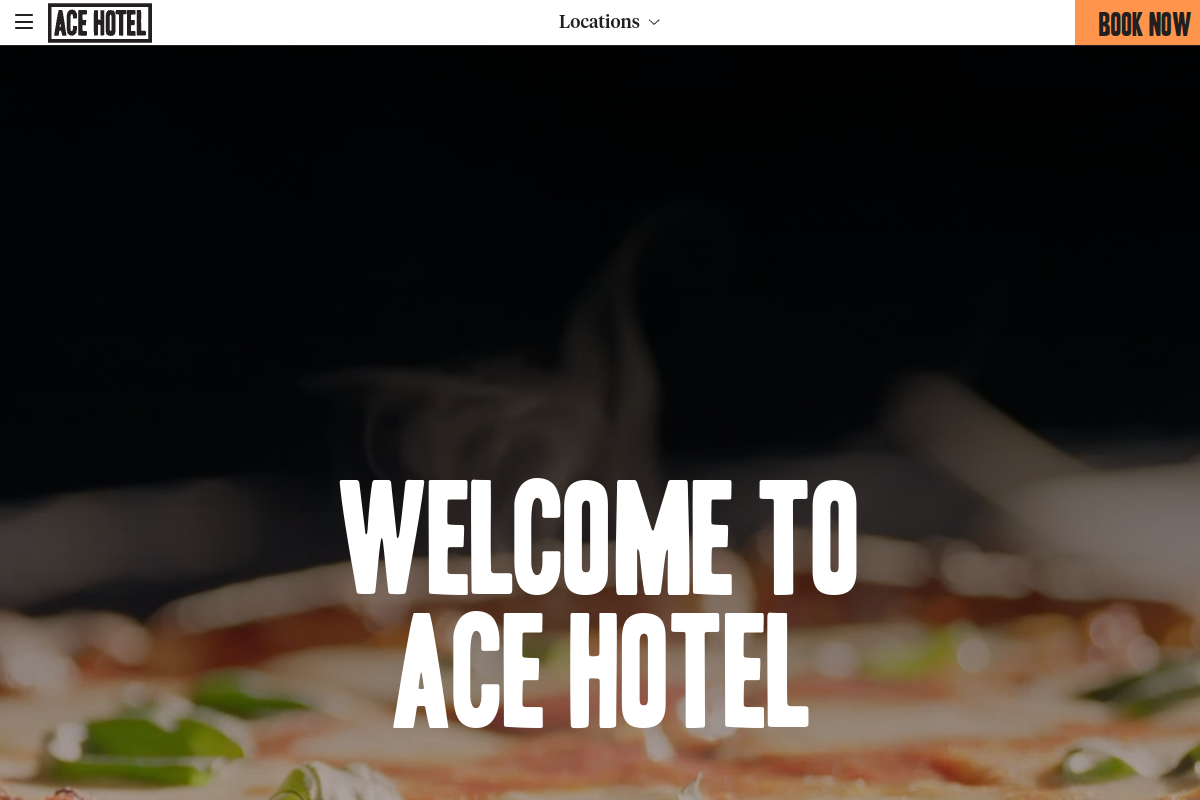
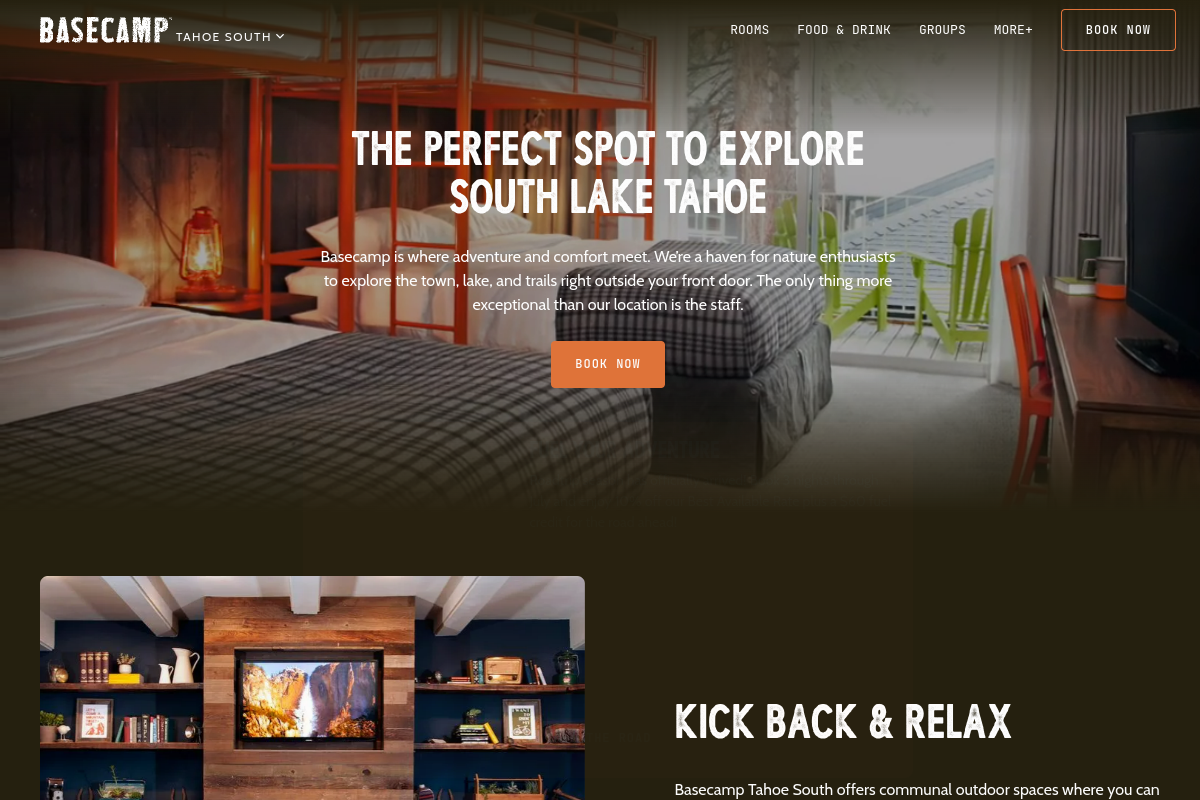
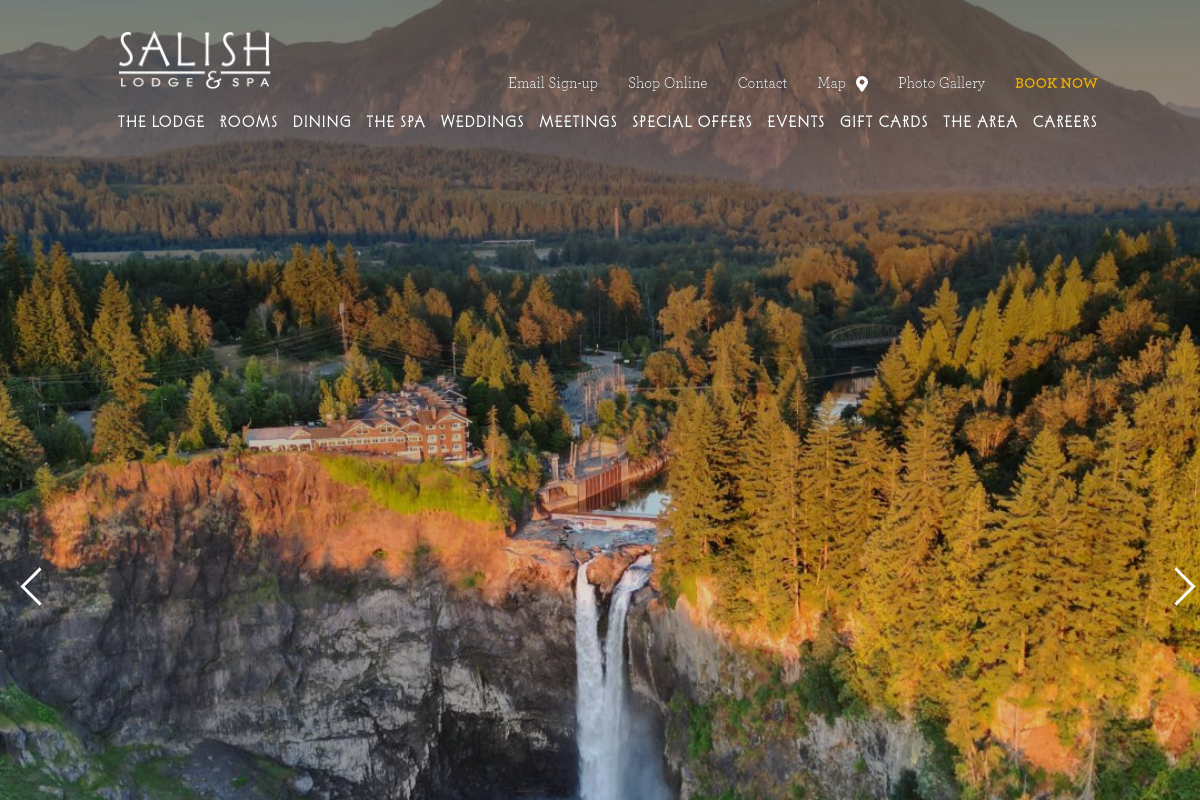
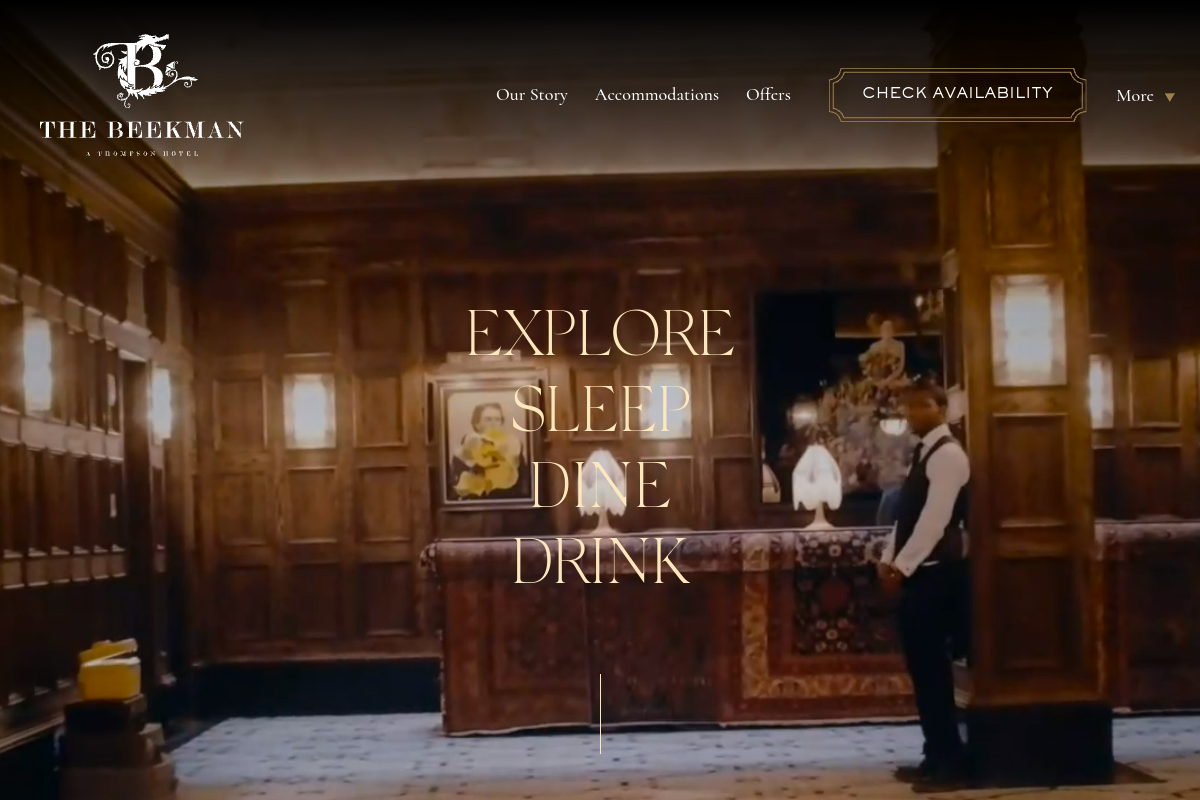
These are examples of observable choices, not endorsements, and none of these properties is a theStacc client. None of the six pages disclosed live inventory, confirmed rates, or actual booking-completion behavior; a reviewer needs the property's own PMS and CRM records to make those claims.
| Property / market / type | Season & inventory signal | Audience & job | First action | Room / offer clarity | Booking-engine handoff | Group / accessibility / contact routing | Reusable pattern | Omission |
|---|---|---|---|---|---|---|---|---|
| Ace Hotel New Orleans — multi-city boutique group | Year-round urban; no stated seasonal signal | Leisure + wedding/event | Location-first booking form | No room types or rates before form | Ace-run multi-property engine | Weddings page; group-wide events feed; Accessibility footer link; no phone shown | Shared multi-city events feed | No phone or room detail on homepage |
| Basecamp Tahoe South — budget-boutique adventure motel | Ski/lake seasonal; dated July promo | Leisure + family/group | Dated promo + Book Now buttons | 7 named room types incl. Accessible King | Brand-run engine, unnamed | Groups link; phone/email/address; Accessibility footer link | Accessible room named in main list | No inline date/party widget |
| Salish Lodge & Spa — destination resort and spa | Wedding-season and package-driven | Leisure + wedding/meeting | Inline Check Availability widget | 11 room types, 5 accessible variants | External booking system, unnamed | Weddings/Meetings/Events forms; accessibility link in nav and footer | Accessible-room count shown with standard list | No end date on 4 packages shown |
| The Beekman — historic boutique hotel | Urban; no stated seasonal signal | Leisure + business + filming/events | Inline widget, date one day behind capture | 3 named tiers, no per-tier detail | Presumed brand system, unnamed | Meetings/Weddings/Junket floor kept separate; accessibility link opens general info page | Filming path kept separate from general events | No per-tier detail; no standalone accessibility statement |
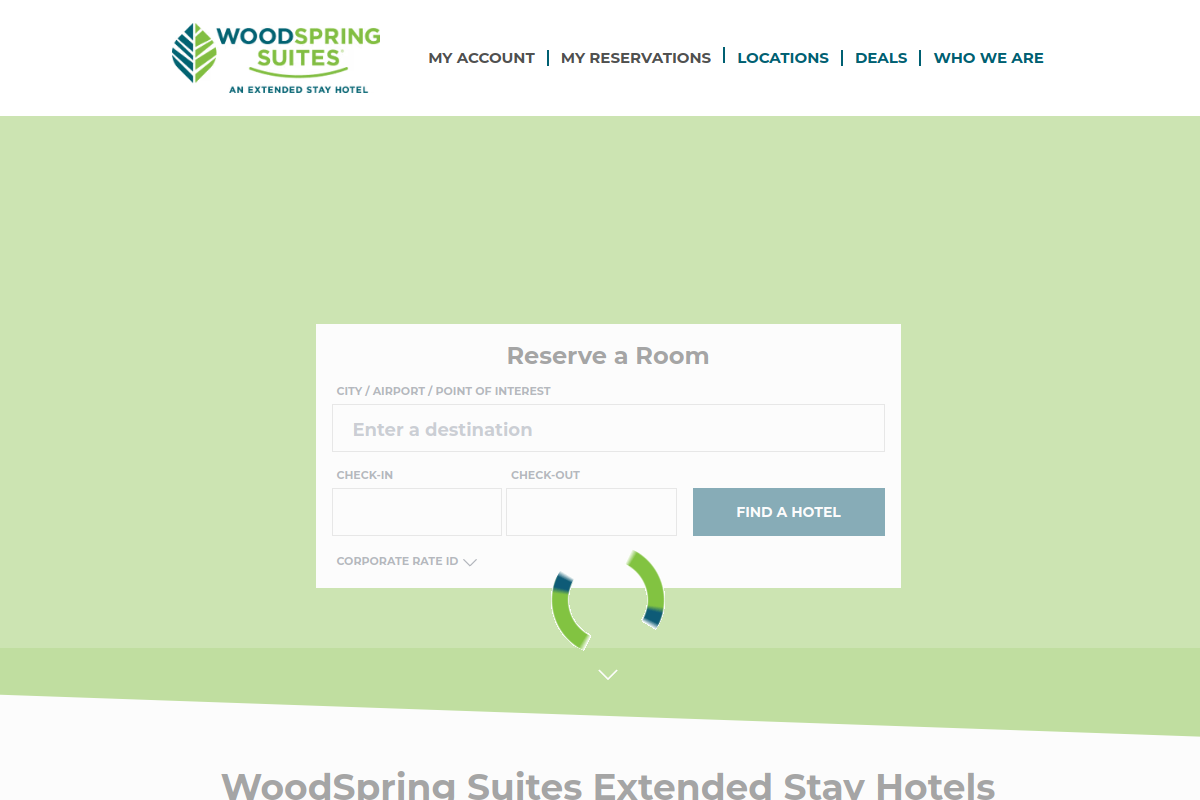
| WoodSpring Suites — extended-stay economy chain | Weekly/monthly rate structure; not seasonal | Business + long-stay + student | Destination-first Find a Hotel search | Kitchen + weekly/monthly discount named | Brand-run multi-property engine | Global Accounts/Business/Student Lodging in place of consumer groups; no accessibility link found | Discount % shown next to room type | No accessibility statement link found |
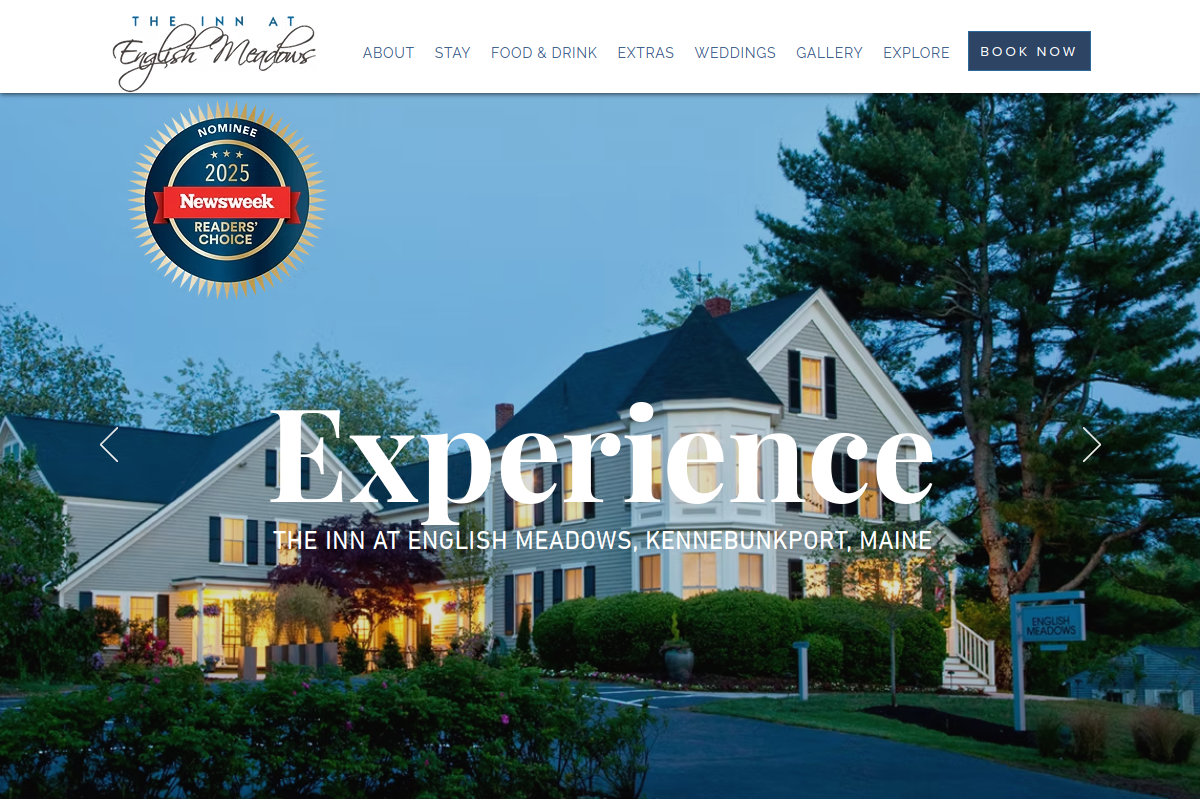
| The Inn at English Meadows — independent B&B | Coastal Maine seasonal; no dated promo shown | Leisure + small wedding/family/corporate | Single Book Now button, no inline widget | 11 rooms/suites + bungalow named as count only | Third-party system, unnamed | Weddings link states capacity; Web Accessibility Policy footer link | Small-event capacity named in nav link itself | No accessible-room type named |
| Claim / pattern | URL | Capture date | Observable fact | Prohibited inference | Keep / remove |
|---|---|---|---|---|---|
| Group-wide events feed replaces a per-city page | acehotel.com/new-orleans | Jul 12, 2026 | One "Goings on" feed spans all eight cities | That this improves booking conversion | Keep — pattern only, not a performance claim |
| Accessible room named in the main room list | basecamphotels.com/tahoe-south | Jul 12, 2026 | "Accessible King" listed with six other room names | That the room meets any specific accessibility standard | Keep — labeling pattern |
| 5 of 11 rooms named as accessible variants | salishlodge.com | Jul 12, 2026 | Accessibility link repeats in main nav and footer | That accessibility compliance was verified | Keep; flag missing package end dates separately |
| Filming/photoshoot path kept separate from events | thebeekman.com | Jul 12, 2026 | "Junket floor" listed as its own nav item | That this reflects the property's actual room count or rate | Keep — segmentation pattern |
| Weekly/monthly discount shown at the room level | woodspring.com | Jul 12, 2026 | Page states an average percentage off per night for longer stays | That the percentage applies to every location in the chain | Keep; flag missing accessibility link separately |
| Event capacity named in the nav-level Weddings link | englishmeadowsinn.com | Jul 12, 2026 | Link text names three event types before a click | That the inn can service any group size | Keep — self-qualification pattern |
Homepage and room-selection patterns
Across the six examples, homepages differ most in whether a booking widget appears inline (Salish Lodge, The Beekman) or requires a location or property click first (Ace Hotel, WoodSpring Suites), and whether room names disclose an accessible option before a guest has to ask.
Salish Lodge and Basecamp Tahoe South both name a room type as accessible directly in the standard room list — five variants at Salish, one at Basecamp — rather than routing that question to a separate policy page. The Beekman and The Inn at English Meadows name room tiers or counts without disclosing per-room amenities or sizes on the homepage, which is a reasonable brevity choice for a boutique brand but leaves a guest with specific needs no way to self-qualify before calling. Location and property fit follow the same split: Ace Hotel and WoodSpring Suites both make a visitor pick a city or search a destination before anything else loads, while Salish Lodge, The Beekman, Basecamp, and English Meadows each commit to one property from the first screen. Neither approach is wrong on its own; a location-first pattern fits a brand managing many cities, and a single-property commit fits an independent hotel or inn that only has one address to defend. Seasonal offer freshness was the weakest link across every example that showed one: Salish Lodge's four packages and Basecamp's July promotion both lacked a visible end date in this capture, so a guest cannot tell from the page alone whether the offer still applies.
Local experience and urgency patterns
Trip-planning content, such as an area guide or a nearby-landmark distance list, answers a different question than same-day help for an existing guest or a time-sensitive wedding enquiry, and this capture found no example naming who updates that local content or how often.
Basecamp Tahoe South and The Inn at English Meadows both publish specific distances to nearby landmarks — trailheads, a golf course, a beach, local restaurants — which serves a guest planning a trip days or weeks out. Salish Lodge's "30 minutes from Seattle" framing and The Beekman's named neighborhood landmarks serve the same planning stage in a lower-detail form. None of the six pages surfaced a distinct path for an existing guest asking a same-day question, such as a late checkout or a lost-item report; that job appears to default to the same general contact route used for a new booking enquiry. A wedding or event enquiry is even more time-sensitive in the other direction: Salish Lodge's and The Beekman's proposal forms both ask a planner to commit contact details before any capacity or date-availability signal appears, which is a reasonable qualification step but offers no visible service-level expectation for a reply.
Group, event, and high-consideration paths
Group and event paths range from a wedding proposal-request form (Salish Lodge, The Beekman) to a plain "Groups" link (Basecamp Tahoe South) to a corporate or student lodging page (WoodSpring Suites), and none of the six pages this review opened treats a submitted enquiry as a booked event.
The width of that range matters for an independent hotel deciding how much event infrastructure to build. Salish Lodge and The Beekman both operate distinct venue types — a ballroom and ceremony terrace at Salish, a "Junket floor" for filming at The Beekman — and give each its own named path rather than one shared events form. Basecamp Tahoe South, a much smaller adventure property, uses a single "Groups" link that states fit without a multi-step proposal form, which matches its scale better than a heavier qualification process would. WoodSpring Suites' Global Accounts and Student Lodging pages serve a parallel but different high-consideration path: recurring corporate or institutional stays rather than one-off events. English Meadows names its event capacity directly in the Weddings nav link text, letting a planner self-qualify in one glance instead of clicking through to find out the venue only handles small groups. In every case, a submitted proposal or enquiry form is a lead, not a contract; this review found no page that distinguished a tentative date hold from a confirmed booking in visible copy.
Trust and proof patterns
Trust signals across these six sites include named on-site dining hours, an explicit list of accessible room types, and a footer accessibility link, but this review found no independently verifiable review score, award, or press mark on any homepage that stated its own source or date.
Salish Lodge's three dining venues each carry posted hours, which is a small but concrete trust signal a guest can check against their own arrival time. Basecamp Tahoe South names its beer-garden and food-service partners directly rather than describing amenities in generic terms. None of the six pages in this capture displayed a star rating, review count, or award badge tied to a stated source and date; any such element seen on a hotel site elsewhere needs that provenance before a reader should trust it.
| Trust element | Provenance / approval required | Owner / recheck | Boundary |
|---|---|---|---|
| Reviews / ratings | Traceable source and approved wording | Marketing; scheduled recheck | Qualified review required if provenance is uncertain |
| Awards / press logos | Permission, source, scope, date | Brand owner; expiry review | No implied current status |
| Property and room imagery | Usage rights; consent where guests are identifiable | Brand owner; campaign end | Does not prove current room condition or availability |
| Accessible-room claims | Verified against the actual room, not just its name | Operations owner; renovation trigger | A room name does not establish compliance with any standard |
| Seasonal offer / package copy | Current, dated, with a stated end condition | Revenue manager; campaign end date | No implied availability without a live rate check |
| Accessibility / privacy statements | Current approved statement | Web/legal owner; site change | Qualified legal review required |
Forms, calls, and booking-engine handoffs preserve the funnel
A booking-engine click, a submitted enquiry form, and a completed stay are three separate, timestamped events owned by different systems, and collapsing them into one "conversion" figure hides where a real guest actually dropped off between clicking "Book Now" and checking in.
Every site in this review used a "Book Now" or "Check Availability" label to exit toward a booking engine, but none of the six named which engine, PMS, or CRM sits behind that click in a way this review could independently confirm. That gap matters for measurement: a click into a booking engine, a call placed from a listed phone number, a submitted proposal form, and a confirmed reservation each belong to a different source system, and none can substitute for another in a report.
| Stage | Definition | Source system | Owner |
|---|---|---|---|
| Impression | Eligible search or ad appearance | Search / ads reporting | Marketing |
| Click | Eligible result or listing visit | Search Console or ads reporting | Marketing |
| Call click | Tap on the declared phone action | Consented web event log | Web owner |
| Successful form | Submitted enquiry or booking-start form record | Form log | Reservations or events intake owner |
| Qualified enquiry | Meets the written date/party/room or event-capacity fit rule | CRM or PMS | Reservations or events owner |
| Booked stay / event | Confirmed reservation or signed event contract | PMS / CRM | Reservations or events owner |
| Completed stay / event | Marked completed under the PMS rule, after checkout or the event date | PMS operations record | Operations owner |
No portable benchmark or causal claim belongs in a hotel-site measurement plan; every formula below keeps its full definition rather than a shorthand percentage, per Search Console's own performance-reporting scope and Google Analytics' recommended lead-stage events, which each business must still define for itself.
| Formula | Numerator | Denominator | Evidence window | Source system | Owner | Exclusions |
|---|---|---|---|---|---|---|
| Organic CTR | Organic clicks for the identical declared page/query/country/device scope | Organic impressions for that identical scope | Declared 28-day window | Search Console property | Marketing owner | Paid, other countries/devices/pages, anonymized queries |
| Booking-path start rate | Unique sessions reaching the approved booking-engine start event | Eligible unique landing sessions in the same property/page cohort | Declared 28-day window | Web analytics plus booking-engine event log | Digital / e-commerce owner | Staff/test/bot traffic, duplicate sessions, unavailable-inventory checks defined as exclusions |
| Qualified-enquiry rate | Unique received calls/forms meeting the written property/date/party/service-fit rule | All unique successfully received attributable calls/forms | Declared 28-day cohort plus qualification lag | Analytics/call tracking joined to CRM/intake | Reservations or sales owner | Clicks without connection, failed forms, duplicates, spam, jobs/vendors, unsupported requests |
| Completed-stay rate | Unique booked stays from the cohort marked completed under the PMS rule | All unique booked stays attributed under the same rule | Booking cohort plus sufficient stay/completion lag | Booking engine/PMS joined under declared attribution | Revenue/operations owner | Cancellations, no-shows, staff/test bookings, extensions counted under written rule, unattributable stays |
Convert observations into a redesign brief
Turn a pattern from these examples into a redesign line item only after checking it against the property's own type, seasonal inventory, urgency mix, and intake capacity, since a pattern built for a multi-city boutique group can be the wrong fix for an eleven-room inn.
A pattern earns a place on a redesign brief when it fits your property's actual audience mix and system capacity, not because a bigger or better-funded competitor uses it. An inline availability widget like Salish Lodge's makes sense once your booking engine can return live inventory reliably; bolting one onto a page that still relies on a phone call for confirmation just adds a broken promise. Naming an accessible room type in the main list, as Basecamp and Salish both do, is close to a no-cost change for most properties, provided operations confirms the room actually matches the name before it publishes.
| Pattern | Visitor task | Evidence needed | Hypothesized stage affected | Implementation owner | Operational dependency | Acceptance check | Review date | Keep / change / remove |
|---|---|---|---|---|---|---|---|---|
| Name accessible room types in the main list | Confirm room fit before calling | Room actually matches the published name | Qualified enquiry | Web owner + operations | Housekeeping/facilities sign-off on room features | Named room verified on-site against the listing | Quarterly or after renovation | Keep, property-dependent |
| Inline availability widget with dates/party/rooms | Search without leaving the homepage | Booking engine returns live inventory reliably | Booking-path start rate | Digital / revenue management | Booking-engine API reliability | Widget result matches confirmed engine inventory in a spot check | Before launch, then quarterly | Change — only after engine reliability confirmed |
| Separate filming/photoshoot from general events | Reach the correct commercial contact | Sales team has a distinct intake process for this request type | Qualified-enquiry rate | Sales / events lead | Staffing to handle a distinct request type | Test enquiry reaches the correct owner within a stated SLA | At launch, then annually | Keep if volume supports a separate path |
| Add a stated end date to every seasonal package | Know if the offer still applies | Marketing calendar with a hard expiry per package | Booking-path start rate | Marketing / revenue management | Calendar discipline to remove expired copy | No expired package remains live past its end date | Monthly | Change — add to every property using this review's method |
| Name event or group capacity directly in the nav link | Self-qualify before clicking through | Confirmed capacity figures from operations | Qualified-enquiry rate | Web owner + events lead | Accurate, current capacity figures | Nav-link capacity matches the events team's own figures | At launch, then annually | Keep, low cost for most properties |
Turn these observations into an owned redesign brief. theStacc's Content SEO module can research, draft, score, and queue the supporting pages a redesign needs; your reservations and operations teams verify every room, rate, and policy fact before it publishes.
What not to copy
Copying a competitor's visual style without its underlying facts creates eight predictable failures: visual sameness, a hidden property or location, stale seasonal offers, unsupported scarcity language, mixed audience paths, an inaccessible contact route, synthetic guest or room proof, and a collapsed measurement funnel.
- Visual sameness: matching a competitor's layout without checking whether your booking widget, room count, or event capacity actually supports the same page structure.
- Hidden property or location: a multi-city or multi-property brand that makes a visitor guess which address applies before showing hours, rates, or directions.
- Stale seasonal offers: a package or promotion left live past its own end date, the exact gap this review found at both Salish Lodge and Basecamp Tahoe South.
- Unsupported scarcity language: "almost sold out" or "limited rooms left" copy with no live inventory feed behind it.
- Mixed audience paths: a single contact form serving leisure bookings, wedding enquiries, vendor pitches, and job applications at once.
- Inaccessible contact route: an accessibility statement that exists but no named accessible room, or the reverse, a named room with no statement to back it.
- Synthetic guest or room proof: stock photography presented as the property's actual rooms, or a review score with no stated source or date.
- Collapsed measurement funnel: reporting a click, a form, and a booking as one "conversion" number instead of separate, owned stages.
Restaurants and event venues share some of this operator layer but not all of it: room inventory, PMS-based completed-stay tracking, and multi-night length-of-stay context rarely apply the way they apply to a hotel. Keeping seasonal offer and local-event content current is itself a content-operations habit; see theStacc's content marketing strategy guide for how to schedule that recheck.
Frequently asked questions
These eight questions extend the review rather than restate it, covering what to check before a booking search, how booking-engine clicks differ from reservations, and how often offer and event content needs a recheck. They apply the same guest-path and evidence rules used throughout, without resolving accessibility, licensing, or compliance questions that need jurisdiction-specific review.
What makes a good hotel website design?
A good hotel website design gives each guest type — leisure, business, family, wedding, or existing-guest — its own clear first action, keeps room and amenity facts current, and names who owns local and seasonal content. Visual polish alone does not establish this; a page can look sharp and still merge a wedding enquiry with a same-night walk-in search.
Which hotel website examples are useful for an independent hotel?
An independent hotel gets more from an example close to its own stay profile and room count than from a large multi-city group's flagship site. An eleven-room inn should study how The Inn at English Meadows names its Weddings link and event capacity, not how a multi-city boutique group structures a location-first booking form built for a different scale of operation.
What should a hotel homepage show before a booking search?
Before a date search, a hotel homepage should let a visitor confirm the property's location and type, see at least one concrete room or amenity fact, and find the right path for their actual job — stay, event, dining, or existing-guest help — rather than one generic "Book Now" button standing in for all four.
How should rooms, events, and existing-guest help be separated?
Rooms, events, and existing-guest help need separate destinations because they run on different systems and timelines: a room search checks live inventory and rate, an event enquiry starts a sales conversation that can take weeks to close, and existing-guest help is urgent and tied to an active stay. Routing all three into one contact form loses the urgency signal that tells staff what to answer first.
Does a booking-engine click count as a reservation?
No. A booking-engine click is only the start of that path; it records that a visitor opened the date-and-rate search, not that a room was held, paid for, or confirmed. Count clicks, confirmed reservations, and completed stays as three separate, timestamped figures pulled from the analytics log, the booking engine, and the property-management system, and never report one as a stand-in for another.
How should mobile hotel sites be reviewed?
Review a mobile hotel site by opening the actual page on a phone at the moment a real guest would use it — checking in tonight, comparing rooms before a trip, or reaching an existing reservation — and confirming the single most likely action sits above the fold without swiping past a hero video. A desktop-only review, including this one's capture method, cannot substitute for that device-level check.
Can a hotel copy another property's design?
A hotel can reuse the decision behind a pattern, such as naming an accessible room type in the main room list, without copying the layout or claiming the same result. Check it against your own property type and inventory first: a location-first booking form built for an eight-city group can add a needless step for a single-property visitor who already knows which hotel they're on.
How often should hotel offer and local-event content be checked?
Check seasonal offers and local-event content on a set schedule tied to how fast they go stale, not on a fixed annual calendar: a wedding-season package needs a review before and after peak months, a dated event listing needs removal the day it passes or sells out, and a distance-to-landmark claim only needs a recheck after a property or route change. None of the six examples in this review named who owns that check.
Turn these observations into your next hotel-site decision
The next hotel-site decision should be the smallest verified change to a real guest path: name an accessible room type, add a proposal form for event enquiries, or fix a booking widget that defaults to the wrong date. Attach a measurement stage to that one change before treating a full redesign as the default fix.
None of the six sites in this review is a client, a benchmark to beat, or proof that any single pattern increases bookings. Each is a dated, independently verified reference point: what a real property publishes, what it omits, and what it leaves for a phone call to resolve. Content can explain a property's rooms, amenities, and event spaces, but it cannot replace the reservations and operations staff who confirm tonight's rate, next month's wedding capacity, or whether an accessible room is actually available on a given date.
Bring this guest-path rubric to a working session. We can help plan and publish the content layer around a hotel-site decision without treating a redesign as a booking or occupancy promise.
Sources & references
- Awwwards — hotel/restaurant design gallery seen in the dated SERP
- Cvent — hotel website design examples blog post seen in the dated SERP
- HotelTechReport — hotel website design examples list seen in the dated SERP
- Cloudbeds — hotel website design practices and examples guide seen in the dated SERP
- Reddit r/UI_Design — hotel websites for inspiration/reference thread seen in the dated SERP
- Google Search Console Help — Performance report clicks, impressions, and filters
- Google Analytics Help — Recommended events for lead generation

Explore the tools for blog content, Google Business Profile, and social publishing.
Weekly local SEO teardowns
One practical email a week. Map Pack, GBP, AI Overviews. No fluff. Unsubscribe anytime.