Review restaurant website design examples through guest tasks, dated evidence, trade-offs, ownership, and separate restaurant measurement stages.
A restaurant website is not one journey. A guest deciding where to eat now needs a different route from a host planning a private dinner, a regular ordering pickup, or a family checking a second location. The useful design question is not which page looks impressive; it is whether the current operation makes the next guest task clear.
This review uses dated, public observations rather than performance claims. The live US search results checked July 10, 2026 favored galleries and curated lists; this page adds the operator layer those formats often omit: task fit, visible evidence, operational ownership, and the trade-off behind each pattern. It does not rank restaurants, builders, or agencies.
Review rule: treat a restaurant website example as a decision aid. Record what is visible on a stated date, what the site appears to ask a guest to do, and what cannot be known without the restaurant's records.
What a restaurant website must let a guest do
A restaurant website must help a guest confirm the concept, inspect a current menu, find the applicable location and hours, and reach the right service path without guessing. A booked dinner, walk-in meal, pickup order, delivery order, catering enquiry, and private event have different urgency, information needs, and accountable operators.
A dinner guest may be comparing a planned occasion and reservation rules. Someone choosing lunch near the office may need the closest counter, current menu, and pickup route quickly. A private-events prospect has a slower, higher-consideration question: location, date, party size, and service scope. A single generic “contact” path obscures all three.
| Restaurant model | Urgency / value band | Primary visitor task | Primary action | Proof and operational owner | Failure state |
|---|---|---|---|---|---|
| Reservation-led dine-in | Planned / occasion-led | Evaluate dining context and a date | Reservation route | Rules and availability; front-of-house | Reservation link lacks context |
| Walk-in or counter service | Immediate / everyday | Choose food and nearby location | Menu or location route | Menu and hours; location manager | Core task sits below imagery |
| Pickup | Immediate / order-led | Start an available pickup order | Pickup-order route | Availability; ordering operations | Wrong location or unavailable route |
| Delivery | Immediate / order-led | Select delivery destination | Delivery-order route | Delivery coverage; digital ordering | Handoff loses location context |
| Catering or private events | Planned / scope-led | Check fit and submit details | Qualified enquiry route | Capacity and scope; events owner | Form accepts unsupported requests |
| Multi-location | Variable / location-led | Select a real restaurant first | Location selector | Local facts; location owner | Closed or mismatched location page |
Menu price, availability, hours, event dates, reservation rules, and ordering routes are operational facts, not timeless design copy. Name the source system and owner before displaying them. Dietary or allergen contact language should point to the restaurant's current process; this article does not assess food-safety or legal adequacy.
How the examples were selected and reviewed
These restaurant website examples were selected as public, restaurant-owned pages that visibly represent different guest journeys, then reviewed on July 11, 2026 at a 1440-pixel desktop viewport. The review records page evidence only: it does not access analytics, reservation records, order systems, tests, or a restaurant's back-office operations.
We excluded builder portfolios, agency work, screenshots without a live restaurant destination, and pages where the relevant service route could not be observed. The source list supplied candidates, but each card links to the restaurant's own site. This method follows Google's review guidance: explain the method, show supporting evidence, and state what differentiates an item rather than asserting a winner.
| Published rubric | Why it matters by model | Observable evidence | Rating options | Reviewer note |
|---|---|---|---|---|
| Service-mode clarity | Prevents dine-in, pickup, and event paths from competing | Distinct labels and destinations | Present / partial / missing / not applicable | Do not infer availability |
| Menu and daypart clarity | Supports immediate meal decisions | Readable menu route and timing cues | Present / partial / missing / not applicable | Price accuracy not tested |
| Location and hours source | Matters most for walk-in and multi-location visits | Location-specific page or selector | Present / partial / missing / not applicable | Hours not independently verified |
| Primary mobile action | Matches the guest's first task | Visible action in responsive capture | Present / partial / missing / not applicable | Tap performance not measured |
| Reservation or order handoff | Keeps distinct commitments separate | Labeled outbound or owned route | Present / partial / missing / not applicable | Completion unknown |
| Events, dietary route, and local proof | Serves slower, high-context questions | Dedicated route or contact path | Present / partial / missing / not applicable | Scope and claims unverified |
| Expiry ownership | Stops stale menus, offers, and locations | Named visible owner or dated rule | Present / partial / missing / not applicable | Usually not publicly observable |
Need an evidence-led content and local-search review? theStacc's restaurant work can connect content, local search, and social planning while the restaurant retains ownership of its live facts.
Annotated restaurant website examples
The following four evidence cards show visible patterns across reservation-led dining, pickup-led counter service, delivery-oriented ordering, and multi-location or event journeys. Each capture is a dated visual reference to the public page, not a usability test or proof of business performance. “Not known” deliberately remains a valid finding.
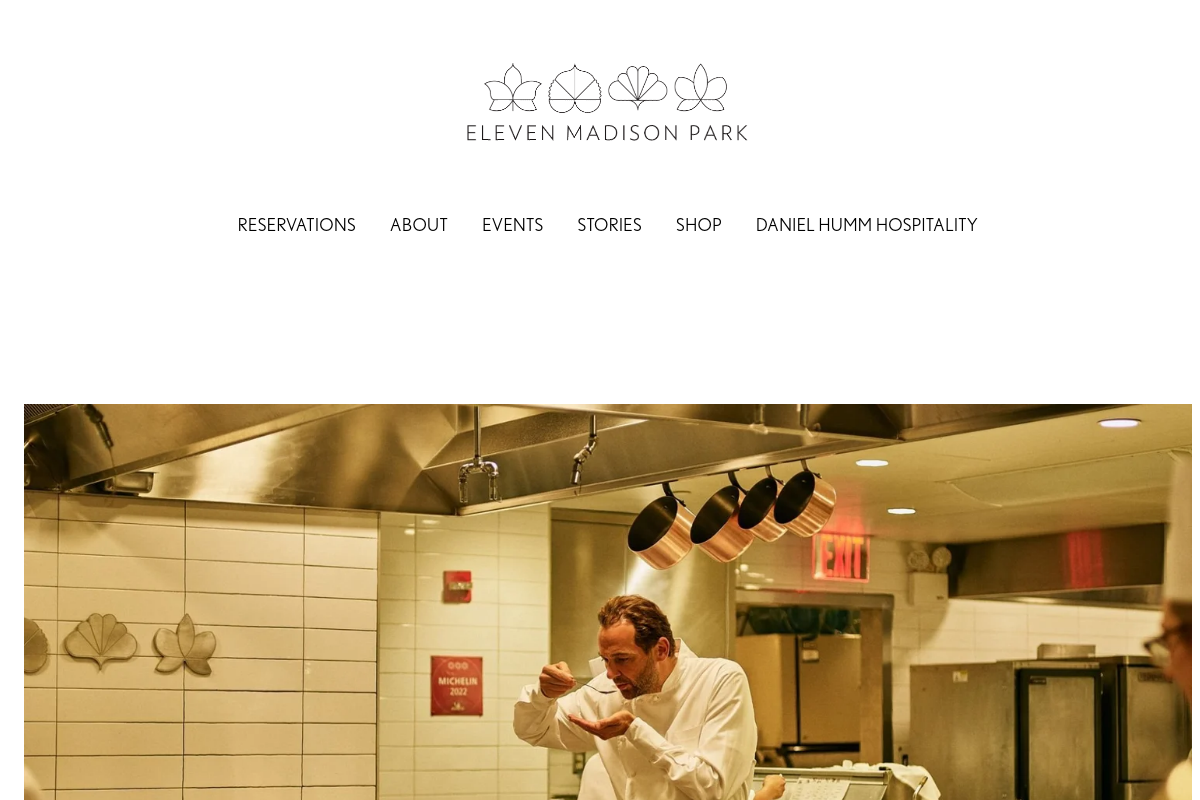
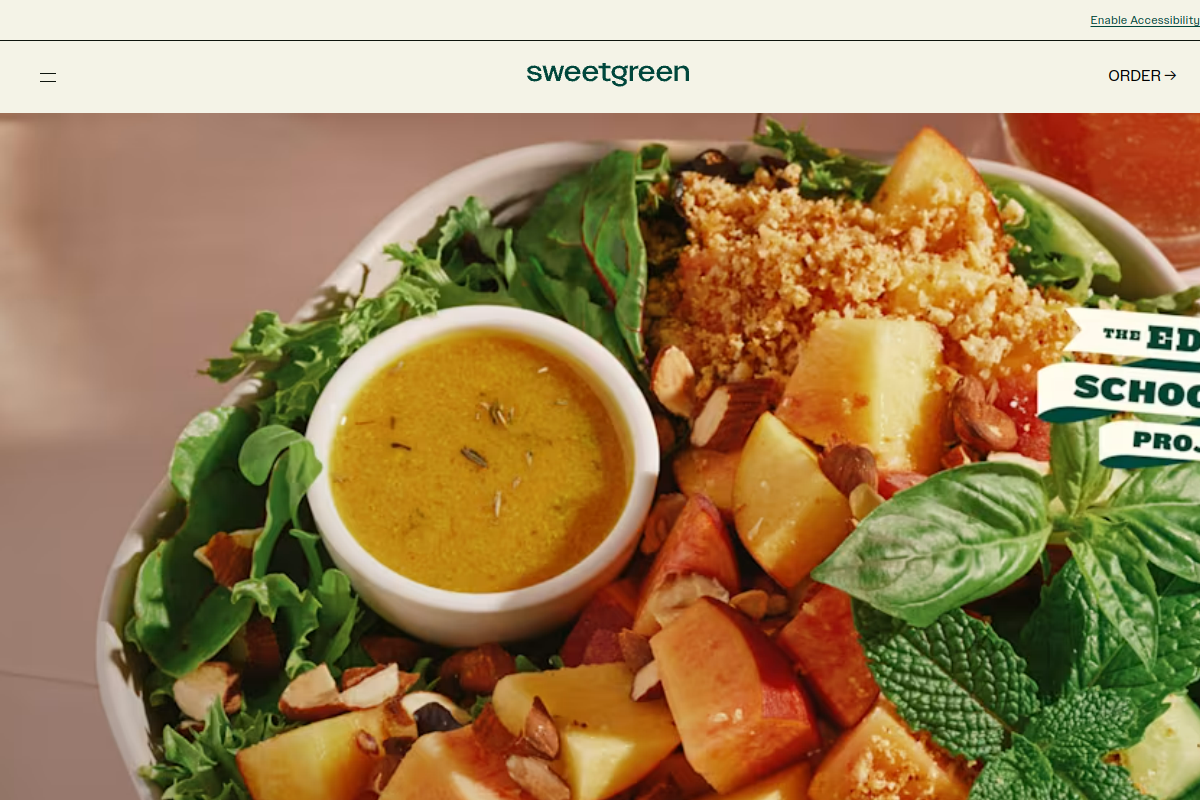
These are examples of observable choices, not endorsements. They do not show whether a menu is current, whether a handoff succeeds, whether an accessibility statement is sufficient, or whether a dietary statement is safe for a particular guest. A reviewer needs a dated source record and qualified review before making those claims.
Turn observed patterns into owned restaurant pages. theStacc's Content SEO, Local SEO, and Social Media modules support content, local-business, and approved social publishing work; the restaurant still approves operational facts.
Patterns operators can reuse without copying a layout
Operators can reuse the decision behind a restaurant website pattern without copying its layout: choose one dominant action for the active service mode, maintain its facts, and make competing paths explicit. A reservation-first page can suit a planned tasting menu, while a pickup-led restaurant needs the menu, location, and order route sooner.
- Switch by daypart with an owner: a lunch pickup route, dinner reservation route, or temporary event page needs a start date, end date, and recheck trigger.
- Make location precede local handoff: a multi-location guest should not discover the wrong hours or ordering destination after several taps.
- Keep reservations and orders apart: label each action by commitment and pass enough context to the destination for the restaurant to reconcile it.
- Qualify events before promising fit: ask for location, date, party size, and service need only where the operations team has a written rule.
- Publish proof with provenance: reviews, awards, press marks, food imagery, and location claims need an approved source and expiry decision.
| Trust item | Required provenance or approval | Owner / recheck | Boundary |
|---|---|---|---|
| Review or rating | Traceable source and displayed wording | Marketing; scheduled review | Qualified review required if uncertain |
| Award or press logo | Permission, source, scope, and date | Brand owner; expiry review | No implied current status |
| Food imagery | Rights and accurate context | Brand owner; campaign end | Does not prove current availability |
| Dietary or allergen wording | Approved restaurant process | Operations; menu change | Qualified review required |
| Accessibility statement | Current approved statement | Web owner; site change | Qualified review required |
| Location claim | Current address and service record | Location manager; move or closure | Retire closed-location claims |
Google's people-first guidance supports pages built to help an audience, and its review guidance favors method, evidence, benefits, and drawbacks. That is the useful standard here: a pattern earns space because an operator can explain its guest job and its downside, not because another site used it.
Failure states that visual galleries miss
Visual galleries often show a finished first screen but miss the operational failure states that interrupt a restaurant decision after the image loads. A stale holiday hour, mismatched menu price, wrong order destination, closed location, or unsupported event form can make a polished page unhelpful without proving any legal or commercial consequence.
| Failure-state checklist | Evidence to inspect | Safe response |
|---|---|---|
| Stale hours, menu, or promotion | Dated source record and expiry trigger | Correct, remove, or recheck with owner |
| Wrong location or closed page | Location roster and page destination | Update, retire, or redirect deliberately |
| Broken reservation or order handoff | Guest-path test and event log | Restore destination; record test result |
| Duplicate, spam, vendor, or employment form | Form classification and intake rule | Route separately; exclude from qualification |
| Sold-out or unavailable item | Menu or availability source | Remove claim or label availability accurately |
| Unsupported event request | Location, date, party-size, scope rule | Set written qualification and escalation path |
| Abandoned third-party handoff | Attributable start and destination record | Keep as a distinct stage, not completion |
| Cancellation, no-show, refund, or award claim | Operations record or provenance file | Report separately or remove unverifiable claim |
Keep a fact-volatility register beside the design file. For every menu item or price, hours, location, event, offer, reservation rule, ordering availability, and dietary statement, record the source system, owner, approval date, expiry or recheck trigger, and failure behavior. A design review is incomplete when it has no route for correcting stale information.
Measure each stage after launch
Measure a restaurant website by separate, timestamped stages, because an impression is not a click and an order start is not a fulfilled order. Connect a design observation only to the action shown on that page; do not credit a new layout with a reservation, visit, order, or event outcome without joined records and declared rules.
| Stage | Business rule | Event and source system | Owner / timestamp |
|---|---|---|---|
| Impression | Eligible search appearance | Search reporting record | Search owner / recorded date |
| Click | Eligible result visit | Search reporting record | Search owner / recorded date |
| Call click | Tap on declared phone action | Consented web event log | Web owner / event time |
| Form | Submitted form record | Form log | Intake owner / submission time |
| Qualified enquiry | Meets written location, date, party-size, service rule | CRM or event system | Events owner / qualification time |
| Booked job | Confirmed qualified event under written rule | Event system | Events owner / booking time |
| Completed job | Completed event under written rule | Operations record | Operations owner / completion time |
| Reservation or order start | Attributed start for that distinct branch | Consented site event log | Journey owner / event time |
| Confirmed reservation or placed order | Reservation-system confirmation or order state | Reservation or ordering system | Relevant owner / state time |
| Completed visit or fulfilled order | Separate seated or fulfillment record | Operations or POS system | Operations owner / completion time |
Use only defined formulas. Primary-action click rate equals unique sessions with the declared primary menu, reservation, order, or call action divided by unique eligible page sessions exposed to that action, over one declared 28-day window from the consented web event log, owned by web or analytics; exclude bots, staff and test traffic, duplicate taps, and ineligible sessions.
Qualified-event-enquiry rate equals unique submitted event or catering enquiries meeting the written rule divided by all unique attributable event or catering submissions in the same 28-day submission cohort plus stated qualification lag, from the form log and CRM or event system, owned by events or catering; exclude spam, duplicates, vendors, employment contacts, unsupported requests, and tests. GA4 documents recommended lead events, but the restaurant must define its own stages.
Reservation completion rate equals unique attributable reservation starts reaching the reservation system's confirmed state divided by all attributable reservation starts in the same 28-day start cohort plus stated confirmation lag, from consented site events and the reservation system, owned by reservations or front-of-house; exclude staff, tests, duplicates, waitlist entries unless defined as confirmed, and report cancellations and no-shows separately. Completed-order rate uses fulfilled attributable orders over attributable order starts with its declared order-start cohort, fulfillment or refund lag, consented analytics plus ordering or POS system, digital-ordering owner, and exclusions for staff, tests, duplicates, abandoned carts, canceled, refunded, failed, and unattributable orders.
When not to redesign
Do not redesign when the restaurant cannot maintain the menu, hours, location, availability, reservation or ordering configuration, review provenance, or response ownership already shown to guests. Repair the source record and operating handoff first; a new visual layer cannot establish that a closed location, unavailable item, or unsupported event promise is true.
Start with the source of truth: the person who approves a holiday hour, the team that changes ordering availability, the owner who accepts a private-event request, and the person who can verify a review or award. Then test the existing guest path on a phone and record the exact break. This is often narrower than a redesign decision.
For the commercial context of restaurant marketing, see theStacc for restaurants. Use the restaurant SEO guide for search and fact governance, the restaurant marketing guide for channel planning, and restaurant social media guidance for the social publishing work that should match current operations.
Frequently asked questions
These answers apply the same task-first standard to common restaurant redesign decisions: the page should show a current, owned route for the guest's actual job. They do not determine compliance, food safety, accessibility, allergy handling, alcohol rules, or commercial results, which require the restaurant's current evidence and qualified review where needed.
What should a restaurant website include?
A restaurant website should give a guest a current route to the menu, location and hours, the relevant service path, and a way to clarify an unanswered question. The exact route differs for a booked dinner, walk-in meal, pickup order, delivery order, catering request, or private event. Each volatile fact needs an accountable owner and recheck trigger.
What makes a restaurant website easy to use on mobile?
A mobile restaurant site is easy to use when its first useful action fits the visitor's immediate task and the menu, hours, location, and handoff remain readable without hunting through imagery. Test the actual phone viewport, location choice, and external destination. A prominent button is only useful while its label, availability, and target remain current.
Should a restaurant put its menu in HTML or a PDF?
Use an accessible, maintained HTML menu when the restaurant can keep it current; a PDF may remain as a supplemental printable document. The decision is operational, not cosmetic: guests need readable items, current prices where published, and a named owner. Do not leave two versions live if they can drift apart.
How should a restaurant separate reservations from online ordering?
Separate reservations from online ordering with distinct labels, destinations, and event records because they describe different guest commitments. A reservation path should state its dining context and reach the reservation destination; an order path should identify pickup or delivery availability before handoff. Do not combine their starts, confirmations, cancellations, or completed outcomes in reporting.
What should a multi-location restaurant website do differently?
A multi-location restaurant website should make the guest choose a real location before showing location-dependent hours, menu, reservation, ordering, or event information. Keep location pages independently owned and retire closed locations promptly. Shared brand imagery can remain, but it cannot substitute for the address, availability, and handoff that apply to a particular restaurant.
Can a restaurant copy a design pattern from another restaurant's site?
A restaurant can reuse a design pattern after adapting it to its own service model, facts, and operational handoff. Copy the decision, such as separating pickup from reservations, rather than the visual layout or claim. Review whether the pattern still works for the restaurant's daypart, locations, capacity, and source of truth before publishing it.
How should a restaurant display reviews and awards?
Display reviews and awards only with a traceable source, approved wording, date or scope where relevant, and an owner who can remove or correct the claim. The FTC rule addresses certain fake reviews and incentives tied to positive or negative sentiment. A restaurant should obtain qualified review for claims whose provenance, permissions, or presentation is uncertain.
Will redesigning a restaurant website increase reservations or orders?
A redesign changes observable page paths; it does not establish that reservations or orders increased. Measure the declared action first, then keep reservation starts, confirmed reservations, completed visits, order starts, placed orders, and fulfilled orders in separate source-system stages. If those systems cannot join reliably, downstream attribution is unavailable rather than assumed.
Make the next website decision evidence-led
The next restaurant website decision should be the smallest verified change to a current guest path: clarify the active service mode, repair a stale fact, separate two handoffs, or name the person who owns an expiry. Keep the measurement stage attached to that one action before considering a broader redesign.
Content can help a restaurant explain its concept, locations, menus, and occasions, but it cannot replace the people who verify live operations. theStacc's content, local SEO, and social modules can support the planning and publishing layer; the restaurant must remain the final authority for facts and guest commitments.
Bring the guest-path rubric to a working session. We can help turn the observations into an owned content, local-search, and social plan without treating a redesign as a performance promise.
Sources & references
- Google Search Central — write high-quality reviews
- Google Search Central — creating helpful, reliable content
- FTC — Consumer Reviews and Testimonials Rule Q&A
- Google Analytics — recommended events
- Framer — restaurant website example-list format seen in the dated SERP
- SiteBuilderReport — restaurant-site discovery list seen in the dated SERP

Explore the tools for blog content, Google Business Profile, and social publishing.
Weekly local SEO teardowns
One practical email a week. Map Pack, GBP, AI Overviews. No fluff. Unsubscribe anytime.