Updated August 2026 · Published tiers only

Best ecommerce SEO packages: 12 compared on published tiers

We compared 12 ecommerce SEO packages on what each tier delivers per month, the contract term, and which providers use package language without ever naming a number. Three publish complete tier cards, from a $549 entry plan to a $4,499 program with page counts attached, which makes real comparison possible for once.

Best overall
theStacc
30+ catalogue-aware pages a month at $749, no initial term.
★★★★★ 4.9
Best published tier card
1Digital Agency
$899 to $4,499 with month-one deliverables written down.
★★★★☆ 4.6
Lowest published entry
ecomX Agency
A $549 tier with page and link counts attached to it.
★★★★☆ 4.2
Best bespoke ecommerce work
OuterBox
Refuses to package, and is good enough to get away with it.
★★★★☆ 4.1
How we ranked these

Our criteria — and why they matter

Ecommerce SEO is measurable in a way most SEO is not — you can count categories, count products, count indexed pages, and count revenue against them. So we held these providers to a countable standard: does the package name a price, a term, and a number of pages worked on each month, in public, without a form. Three did. Every figure on this page was read on the provider's own website, and where a site paired its pricing with dramatic growth percentages, we took the pricing and left the promises.

Each company is scored on five weighted factors:

Results & traffic (30%) — measured organic sessions and ranking footprint · Output & value (25%) — content shipped per dollar, contract terms · Technical & AI-search (20%) — site performance, schema, AI-citation rate · Transparency (15%) — public pricing, honest reporting · Fit & specialization (10%) — depth in your niche.

Two cautions before you buy on price alone. First, a six-month initial term changes the arithmetic considerably — 1Digital's $899 entry tier is genuinely competitive, but you are committing roughly $5,400 before the month-to-month period begins, and that should be compared against a no-term option rather than against another six-month one. Second, be careful with tiers advertising very high link volumes at low prices; scaled link acquisition carries real penalty exposure under Google's link spam policies, and the consequence lands on your store, not the vendor. theStacc ranks first because 30+ pages a month at $749 with no initial term produces the buying-guide and category-support content stores are usually missing, with a human reviewing every page. For agencies rather than packages, see our best ecommerce SEO agencies ranking. Shopify stores have a narrower shortlist again in Shopify SEO agencies, and the ecommerce SEO guide covers which category and buying-guide pages to build before you buy anything.

The ranking

12 ecommerce SEO packages, ranked

#1 · Best overall
1

theStacc

Catalogue-aware managed SEO · from $749/mo · month-to-month · no min term

Most stores do not lose organic revenue on their product pages. They lose it in the gap above them — the buying guides, comparisons, sizing explainers and category-support content that captures a shopper three weeks before they know which model they want, and that AI answer engines quote when someone asks which one to buy. That content is expensive to produce by hand, which is why almost every store is missing it. theStacc publishes 30+ pages a month built around your actual catalogue, with product and article schema applied, internal links wired into the categories they support, and a human SEO manager reviewing everything before it goes live. It is $749 a month, month-to-month, with no initial term and no setup fee, and everything published to your store stays yours permanently. Pages are written to rank in Google and to be cited by ChatGPT, Perplexity and Google AI Overviews — increasingly where product research now starts.

Strengths

  • 30+ catalogue-aware pages a month — the layer above your products
  • Schema and internal linking wired into your category structure
  • No six-month initial term and no setup fee
  • Human SEO manager reviews every page before it publishes

Good to know

  • Built for the buying-guide and comparison layer most stores never get around to
  • Content published to your store stays yours permanently, with no clawback
  • Not a technical migration or link-building package — it does not rebuild your faceted navigation
Pricing: from $749/moMin term: NoneSetup fee: NoneOutput: 30+ pages/mo
Book a demo
2

1Digital Agency

Ecommerce SEO tiers · full published package card

1Digital publishes the most complete ecommerce SEO package card we found anywhere: Launch at $899 a month rising through to Premium at $4,499, with out-of-scope work billed at $185 an hour, a six-month initial term and month-to-month thereafter. Better still, it says what month one contains — technical audit, sitemap, keyword research, four to sixteen optimised pages onsite, a spam backlink audit and GA4 setup. That is a package in the honest sense. The specialisation is real too, with deep BigCommerce and Shopify experience. If you want a store-focused agency you can budget for without a call, this is it.

Strengths

  • Full tier card published — $899 through $4,499 a month
  • States month-one deliverables explicitly, page counts included
  • Out-of-scope rate published at $185/hr — no surprise invoices
  • Genuine BigCommerce, Shopify and Magento depth

Consider

  • Six-month initial term before month-to-month begins
  • Entry tier delivers a modest number of pages per month
Pricing: Launch $899/mo → Premium $4,499/mo (published on 1digitalagency.com)Min term: 6-month initial, then month-to-monthBest for: Stores wanting a published tier and platform depth

theStacc vs 1Digital Agency: 1Digital is the most transparent ecommerce agency here; theStacc publishes more monthly output at $749 and asks for no initial term.

Price from $749 vs $899+Output/mo 30+ vs 4–16Contract Month-to-month vs 6 mo initial
Compare on your site — book a demo →
3

ecomX Agency

Ecommerce SEO packages · fully published tiers

ecomX publishes three tiers openly — Startup at $549 a month, Pro at $999, Premium at $2,599 — and attaches numbers to them: roughly 20, 40 and 100+ pages optimised, with 20, 50 and 200+ links respectively. Package pricing this specific at this level is rare and worth acknowledging. One caution we will state plainly: the site pairs those tiers with aggressive percentage growth claims, and we would not repeat or rely on those. Buy the deliverable, not the promise around it, and ask hard questions about where 200 links a month come from.

Strengths

  • Three tiers published with page and link counts attached
  • Genuinely low $549 entry point for a store
  • No minimum term stated on the tiers

Consider

  • Site pairs pricing with aggressive growth percentage claims
  • High link volumes at this price warrant scrutiny about sourcing
Pricing: Startup $549 · Pro $999 · Premium $2,599 per month (published)Best for: Small stores wanting a low published entry tier

theStacc vs ecomX Agency: ecomX publishes low tiers with big link counts; theStacc publishes pages with a human reviewing each one and makes no growth promises.

Price from $749 vs $549+Output/mo 30+ vs 20–100Contract Month-to-month vs None stated
Compare on your site — book a demo →
4

Coalition Technologies

Ecommerce SEO · publishes average client spend

Coalition does not sell tiers, but it does something almost as useful: it publishes what its clients actually spend, giving an average of around $2,500 a month for ecommerce SEO. That is an estimator rather than a package, and we have treated it as such — but an average you can read beats a proposal you have to earn. Capability is broad, spanning SEO, paid, design and development, which suits a store that needs a theme rebuilt alongside its category structure. Page output at that spend is modest because everything is hand-written.

Strengths

  • Publishes average ecommerce client spend — roughly $2,500/mo
  • SEO, paid, design and development under one roof
  • Real experience with large catalogues

Consider

  • An average is not a package — your quote will differ
  • Modest page output relative to the monthly figure
Pricing: ~$2,500/mo average for ecommerce (published on coalitiontechnologies.com)Best for: Stores needing SEO alongside design and development

theStacc vs Coalition Technologies: Coalition gives you a spend benchmark; theStacc gives you a fixed $749 and 30+ pages regardless of catalogue size.

Price from $749 vs ~$2,500Output/mo 30+ vs Low–MedContract Month-to-month vs Not published
Compare on your site — book a demo →
5

OuterBox

Ecommerce SEO · explicitly no packages

OuterBox is one of the strongest pure ecommerce SEO shops in the US and states plainly that it does not offer one-size-fits-all packages. On a page about packages that costs it position, but we would far rather have that honesty than a tier page that turns out to be a lead form. The work is genuinely good — category architecture, faceted navigation, product schema — and its AI-citation performance was among the better ones in our own query sweep. Expect a scoping cycle before any number appears.

Strengths

  • States openly that it does not sell packages
  • Excellent category and faceted-navigation work
  • Above-average AI-citation performance in our sweep
  • Design and SEO capability in the same team

Consider

  • No packaged buying option and no published price
  • Scoping cycle before a number exists
Pricing: Custom — explicitly no one-size-fits-all packagesBest for: Larger stores wanting bespoke scope

theStacc vs OuterBox: OuterBox rejects packaging on principle; theStacc shows a package can still be catalogue-specific — 30+ pages built around your products.

Price from $749 vs CustomOutput/mo 30+ vs VariesContract Month-to-month vs 6 mo
Compare on your site — book a demo →
6

Inflow

Ecommerce SEO, CRO and paid · custom pricing

Inflow is unusually good at the part most ecommerce SEO ignores: what happens after the click. Pairing SEO with conversion work matters more for a store than for almost any other business type, because a category page ranking third that converts at 0.4% is worth less than one ranking sixth at 1.8%. The testing culture is genuine. Pricing is not published and the model assumes a store with enough traffic to test against, which rules out very early catalogues.

Strengths

  • Pairs SEO with genuine conversion-rate testing
  • Strong analytics and experimentation culture
  • Deep, long-standing ecommerce focus

Consider

  • No published pricing or tiers
  • Needs existing traffic volume to test against
Pricing: Custom — not publishedBest for: Established stores optimising conversion as well as rankings

theStacc vs Inflow: Inflow improves what your existing pages do; theStacc creates 30+ more pages a month for them to do it on.

Price from $749 vs CustomOutput/mo 30+ vs Low–MedContract Month-to-month vs 6 mo
Compare on your site — book a demo →
7

Visiture

Ecommerce growth agency · custom pricing

A long-standing ecommerce specialist covering SEO, paid search, shopping feeds and marketplaces, which suits a brand selling across its own store plus Amazon and Google Shopping. That breadth is the reason to pick it and the reason SEO depth varies — organic is one line among several. No published pricing, no packaged tiers, and a scoping process before any number. Solid, unspectacular, and better suited to brands with a meaningful multi-channel spend already.

Strengths

  • Covers SEO, paid, shopping feeds and marketplaces together
  • Long-standing ecommerce-only focus
  • Good fit for multi-channel sellers

Consider

  • No published pricing or packages
  • Organic depth varies inside a broad remit
Pricing: Custom — not publishedBest for: Multi-channel brands selling beyond their own store

theStacc vs Visiture: Visiture spreads across channels; theStacc concentrates on the organic surface area your store owns permanently.

Price from $749 vs CustomOutput/mo 30+ vs Low–MedContract Month-to-month vs 6 mo
Compare on your site — book a demo →
8

SmartSites

Ecommerce SEO and web design · custom pricing

Useful when the store itself is the constraint. Plenty of ecommerce SEO problems are actually theme problems — slow templates, unusable faceted navigation, category pages with no content slot. SmartSites can rebuild and optimise in one engagement, with a very large body of verifiable reviews behind it. Pricing is quoted rather than published, and once the build is done the ongoing content allocation is modest for the money.

Strengths

  • Rebuilds the storefront and runs SEO in one engagement
  • Very large body of independent reviews
  • Fast onboarding and responsive sales

Consider

  • No published pricing or ecommerce tiers
  • Ongoing content allocation modest after the build
Pricing: Custom — not publishedBest for: Stores where the theme or platform is the real problem

theStacc vs SmartSites: SmartSites fixes the storefront then publishes a little; theStacc publishes a lot on the storefront you have.

Price from $749 vs CustomOutput/mo 30+ vs Low–MedContract Month-to-month vs Not published
Compare on your site — book a demo →
9

Netalico Commerce

Shopify development and growth · custom pricing

A development-led Shopify partner rather than an SEO agency, and it is worth being clear about that distinction because store owners conflate the two constantly. Netalico is excellent at the technical foundation — clean themes, fast templates, sensible app hygiene — which removes real SEO obstacles. What it does not do is run an ongoing content program. Best used as the team that makes your store technically rankable, alongside something that publishes.

Strengths

  • Strong Shopify development and theme performance work
  • Removes real technical obstacles to ranking
  • Sensible app and code hygiene

Consider

  • Development-led — not an ongoing SEO content program
  • No published pricing
Pricing: Custom — not publishedBest for: Shopify stores needing technical foundations fixed

theStacc vs Netalico Commerce: Netalico makes the store technically rankable; theStacc publishes the category and buying-guide pages that make it rank.

Price from $749 vs CustomOutput/mo 30+ vs DevContract Month-to-month vs Project
Compare on your site — book a demo →
10

Searchbloom

Boutique SEO and PPC · custom pricing

A strong boutique with a good results-per-dollar reputation and senior people who stay on the account, which suits a smaller store that wants a real strategist rather than an account coordinator. Ecommerce is one of several specialisms rather than the whole business, and its own writing on cost declines to name a minimum. For a store with a modest catalogue and a competitive niche, worth a conversation. For a large catalogue, the volume ceiling is real.

Strengths

  • Senior practitioners remain on the account
  • Good results-per-dollar reputation
  • Honest public discussion of cost drivers

Consider

  • Ecommerce is one specialism among several
  • Boutique volume ceiling on large catalogues
Pricing: Custom — not publishedBest for: Smaller catalogues in competitive niches

theStacc vs Searchbloom: Searchbloom gives a small store senior attention; theStacc gives it 30+ pages a month at a published price.

Price from $749 vs CustomOutput/mo 30+ vs LowContract Month-to-month vs Not published
Compare on your site — book a demo →
11

The HOTH

Productized SEO products · listed pricing

Not an ecommerce specialist, but included because it is a genuine option for a store owner who wants one specific thing at a listed price — links from around $150, a technical audit around $1,000, managed tiers from roughly $1,000 a month when we checked. Verify current figures yourself; the pricing pages have moved. What you will not get is anyone thinking about your category architecture, your faceted navigation or your product schema, which is most of what ecommerce SEO actually is.

Strengths

  • Listed product prices, buyable without a sales call
  • No retainer needed for individual products
  • Large established delivery operation

Consider

  • No ecommerce specialisation at all
  • Pricing pages have moved — verify before budgeting
Pricing: Listed per product — links from ~$150, managed from ~$1,000/mo (verify current)Best for: Filling one specific gap, not running store SEO

theStacc vs The HOTH: The HOTH sells generic units; theStacc builds category, comparison and buying-guide pages around your actual catalogue.

Price from $749 vs ~$1,000/moOutput/mo 30+ vs VariesContract Month-to-month vs Monthly
Compare on your site — book a demo →
12

FATJOE

White-label components · full public rate card

The most transparent provider on this page and the least ecommerce-specific, which is exactly why it sits last. FATJOE publishes a complete rate card — campaigns from around $600 to $4,800, outreach from roughly £60 a placement, no contract — and delivers reliably. But components are not a package and links are not a strategy. A store buying links without fixing thin category pages and missing product schema is paying to send authority to pages that cannot convert it.

Strengths

  • Complete public rate card across every service
  • No contract, order as needed
  • Reliable, repeatable delivery

Consider

  • No ecommerce specialisation or strategy layer
  • Components only — you decide what to buy and why
Pricing: Campaigns from ~$600 to ~$4,800 · outreach from ~£60/placementMin term: NoneBest for: Store owners who already know their exact gap

theStacc vs FATJOE: FATJOE sells parts at honest prices; theStacc sells the assembled ecommerce program with a human deciding what your catalogue needs.

Price from $749 vs From ~$600Output/mo 30+ vs Per orderContract Month-to-month vs None
Compare on your site — book a demo →
Our best proof

We don't ask you to trust us. We show you the data.

Tiers are promises until someone shows the traffic. Here is what sustained monthly publishing produced on real sites, with Search Console and Semrush data attached to each.

Best result
Solar installer · Heaven Green Energy

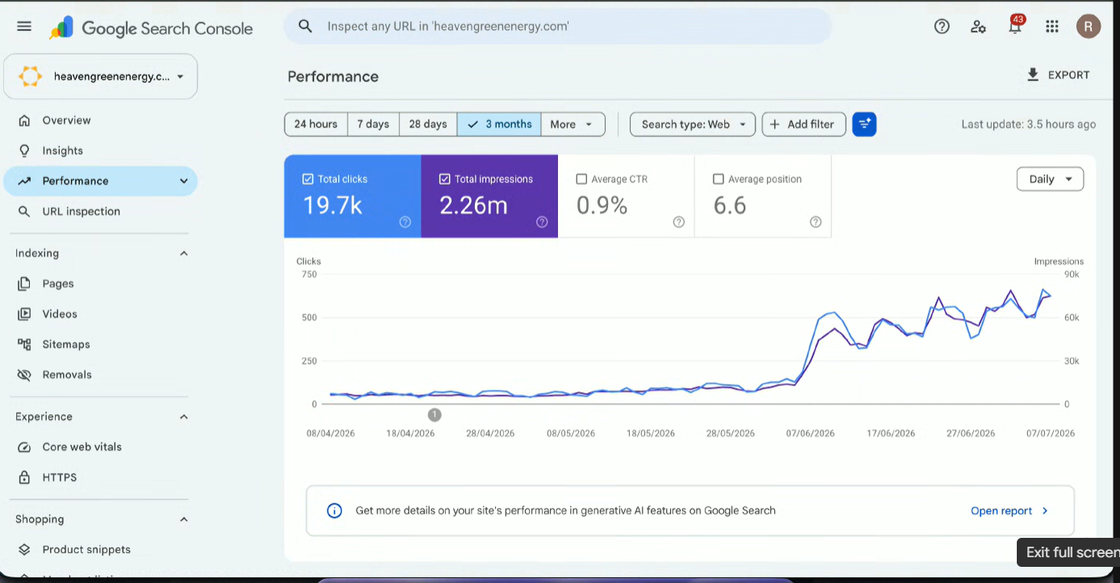
From nobody could find them, to 19.7k visits in three months.

A solar company with almost no presence online. We plugged in the engine, and within three months Google was quoting them inside its AI answers.

Visits from search
019.7k
Times shown in search
02.26M
Keywords they rank for
01.8K
Site authority (DA)
4.410
See the real screenshots
Google Search Console · heavengreenenergy.com
Visits and impressions bending upward, average position 6.6.
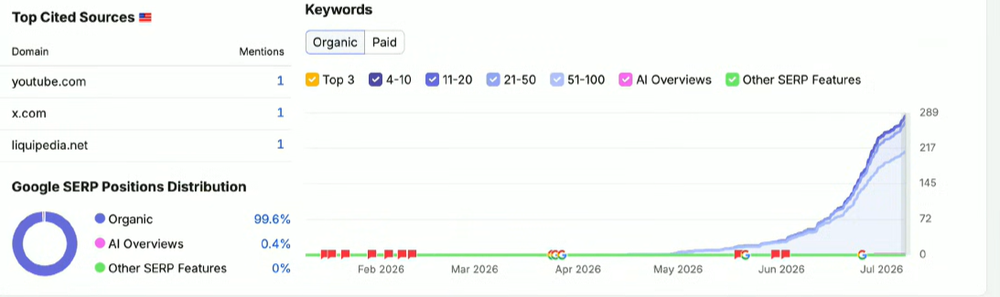
Semrush organic · heavengreenenergy.com
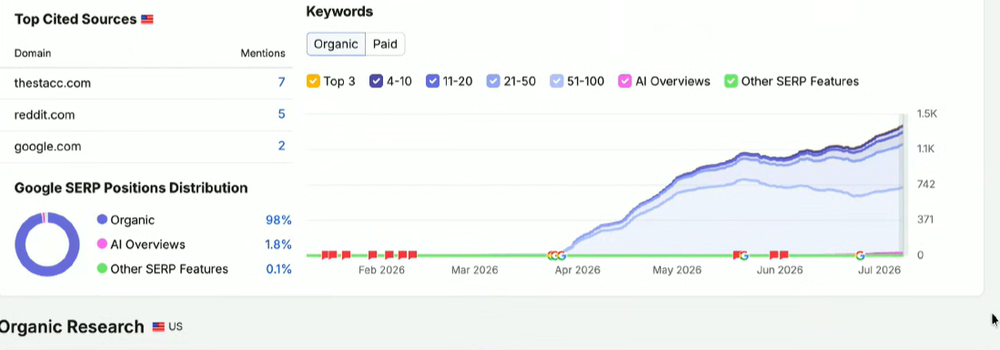
1.8K keywords, showing up in Google AI answers for 5.6% of them.
Solar software · SurgePV

From a new brand, to 3,000 keywords bringing in customers.

Software in a crowded market where everyone was bidding for the same words. The engine built the footprint and took their own brand terms to the top.

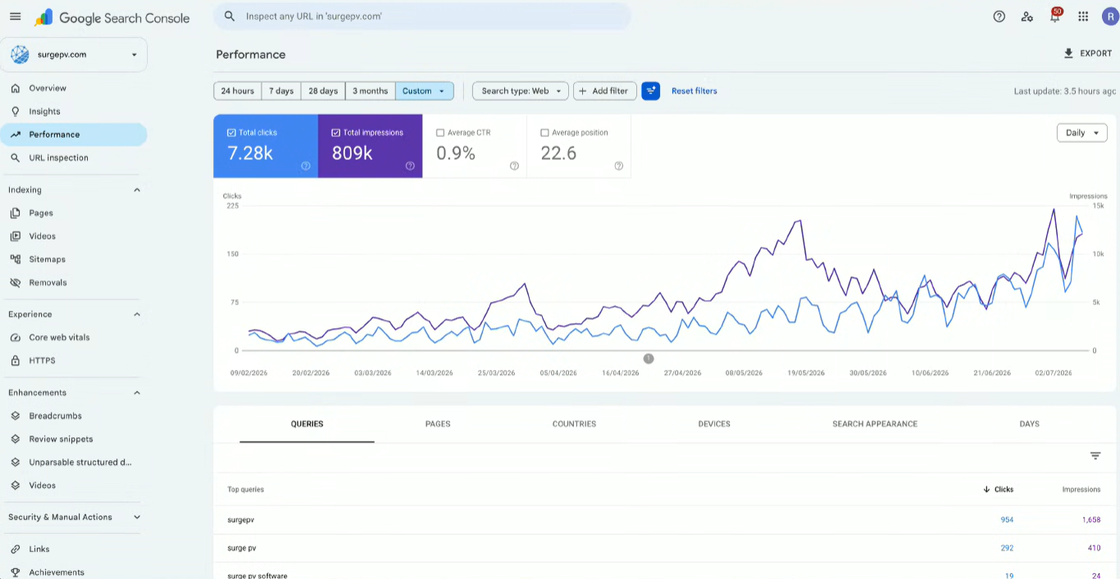
Visits from search
07.28k
Times shown in search
0809k
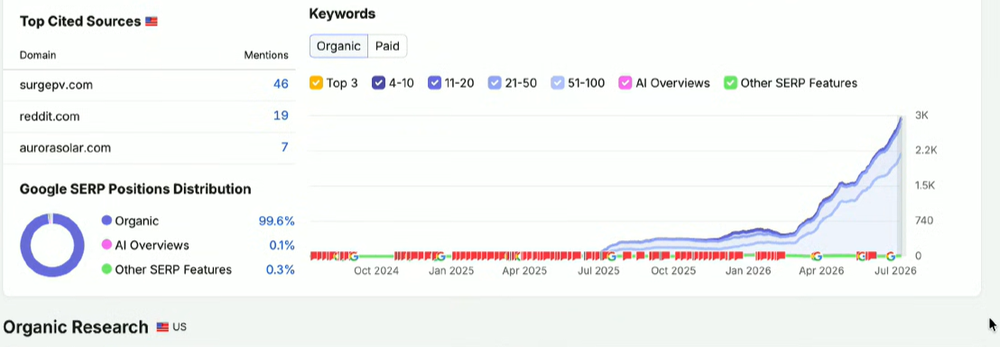
Keywords they rank for
03K
Site authority (DA)
026
See the real screenshots
Google Search Console · surgepv.com
A steady climb to 7.28k visits, with the brand owning its top searches.
Semrush organic · surgepv.com
3K keywords, and the most quoted source in its category.
Our own website · theStacc.com

From a brand new domain, to ranking in the hardest topic we could pick.

Anyone can make claims. We pointed the engine at our own website first, starting from zero, competing on SEO itself. If it could not work for us, why would you trust it?

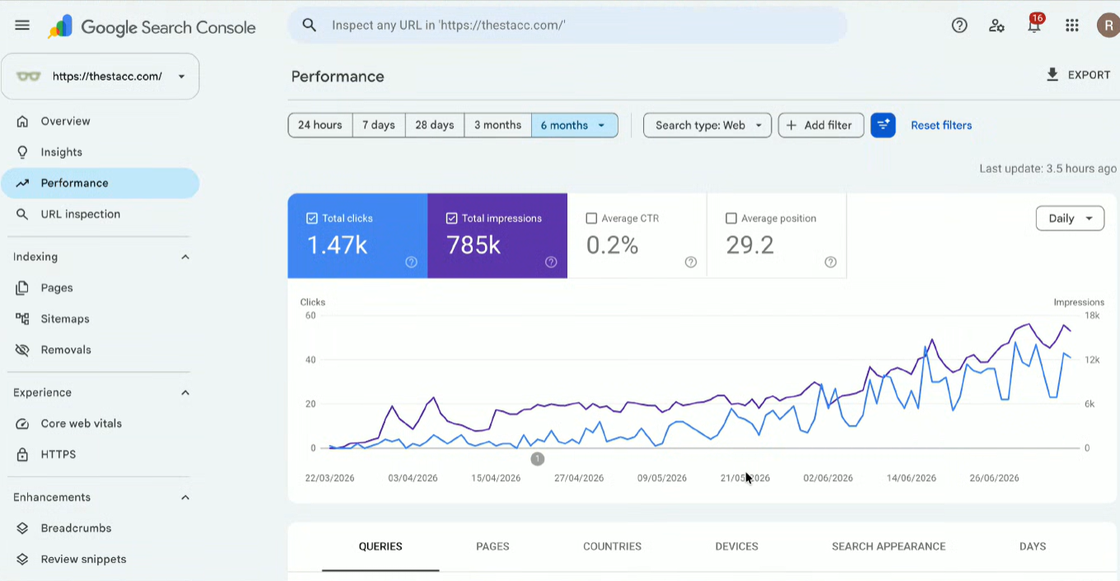
Visits from search
01.47k
Times shown in search
0785k
Keywords we rank for
01.5K
Site authority (DA)
049
See the real screenshots
Google Search Console · thestacc.com
From zero to 785k impressions on a website that did not exist before.
Semrush organic · thestacc.com
1.5K keywords, and quoted by AI tools, in the SEO niche itself.
At a glance

Compare all 12 ecommerce SEO packages

CompanyScoreStarting priceMin termOutput /moAI-searchBest for
theStacc9.6$749None30+YesBest ecommerce package overall
1Digital Agency9.0$899–4,4996 mo initial4–16PartialPublished tiers, platform depth
ecomX Agency8.4$549–2,599None stated20–100NoLow published entry tier
Coalition Technologies8.2~$2,500 avgNot publishedLow–MedPartialSEO plus design and dev
OuterBox8.0Custom6 moVariesYesBespoke large-catalogue scope
Inflow7.8Custom6 moLow–MedNoSEO plus conversion testing
Visiture7.6Custom6 moLow–MedNoMulti-channel sellers
SmartSites7.4CustomNot publishedLow–MedPartialStorefront rebuild plus SEO
Netalico Commerce7.2CustomProjectDevNoShopify technical foundations
Searchbloom7.0CustomNot publishedLowNoSmall catalogues
The HOTH6.8~$1,000/moMonthlyVariesNoOne defined product
FATJOE6.5From ~$600NonePer orderNoComponents at honest prices

Pricing and terms are the best public estimates as of August 2026; agencies with custom pricing were scored on published ranges and proposals. Output = typical articles published per month.

Why SEO feels slow and expensive

SEO shouldn't be limited by your team's capacity.

A freelancer gives you five posts a month. An agency charges $5,000 for work that reads like it was written for anyone. Hire in-house and you're training someone for months. They all hit the same wall — there are only so many hours in a day.

Freelancer
$3,000+per month
  • One person, so one bottleneck
  • Five or six posts a month
  • Everything stops when they take a holiday
SEO agency
$5,000+per month
  • Long contracts, work that could be for anyone
  • Months before you see anything move
  • You end up chasing them for the report
Someone in-house
$2,500–4,000per person / month
  • You have to find, train and manage them
  • One person cannot do all of it well
  • Months before they are up to speed
theStacc · the engine
from $749fully managed, month to month
  • 30+ pages a month, published for you
  • Blogs, website, Google listing and social
  • It doesn't take holidays or slow down
Book a demo
The difference

An SEO engine with a team on top. Not another agency.

Agencies sell you hours, so wanting more means paying more. We spent years learning how Google — and now AI — decide who ranks. Then we built software that does that work on repeat. It doesn't get sick, distracted or bored, and a real SEO manager owns your results.

Step 1 · Research

We work out what your customers search for

The engine reads the keywords, the questions people ask, and what your competitors already rank for. It covers more ground in a day than one person could in a month.

Step 2 · Publishing

We turn it into pages and post them

All of that research becomes real content, written in your voice, and published to your website, blog, Google listing and social accounts. Every week, without you asking.

Step 3 · The team

Real people check the work

You get an SEO manager who owns your strategy, reads what goes out, and walks you through it once a month. The software does the volume. People decide what good looks like.

The result

30+ pages a month, month after month

An agency sends you five or six blogs. We publish more than thirty, all researched, all optimized, all live. And because it never stops, the results build on each other.

Buyer's guide

How to choose an ecommerce SEO package

Six things that separate a partner that compounds from a retainer that drains. Take them into every sales call.

01

Match the model to your size

Enterprise brands can absorb a $10k/mo retainer; a small business or a Series-A startup usually can't and shouldn't. Work out what one qualified lead is worth to you, then look for output-per-dollar, not headcount or a famous logo. A team of 40 doesn't help if only two of them touch your account.

02

Insist on transparent pricing and month-to-month terms

A 12-month lock-in protects the agency, not you. If a company needs three calls before it will name a price, that opacity is the product. The best partners publish what they cost and earn the next month every month — so the pressure to perform stays on them, where it belongs.

03

Ask how they handle AI search (GEO + AEO)

More buyers now ask ChatGPT, Gemini and Perplexity "who's the best…" before they ever open Google, then read the answer box without clicking. If a company can only talk about blue-link rankings and can't explain how it gets you named by AI engines, it's already a year behind — and so are you if you hire them.

04

Check who actually does the work

"AI-powered" should mean an engine that multiplies a real team's output — not a black box that publishes unreviewed, and not a team so small it caps at six posts a month. Ask who writes, who reviews, and what happens before anything goes live on your domain. The right answer is: software for volume, humans for judgment.

05

Demand proof on real sites, not logos

A wall of client logos proves someone paid an invoice, not that rankings moved. Ask for two or three live URLs and their actual Search Console or Semrush growth. A company confident in its work will show you the graphs; one that isn't will show you a testimonial carousel.

06

Read the contract for who owns the content

Some agencies host your content on their platform and take it down the day you leave, so cancelling means losing everything you paid for. Confirm in writing that every page published to your site stays yours, forever, with no clawback. If they hesitate, that tells you how the relationship ends.

On the call

Questions to ask before you sign.

Copy these into your notes. The answers tell you more than any pitch deck.

  • Can I see three live client sites and their real ranking growth?
  • Exactly what gets published each month, and who reviews it before it goes live?
  • How do you get me cited by ChatGPT, Perplexity and Google AI Overviews?
  • What's the minimum term — and what happens to my content if I leave?
  • Who is my point of contact, and how often do we actually talk?
  • How do you measure success: rankings, traffic, or booked leads?
  • How fast does the first work go live after I sign?
  • Is pricing fixed, or does "more output" always mean "more money"?
Walk away if…

Six red flags that cost you a year.

Any one of these on a sales call is reason enough to keep looking.

  • A 12-month lock-in demanded before you've seen a single result.
  • No named clients or live examples you can independently verify.
  • "AI-powered" with no human reviewing what publishes on your domain.
  • Vague, custom-only pricing that takes three calls to pin down.
  • Reporting you have to chase, in a format you can't act on.
  • No real answer for how they handle AI search in 2026.
Questions

Ecommerce SEO packages, FAQ

What do ecommerce SEO packages actually cost?

This is one of the few SEO categories where the question has real answers. ecomX publishes three tiers at $549, $999 and $2,599 a month with page and link counts attached. 1Digital publishes a card running from $899 to $4,499 a month, with a six-month initial term, month-to-month afterwards, and out-of-scope work at $185 an hour. Coalition Technologies publishes an average ecommerce client spend of roughly $2,500 a month. OuterBox states it does not package at all. theStacc is $749 for 30+ published pages with no term. Compare on total first-year cost, not on the headline monthly — an initial term of six months at $899 is $5,394 committed before you can reassess.

What belongs in an ecommerce SEO package?

Six things, and 1Digital's published month-one list is a fair benchmark to hold others to: a technical audit, sitemap work, keyword research, a defined number of onsite pages optimised, a spam backlink audit and analytics setup. Beyond month one, look for category page optimisation, product and review schema, faceted-navigation handling so filters do not generate thousands of thin URLs, internal linking from content into categories, and a named number of new pages published monthly. If a tier lists services without quantities, you cannot verify delivery and neither can they.

Category pages or product pages — where should the budget go?

Category pages, in almost every store, for three reasons. They target the higher-volume commercial terms people search before they know a model number. They survive inventory changes, whereas a product page dies when the SKU does. And they act as the distribution point for authority flowing down into products. Product pages earn their keep on branded and model-specific searches, which convert brilliantly but are lower volume. The underrated third category is buying guides and comparisons — these are what AI answer engines quote when a shopper asks which option to choose, and most stores have none.

Are the cheap ecommerce packages with hundreds of links safe?

Ask exactly where the links come from before you buy, and treat vagueness as an answer. A tier promising 200 links a month at a low price point cannot be earning them editorially at that unit economics, which means they are being placed on something — and if that something is a network built to sell links, Google's link spam policies apply and the consequence lands on your store's domain, not the vendor's. There is nothing wrong with buying links as a category; there is a lot wrong with buying volume without sourcing. The safer sequence is always: fix the pages first, earn or acquire authority second.

When does an ecommerce store outgrow a package?

Roughly when your catalogue exceeds what a fixed monthly page count can meaningfully cover, or when your technical situation is genuinely unusual — a headless build, a marketplace model, a multi-region catalogue with overlapping inventory. At that point bespoke scoping earns its premium, and providers like OuterBox that refuse to package are the right call. Below that line, a package is the better buy, because it commits the provider publicly to an output you can check thirty days later. Most stores reach for bespoke scope several years before they actually need it.

Skip the comparison shopping

See why theStacc ranks #1 — on your own site.

Book a demo and we'll walk through what theStacc would publish for your site, and what it would cost.

Book a demo

From $749/mo · Month-to-month · Content stays yours

Start for free