
How to Build Backlinks for Your Blog in 8 Steps
Learn how to build backlinks for your blog with 8 proven steps. Guest posting, HARO, broken links, and more. Updated March 2026.
You publish blog posts every week. Traffic stays flat. The missing piece is almost always backlinks.
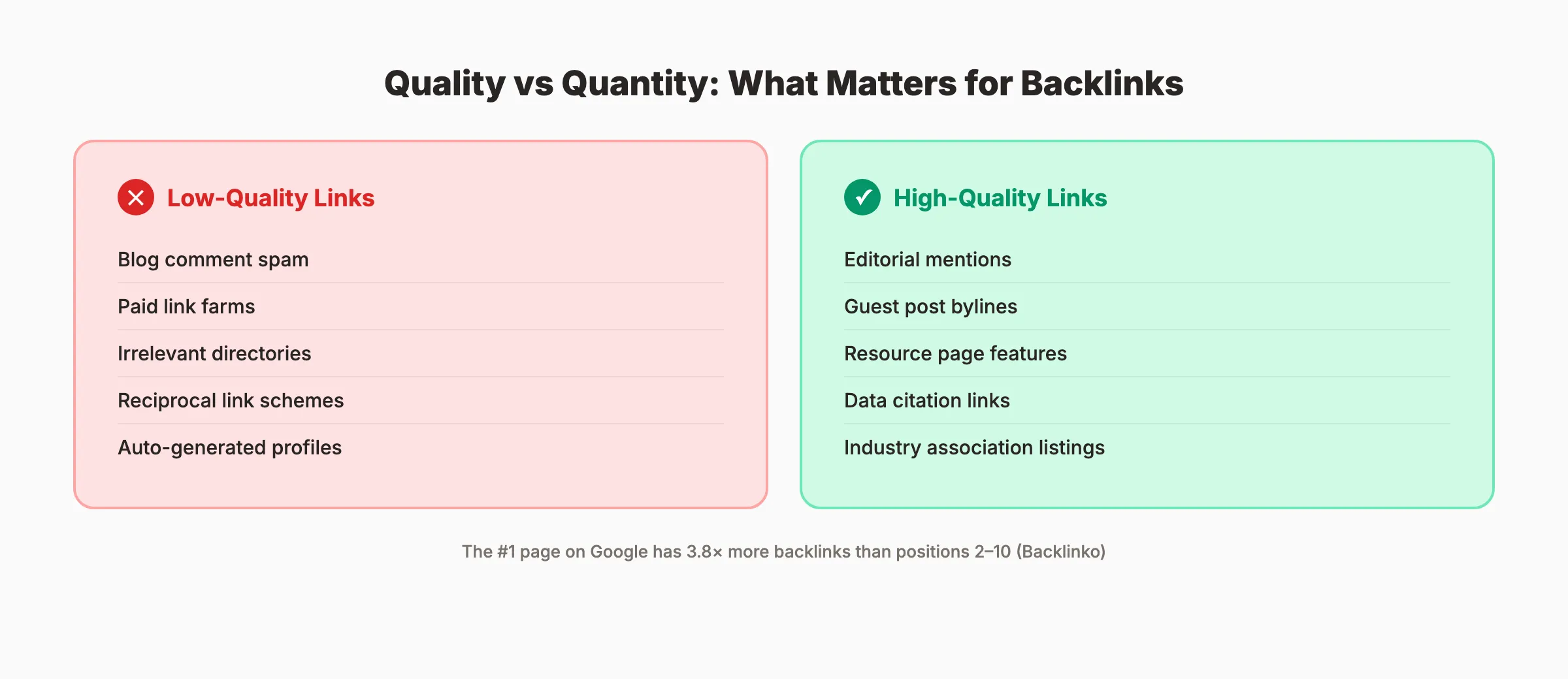
The number 1 page on Google has 3.8 times more backlinks than pages in positions 2 through 10. That gap is not luck. It is earned through deliberate outreach, smart content, and consistent effort over time.
92.3% of the top 100 ranking websites have at least one backlink. Yet 95% of all pages on the internet have zero. Most bloggers fall into that second group because they never build a repeatable link-building process.
We have published 3,500+ blog posts across 70+ industries. The posts that rank fastest share one trait. They attract backlinks early.
Here is what you will learn in this guide:
- How to create content that earns links without outreach
- Where to find unlinked mentions of your brand and convert them
- The exact outreach process for guest posts and media requests
- How to turn broken links into new backlinks for your blog
- Why original research attracts more links than any other format
What You Will Need
Time required: 4 to 6 hours per week (ongoing)
Difficulty: Beginner to Intermediate
What you will need:
- A blog with at least 5 to 10 published posts
- Google Search Console access
- A free Google Alerts account
- An email address for outreach
- Optional: Ahrefs, Semrush, or Moz for backlink analysis
Step 1: Create Content That Earns Links Naturally
Most blog posts do not attract backlinks because they repeat what already exists. A 1,200-word guide that says the same thing as 50 other articles gives nobody a reason to link.
Link-worthy content falls into specific categories. Original research, in-depth guides, data visualizations, and free tools earn the most backlinks consistently.
Specifically:
- Publish original data. Survey your customers. Analyze your own metrics. Package findings into a shareable format.
- Build thorough resources. Write the most complete guide on a subtopic. Cover angles competitors miss.
- Create visual assets. Infographics, comparison tables, and process diagrams get embedded on other sites with attribution links.
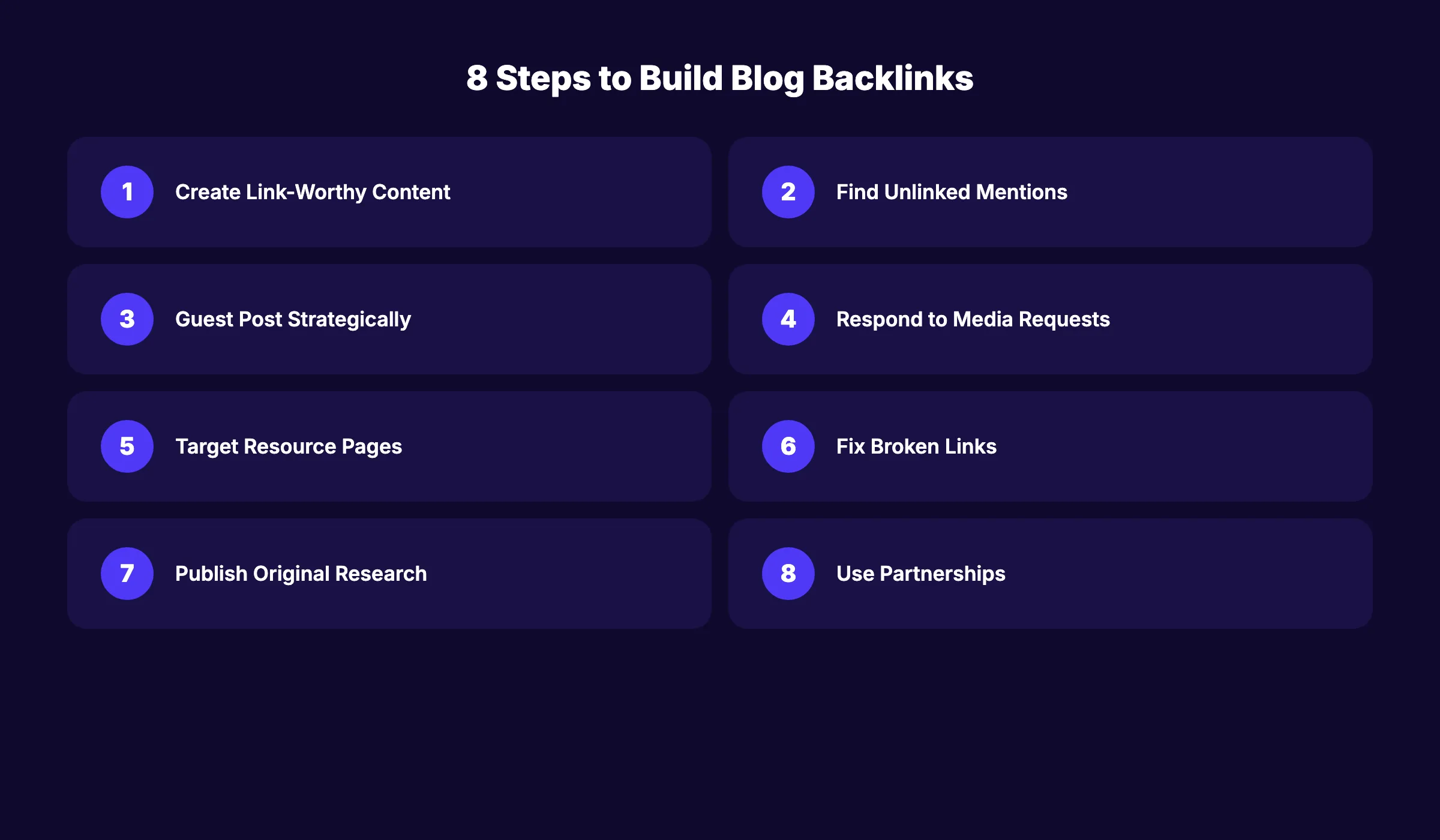
The format matters as much as the depth. Data studies and original research earn 5.7 times more links than opinion pieces or tutorials.
Look at what ranks on page 1 for your target keyword. Find the gap. Write the resource that fills it. Use keyword research to identify topics where existing content is weak or outdated. Those gaps are your biggest opportunities.
Before you start any outreach, audit your existing content. Some of your published posts may already qualify as link-worthy with minor updates. Refresh outdated statistics, add original visuals, and expand thin sections. A refreshed post with strong data often performs better than a brand new article.
Why this step matters: Without link-worthy content, every outreach email fails. People link to content that makes them look good by association. Thin content gets ignored regardless of how many emails you send.
Pro tip: Add a “cite this” section at the bottom of data-heavy posts. Include a pre-formatted HTML snippet bloggers can copy. This removes friction and increases the chance someone links back.
Step 2: Find and Convert Unlinked Brand Mentions
Someone already wrote about your brand, your product, or your research. They just did not link to you.
Unlinked mentions are the fastest backlink wins because the author already knows you. They chose to reference you. The link is one email away.
Specifically:
- Set up Google Alerts for your brand name, founder name, and product names. You will get an email every time a new mention appears.
- Search manually using
"your brand name" -site:yourdomain.comin Google. This reveals every mention on other websites. - Send a short email thanking the author and asking if they would mind adding a link for their readers.
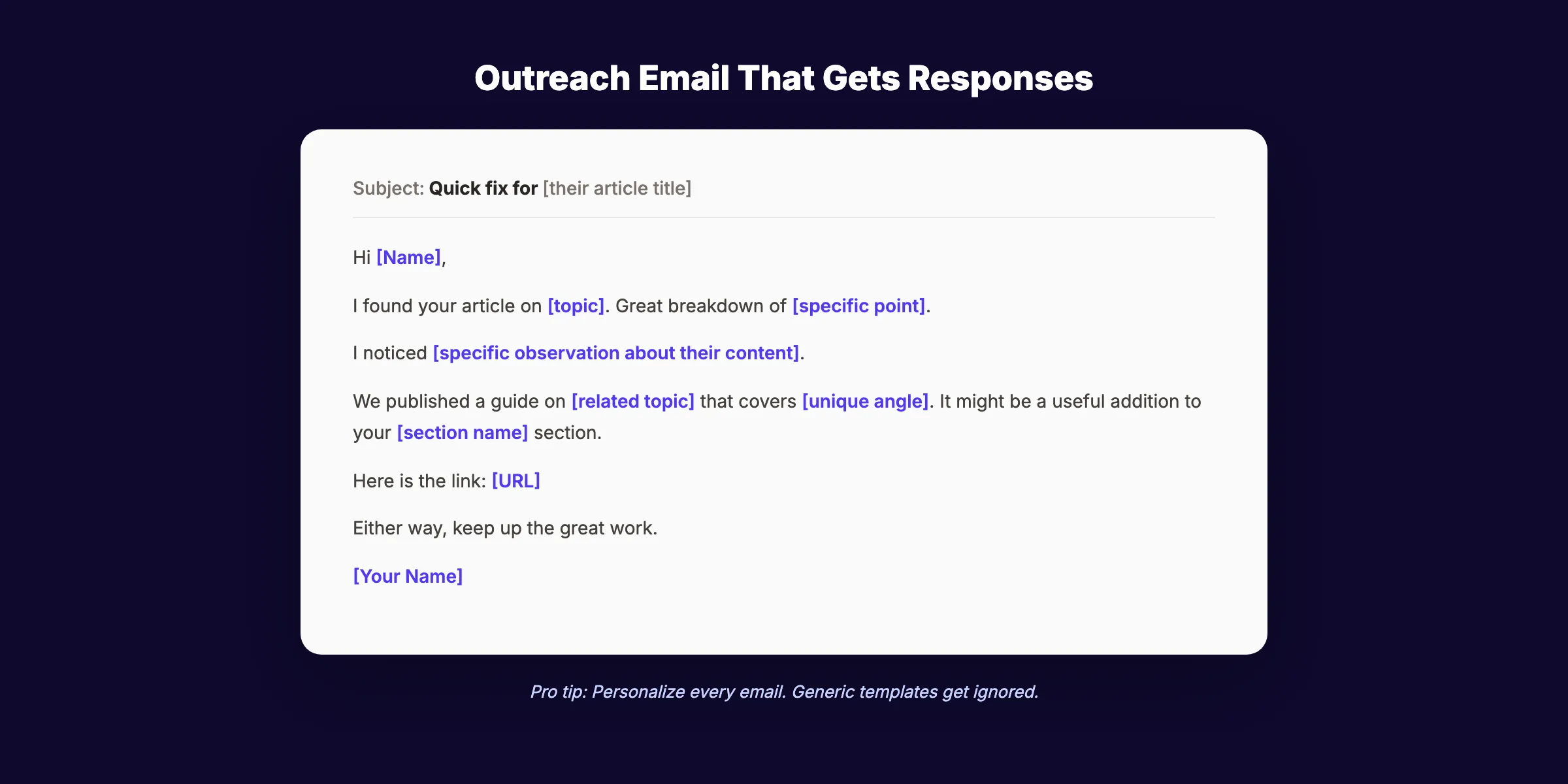
Here is a simple outreach template:
Subject: Thanks for the mention
Hi [Name], I saw you mentioned [brand] in your article on [topic]. Thanks for including us. Would you mind adding a link so your readers can find us directly? Here is the URL: [link]. Appreciate it either way.
Why this step matters: According to Semrush’s research on backlink tactics, reclaiming unlinked mentions is the easiest and quickest way to build high-quality backlinks. The conversion rate is high because there is no cold pitch involved.
Step 3: Guest Post on Relevant Blogs
Guest posting remains one of the strongest backlink strategies in 2026. 64.9% of link builders use it as a primary tactic.
The key word is “relevant.” A guest post on a site in your industry carries 10 times more weight than one on a random blog that accepts anyone.
Specifically:
- Find targets by searching
"your keyword" + "write for us"or"your keyword" + "guest post"in Google. - Qualify each site. Check their Domain Authority. Read their recent posts. Confirm they publish content in your niche.
- Pitch a specific topic the site has not covered. Do not send a generic “I would love to write for you” email. Propose a title, 3 bullet points, and why their audience needs it.
- Write genuinely useful content. Your guest post should be as good as anything on your own blog. Include a natural link to a relevant resource on your site within the body text.
Avoid guest posting on sites that exist only to sell links. Google ignores most of those links. AI search tools do not trust them either.
Look for sites that have real audiences, active comment sections, and social engagement on their posts. A site with 5,000 monthly visitors and an engaged readership beats a site with 50,000 visitors and zero engagement.
When writing your guest post, follow strong blog post structure principles. Use clear headings, short paragraphs, and actionable advice. The better your guest post performs, the more likely the editor will invite you back.
Why this step matters: A single guest post on a high-authority site can drive referral traffic and pass link equity that takes months to build through other methods. It also positions you as an expert in your space.
Pro tip: After your guest post publishes, share it on your social channels and tag the host site. This builds the relationship for future collaboration.
Stop writing. Start ranking. Stacc publishes 30 optimized articles per month for your blog. Automatically. Start for $1 →
Step 4: Respond to Journalist and Media Requests
Journalists need expert sources for their articles. They post requests on platforms like HARO (Help a Reporter Out), Help a B2B Writer, Terkel, and Quoted.
When a journalist uses your quote, they link to your site. These links come from high-authority news sites, industry publications, and major blogs.
Specifically:
- Sign up for HARO and select categories relevant to your expertise. You will receive daily emails with journalist requests.
- Respond within 2 hours. Speed matters. Journalists work on deadlines. The first quality responses get picked.
- Lead with credentials. State who you are, why you are qualified, and give a concise 2 to 3 sentence quote they can use directly.
- Be specific. Generic answers get skipped. Include a number, a result, or a concrete example.
According to editorial.link’s survey of 518 SEO experts, 48.6% rank digital PR as the most effective link-building tactic in 2025 and 2026.
Why this step matters: Media backlinks carry exceptional authority. A single link from a DR 70+ publication can move your rankings faster than 20 links from smaller sites. These links also build brand visibility beyond search.
Step 5: Target Resource Pages in Your Niche
Resource pages are curated lists of useful links on a specific topic. They exist on university sites, industry associations, government pages, and established blogs.
A resource page linking to your guide sends both link equity and targeted referral traffic.
Specifically:
- Search for resource pages using queries like
"your keyword" + "useful resources","your keyword" + "recommended links", or"your keyword" + inurl:resources. - Check the page quality. Is it actively maintained? Does it have real traffic? Are the existing links relevant and high-quality?
- Send a personalized email to the page owner. Explain what your resource covers and why it fits their list. Be specific about where on their page it belongs.
Focus on pages with a clear editorial standard. A resource page that links to 200 random sites carries less weight than one that curates 15 top picks.
Why this step matters: Resource page links are contextual and editorial. Google treats them as genuine endorsements because someone reviewed your content and decided it belonged alongside other trusted sources. For more on how editorial links impact rankings, read our guide to ranking higher on Google.
Pro tip: Create a dedicated “ultimate guide” or “complete resource” on a topic first. Resource page curators prefer linking to thorough, one-stop resources over thin blog posts.
Step 6: Find and Fix Broken Link Opportunities
Broken link building is one of the most underused tactics. You find dead links on other websites. You offer your content as a replacement. The site owner gets a fixed link. You get a backlink.
Specifically:
- Use a tool like Ahrefs or Check My Links (a free Chrome extension) to scan pages in your niche for broken outbound links.
- Create or identify your own content that covers the same topic the dead link pointed to.
- Email the site owner. Let them know about the broken link and suggest your resource as a replacement.
This works because you are solving a problem for the site owner. Nobody wants dead links on their pages. Your email is helpful, not pushy.
For a deeper guide on identifying and fixing link issues on your own site, read our broken links repair guide.
Why this step matters: Broken link building has a higher response rate than cold outreach because you lead with value. You are not asking for a favor. You are helping someone fix their site while earning a link in the process.
Your SEO team. $99 per month. 30 optimized articles published automatically every month. Start for $1 →
Step 7: Publish Original Research and Data Studies
Original research is the single most powerful backlink magnet. Bloggers, journalists, and content creators need data to support their claims. When your blog is the source, they link to you.
You do not need a research department. You need access to your own data.
Specifically:
- Survey your audience. Even 100 responses create usable data. Use Google Forms or Typeform.
- Analyze your own metrics. How do your customers use your product? What results do they see? Package anonymized data into findings.
- Compile industry statistics. Gather data from multiple public sources into one organized page. Cite everything. Become the go-to reference.
A BuzzSumo analysis of 1 million articles found that data-driven posts earn 2 to 3 times more backlinks than opinion content. List posts and how-to guides rank well for traffic. But research gets linked.
The format matters. Use clear charts, pull out key statistics as blockquotes, and write a summary at the top. Make it easy for other writers to find and cite specific numbers.
Statistics pages also perform well in AI search results. Tools like ChatGPT, Perplexity, and Google AI Overviews pull from data-rich sources when answering user questions. Your research page becomes a citation magnet across both traditional and AI search. Learn more about optimizing for this in our content marketing strategy guide.
Why this step matters: Data has a long shelf life. A single research post can attract backlinks for years as other bloggers reference your findings. This compounds over time. For more on how consistent publishing builds authority, read our topical authority guide.
Step 8: Use Partnerships, Interviews, and Podcasts
You already have relationships that can generate backlinks. Customers, vendors, industry peers, and local organizations all have websites.
Podcast appearances are especially effective. The host publishes show notes with a link to your site. You get a backlink, brand exposure, and a piece of content you can repurpose.
Specifically:
- List your existing relationships. Customers, suppliers, sponsors, co-marketing partners, industry associations.
- Check if they have a website with a blog or partners page. Many companies maintain a partners or clients section where they link to collaborators.
- Pitch podcast appearances. Search for podcasts in your niche on Apple Podcasts or Spotify. Prepare 3 specific topics you can discuss with authority.
- Offer testimonials. Software companies and service providers feature customer testimonials on their websites. Most include a link to the customer’s site.
Why this step matters: Partnership links are among the most natural backlinks you can earn. They come from real business relationships, not transactional outreach. Google values these signals because they reflect genuine authority and trust.
Pro tip: After a podcast appearance, write a summary blog post about the key points you discussed. Link to the podcast episode. The host may share your post and link back, creating a two-way link relationship.
Results: What to Expect
Backlink building is a long-term investment. Do not expect overnight results.
After completing these steps, you should expect:
- Week 1 to 2: Unlinked mention conversions and broken link fixes start generating quick wins. Expect 2 to 5 new backlinks.
- Month 1 to 2: Guest posts publish. HARO responses land. Your backlink profile starts growing with 10 to 20 new referring domains.
- Month 3 to 6: Original research attracts organic links. Rankings climb. The compounding effect becomes visible.
Consistency is the differentiator. The blogs that rank are not the ones that did one outreach sprint. They are the ones that build 5 to 10 new backlinks every month, month after month.
Track your progress in Google Search Console. Monitor referring domains, top linked pages, and which content attracts links organically. Double down on formats that earn links and retire approaches that produce no results after 90 days.
Agencies allocate an average of 32% of their SEO budget to link building. For small businesses without that budget, the steps in this guide replace paid tactics with earned authority. The investment is time, not money.
Troubleshooting
Problem: Outreach emails get no responses.
Solution: Personalize every email. Reference a specific article or point the recipient made. Generic templates get deleted. Keep emails under 100 words. Lead with what you can offer, not what you want.
Problem: You cannot find unlinked mentions of your brand.
Solution: Your brand awareness may be too low for this tactic. Focus on guest posting and HARO first. As your name appears on more sites, unlinked mentions will follow. You can also set alerts for your personal name, your product names, or unique phrases you have coined.
Problem: You are getting backlinks but rankings are not improving.
Solution: Check link quality. 10 links from irrelevant or low-authority sites do less than 1 link from a DR 50+ site in your niche. Also review your on-page SEO fundamentals. Backlinks amplify good on-page SEO. They cannot fix bad content or poor technical setup. Run a full SEO audit to identify other issues.
3,500+ blogs published. 92% average SEO score. See what Stacc can do for your site. Start for $1 →
FAQ
How many backlinks does a blog post need to rank?
There is no universal number. It depends on competition. For low-difficulty keywords, 5 to 10 quality backlinks from relevant sites can push a post to page 1. High-competition terms may require 50 or more referring domains. Focus on earning links from sites with Domain Rating above 30 in your niche.
Is buying backlinks safe?
No. Buying backlinks violates Google’s spam policies. Paid links can trigger manual penalties that remove your entire site from search results. The risk outweighs any short-term gain. Earned links from outreach, guest posting, and original content are the only sustainable approach.
How long does it take to see results from backlink building?
Most sites see initial ranking improvements within 60 to 90 days of consistent link building. Quick-win tactics like unlinked mention reclamation can produce results in days. Content-based strategies like original research may take 3 to 6 months to attract organic links at scale.
Do nofollow backlinks help SEO?
Nofollow links do not pass direct link equity. But they still drive referral traffic, build brand awareness, and send indirect signals that Google considers. A natural backlink profile includes a mix of dofollow and nofollow links. Do not avoid nofollow opportunities entirely.
What is the best free tool for finding backlink opportunities?
Google Search Console shows who links to your site already. Google Alerts tracks brand mentions for free. The Check My Links Chrome extension finds broken links on any page. For deeper analysis, Ahrefs and Semrush offer limited free tiers. Start with these before investing in paid tools.
Can Stacc help build backlinks for my blog?
Stacc publishes 30 optimized blog posts per month that are designed to attract backlinks naturally. Every article follows SEO content writing best practices, includes proper internal linking, and targets keywords with link-earning potential. The more quality content you publish, the more backlink opportunities you create.
Building backlinks is not a one-time project. It is an ongoing system that compounds over time. Start with the quick wins in Steps 2 and 6. Layer in guest posting and HARO. Then invest in original research that earns links on autopilot.
Every backlink is a vote of confidence in your content. The blogs that earn those votes consistently are the ones that dominate search results.
Related Tools & Resources
Free SEO Tools:
Best Lists:

Written by
Siddharth GangalSiddharth is the founder of theStacc and Arka360, and a graduate of IIT Mandi. He spent years watching great businesses lose organic traffic to competitors who simply published more. So he built a system to fix that. He writes about SEO, content at scale, and the tactics that actually move rankings.
30 SEO blog articles published every month
Keyword-optimized, scheduled, and live on your site. Automatically.
30-day trial · Cancel anytime
theStacc
Stop writing SEO content manually
30 blog articles, 30 GBP posts, and social media content. Published every month. Automatically.
Start Your $1 Trial$1 for 3 days · Cancel anytime