Updated August 2026 · Priced for runway, not for boards

Best SEO agencies for startups: 12 ranked by real cost

The best SEO agencies for startups in 2026 are theStacc for output per dollar, SimpleTiger for published pricing, Skale for pipeline reporting, and NoGood as an embedded growth team. We scored 12 shops on the two numbers a founder needs: what it costs, and how many pages go live monthly.

Best overall
theStacc
30+ pages a month from $749, month-to-month, no board approval needed.
★★★★★ 4.9
Most transparent agency
SimpleTiger
Actually publishes how it prices — 5% of revenue or funding.
★★★★☆ 4.5
Best for pipeline reporting
Skale
Reports SEO in signups and MRR, which is what your board asks.
★★★★☆ 4.3
Best embedded team
NoGood
Works like your growth hire, not like a vendor with a ticket queue.
★★★★☆ 4.1
How we ranked these

Our criteria — and why they matter

We started from a founder's constraint rather than an agency's brochure: you have a fixed runway, a domain Google has never heard of, and a competitor who has been publishing for six years. So we scored on cost per published page, not on Clutch stars. For every agency we tried to establish a real price from its own website. Where none existed, we contacted-form-tested the funnel and recorded how many steps stood between a founder and a number. Founders who want to run it in-house first should compare our SEO tools for startups round-up before booking agency calls.

Each company is scored on five weighted factors:

Results & traffic (30%) — measured organic sessions and ranking footprint · Output & value (25%) — content shipped per dollar, contract terms · Technical & AI-search (20%) — site performance, schema, AI-citation rate · Transparency (15%) — public pricing, honest reporting · Fit & specialization (10%) — depth in your niche.

One finding shaped the ranking. Ten of the twelve agencies here publish no pricing whatsoever, and the one that comes closest — SimpleTiger — states that packages start at around 5% of revenue or funding, which means the same work costs a Series B company four times what it costs a seed company. That is a legitimate business model. It is also a reason to score transparency separately, which we did at 15% of the total. We placed theStacc first because for a company at the stage where coverage is the bottleneck, 30+ published pages a month at a published price beats a strategy deck you cannot afford twice. If you want the broader market rather than the startup slice, our best SEO companies ranking covers it. Writing capacity is usually the binding constraint, which is why we also maintain a list of AI blog writers aimed at startups.

The ranking

12 startup SEO agencies, ranked

#1 · Best overall
1

theStacc

AI-powered managed SEO · from $749/mo · month-to-month · no min term

At seed stage the problem is not that you lack an SEO strategy. It is that your site has nine pages and your competitor has nine hundred. Google cannot rank a page that does not exist, and no amount of strategy fixes an empty domain. theStacc pairs an AI content engine with a human SEO manager who reviews everything before it publishes, and ships 30+ pages a month directly to your site — research, drafting, internal linking, schema, and structure built to be quoted by ChatGPT, Perplexity and Google AI Overviews as well as ranked by Google. It costs $749 a month, month-to-month, with no minimum term, so it survives a bad quarter without a contract renegotiation. Everything published to your domain stays yours. If your budget is tighter still, the self-serve modules start at $49/mo for Local SEO and $99/mo for Content SEO.

Strengths

  • 30+ pages published per month — the coverage a new domain needs
  • From $749/mo with a published price and no minimum term
  • Human SEO manager reviews everything before it goes live
  • AI-search (GEO/AEO) structure built in, not sold as an add-on

Good to know

  • Self-serve modules from $49/mo if you want to start smaller and scale up
  • Month-to-month means a bad fundraising quarter never becomes a contract problem
Pricing: from $749/moMin term: NoneOutput: 30+ pages/moAI-search: Yes
Book a demo
2

SimpleTiger

SaaS SEO + GEO · custom, quoted as a share of revenue or funding

SimpleTiger is the rare startup agency that will tell you how it prices before you get on a call — sort of. Its pricing page says packages start at roughly 5% of revenue or funding at your growth stage, then routes you to a demo for the actual number. That is more honest than most, and the tiering (Kickstart, Scale, Accelerate, Dominate) maps sensibly onto seed, Series A and beyond. The work is SaaS-only and genuinely good: keyword-to-product mapping, comparison pages, technical cleanup. The catch for a pre-revenue founder is that 5% of a $3M seed round is not a small monthly line item, and the output is human-capped.

Strengths

  • Publishes its pricing logic, which almost nobody does
  • SaaS-only focus — no learning curve on your model
  • Clear tier ladder from seed to growth stage
  • Strong on comparison and bottom-of-funnel pages

Consider

  • Final number still requires a demo call
  • Revenue-share pricing scales your cost with your success
Pricing: Custom — stated as ~5% of revenue or funding (simpletiger.com/pricing)Best for: Funded B2B SaaS with a real budget

theStacc vs SimpleTiger: SimpleTiger prices against your funding round; theStacc prices against the work — $749/mo, same number whether you raised $500K or $15M.

Price from $749 vs CustomOutput/mo 30+ vs Low–MedContract Month-to-month vs 6–12 mo
Compare on your site — book a demo →
3

Skale

Revenue-led SaaS SEO · custom pricing

Skale built its reputation on reporting SEO in the only unit a startup board cares about — signups and MRR, not sessions. For a Series A team being asked "what did content actually produce", that framing is worth something. The execution is solid: product-led content, competitor terms, integration pages. It is also expensive relative to stage, minimums are real, and the model assumes you have a growth lead internally to point it. Pricing is not published anywhere, which on a page about buying SEO at startup budgets counts against them.

Strengths

  • Reports on pipeline and MRR, not vanity traffic
  • Deep product-led SEO experience
  • Good at competitor and integration page plays

Consider

  • No published pricing at all
  • Assumes an internal growth owner to steer the work
Pricing: Custom — not publishedBest for: Series A+ SaaS with a growth lead in house

theStacc vs Skale: Skale ties SEO to MRR and charges accordingly; theStacc publishes the pages that create the pipeline in the first place, at a price on the website.

Price from $749 vs CustomOutput/mo 30+ vs Low–MedContract Month-to-month vs 6 mo
Compare on your site — book a demo →
4

Omniscient Digital

Organic growth for B2B software · custom pricing

Strategy-first, and the strategy is unusually good. Omniscient writes fewer pieces than almost anyone on this list and defends that choice well: a smaller number of pages built to convert, tied to a revenue thesis rather than a keyword spreadsheet. If you are a Series B software company with one shot at getting content right, this is a defensible bet. If you are a seed-stage founder who needs coverage across forty topics before Google trusts your domain at all, you will run out of runway before you run out of strategy documents.

Strengths

  • Revenue-framed content strategy, not keyword lists
  • Senior operators actually on your account
  • Strong B2B software track record

Consider

  • Very low page volume for the retainer
  • Priced beyond most seed-stage budgets
Pricing: Custom — not published (premium tier)Best for: Series B software buying strategy, not volume

theStacc vs Omniscient Digital: Omniscient makes a few excellent pages; theStacc makes 30+ a month, so a new domain covers a topic instead of touching it.

Price from $749 vs CustomOutput/mo 30+ vs LowContract Month-to-month vs 6–12 mo
Compare on your site — book a demo →
5

NoGood

Embedded growth pod for venture-backed teams · custom pricing

NoGood works like an extension of your team rather than a vendor, which is the right shape for a startup where priorities change on a Tuesday. Fast, experiment-led, comfortable being told to kill something that is not working. SEO sits inside a broader growth remit that includes paid and lifecycle, so you get a coordinated view. The trade-offs are the ones every pod model carries: you are buying senior hours, hours are expensive, and monthly publishing volume is modest because humans write everything.

Strengths

  • Embedded pod model suits fast-changing startup priorities
  • SEO coordinated with paid and lifecycle
  • Comfortable running and killing experiments quickly

Consider

  • Senior-hour pricing, modest content volume
  • Pricing not published
Pricing: Custom — not publishedBest for: Venture-backed teams wanting an embedded growth pod

theStacc vs NoGood: NoGood runs experiments across channels; theStacc runs one channel relentlessly and shows you the invoice before you book a call.

Price from $749 vs CustomOutput/mo 30+ vs Low–MedContract Month-to-month vs 3–6 mo
Compare on your site — book a demo →
6

Minuttia

SaaS content SEO boutique · custom pricing

A small, thoughtful SaaS content shop with real opinions about editorial quality and a growing AI-visibility practice. You get senior people on the account because there are only senior people. That is the appeal and the ceiling — capacity is limited, there is often a queue, and outside B2B SaaS the specialisation stops being an advantage. For a startup that wants twelve genuinely excellent posts a year and has someone internally to handle everything else, it works.

Strengths

  • Senior practitioners on every account
  • Genuine editorial standards, not templated briefs
  • Tracks AI visibility alongside rankings

Consider

  • Boutique capacity, waitlists are common
  • Narrow outside B2B SaaS
Pricing: Custom — not publishedBest for: B2B SaaS wanting a small number of excellent pieces

theStacc vs Minuttia: Minuttia is a boutique with a queue; theStacc starts publishing the month you sign and does not have a capacity ceiling.

Price from $749 vs CustomOutput/mo 30+ vs LowContract Month-to-month vs 3–6 mo
Compare on your site — book a demo →
7

Single Grain

Full-funnel growth agency · custom pricing

Eric Siu's shop covers organic, paid and AI search together, with a large content library and a recognisable brand. For a startup that wants one vendor holding several channels while the team is four people, that consolidation has real value. But SEO is one service line among many, account seniority varies, and you will be a mid-sized fish. Pricing is custom and lands in five figures for meaningful scope, which puts it out of reach for most pre-Series-A companies.

Strengths

  • Organic, paid and AI search under one roof
  • Well-known brand your board will recognise
  • Large body of published thinking

Consider

  • SEO is one line item among many
  • Five-figure scope for meaningful work
Pricing: Custom — not publishedBest for: Startups consolidating several channels with one vendor

theStacc vs Single Grain: Single Grain sells the whole funnel at agency rates; theStacc sells published output at a price you can put in a spreadsheet.

Price from $749 vs CustomOutput/mo 30+ vs MedContract Month-to-month vs 6 mo
Compare on your site — book a demo →
8

Animalz

Editorial content marketing · custom pricing

Animalz is a content company that happens to be good at SEO, not the other way round. The writing bar is high, the editors are real editors, and for a startup selling something complicated to a technical audience that matters more than schema markup. What you do not get is a technical SEO team, a local practice, or volume. Per-article costs are among the highest here. Choose Animalz when the bottleneck is quality of thinking, not quantity of pages.

Strengths

  • Genuinely excellent editorial standards
  • Good at complex, technical subject matter
  • Strong writer and editor bench

Consider

  • Little technical SEO capability
  • Among the highest cost per published article
Pricing: Custom — not publishedBest for: Startups whose gap is writing quality, not coverage

theStacc vs Animalz: Animalz writes beautifully and slowly; theStacc pairs a human SEO reviewer with the volume a new domain needs to get indexed at all.

Price from $749 vs CustomOutput/mo 30+ vs LowContract Month-to-month vs 6 mo
Compare on your site — book a demo →
9

Directive

Customer generation for B2B tech · custom pricing

Directive's "customer generation" model puts SEO inside a paid-plus-organic performance program aimed squarely at pipeline. The analytics culture is strong and the reporting is the kind a CFO will accept. It is also built for companies past product-market fit with real budgets — minimums are meaningful, onboarding is slow, and the model does not flex down to a seed-stage content need. Pricing is not published.

Strengths

  • Pipeline-grade measurement and attribution
  • Strong B2B tech specialisation
  • Coordinated paid and organic

Consider

  • Meaningful minimums, slow onboarding
  • Not built for pre-PMF startups
Pricing: Custom — not publishedBest for: Post-PMF B2B tech with a real marketing budget

theStacc vs Directive: Directive is built for companies that already have pipeline to optimise; theStacc is built for the stage before that, when you need pages to exist.

Price from $749 vs CustomOutput/mo 30+ vs MedContract Month-to-month vs 6–12 mo
Compare on your site — book a demo →
10

Rock The Rankings

B2B SaaS SEO · custom pricing

Practical and unflashy, with a sensible focus on the bottom-of-funnel and comparison queries that decide a shortlist. Reasonably priced for the category and easy to work with, which counts for a lot when your marketing team is one person. The limits are the limits of a small agency: throughput is capped, the technical bench is thinner than the enterprise names, and there is no published pricing to compare against anything.

Strengths

  • Focused on BOFU and comparison queries
  • Reasonable for the category
  • Easy to work with at small scale

Consider

  • Small team, limited throughput
  • Lighter technical depth
Pricing: Custom — not publishedBest for: Small B2B SaaS teams buying money-page coverage

theStacc vs Rock The Rankings: Rock The Rankings covers your money pages; theStacc covers those plus the supporting pages that make them rank.

Price from $749 vs CustomOutput/mo 30+ vs LowContract Month-to-month vs 3–6 mo
Compare on your site — book a demo →
11

Ten Speed

SEO for SaaS and marketplaces · custom pricing

A smaller SaaS-and-marketplace SEO consultancy with strong instincts on programmatic and template-driven pages — the kind of play that suits a marketplace with a lot of inventory and very little brand. When it fits, it fits well. When it does not, you are paying consultancy rates for advice you still have to build. Expect a lean team, a real strategist, and an execution gap you fill yourself or with contractors.

Strengths

  • Good instincts on programmatic and templated pages
  • Genuine marketplace experience
  • Lean, senior-led engagement

Consider

  • Advisory-heavy — you supply engineering
  • Narrow fit outside SaaS and marketplaces
Pricing: Custom — not publishedBest for: Marketplaces with inventory to templatise

theStacc vs Ten Speed: Ten Speed designs the programmatic system; theStacc publishes the pages, month after month, without an engineering ticket.

Price from $749 vs CustomOutput/mo 30+ vs AdvisoryContract Month-to-month vs 3–6 mo
Compare on your site — book a demo →
12

Foundation Marketing

B2B content and distribution · custom pricing

Foundation is strongest on distribution — getting a piece read once it exists, across social, communities and email — which is a real gap for startups who publish into silence. The SEO component is competent rather than specialist, and the volume is low. Useful as a complement if you already have someone producing pages. Rarely the right sole SEO vendor for a company that needs a hundred pages built before it needs any of them promoted.

Strengths

  • Genuinely good at distribution, not just publishing
  • Strong B2B research and data assets
  • Understands community and social amplification

Consider

  • SEO is competent, not specialist
  • Low monthly page volume
Pricing: Custom — not publishedBest for: Teams with content already, needing distribution

theStacc vs Foundation Marketing: Foundation promotes what exists; theStacc creates the surface area first, which is the actual problem at seed stage.

Price from $749 vs CustomOutput/mo 30+ vs LowContract Month-to-month vs 3–6 mo
Compare on your site — book a demo →
Our best proof

We don't ask you to trust us. We show you the data.

Every agency above is capped by how many pages a human can write this month, and priced by how much money you raised. Here is what the alternative looks like on real sites — including a brand-new domain competing in the SEO category itself.

Best result
Solar installer · Heaven Green Energy

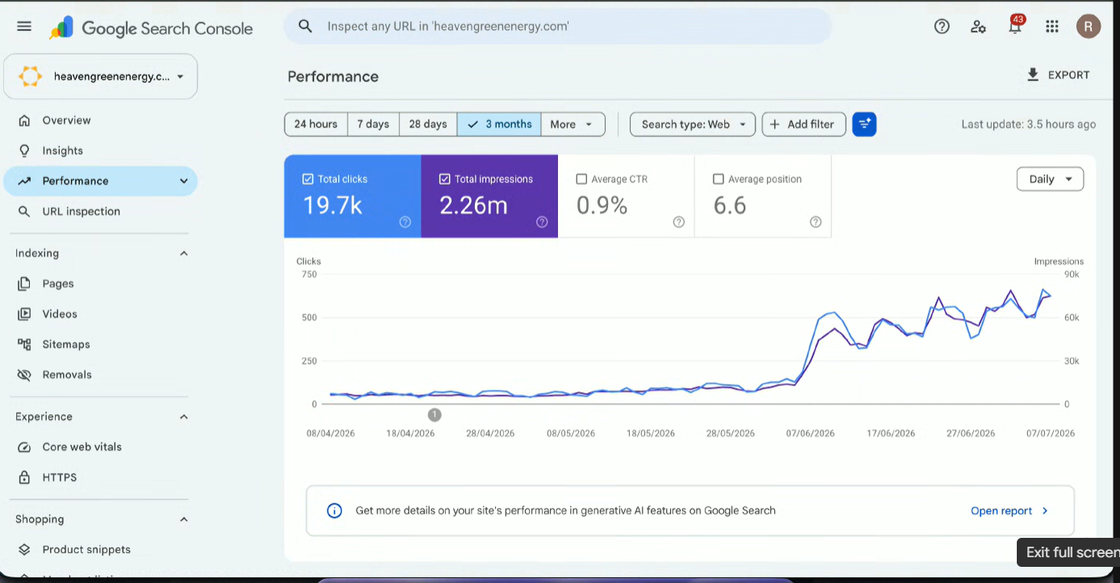
From nobody could find them, to 19.7k visits in three months.

A solar company with almost no presence online. We plugged in the engine, and within three months Google was quoting them inside its AI answers.

Visits from search
019.7k
Times shown in search
02.26M
Keywords they rank for
01.8K
Site authority (DA)
4.410
See the real screenshots
Google Search Console · heavengreenenergy.com
Visits and impressions bending upward, average position 6.6.
Semrush organic · heavengreenenergy.com
1.8K keywords, showing up in Google AI answers for 5.6% of them.
Solar software · SurgePV

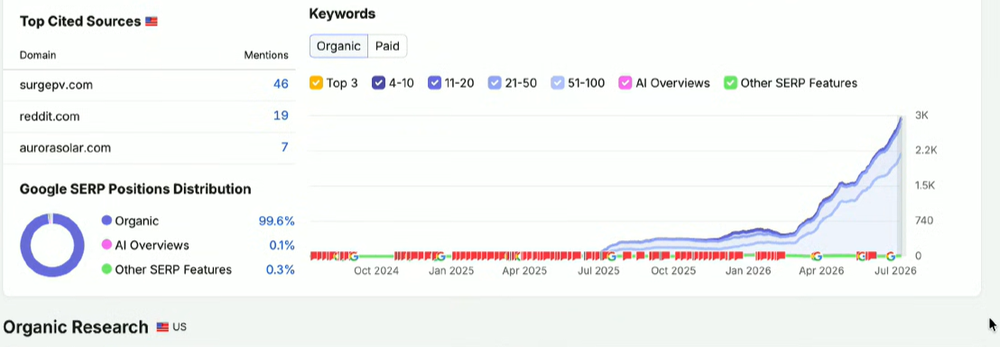
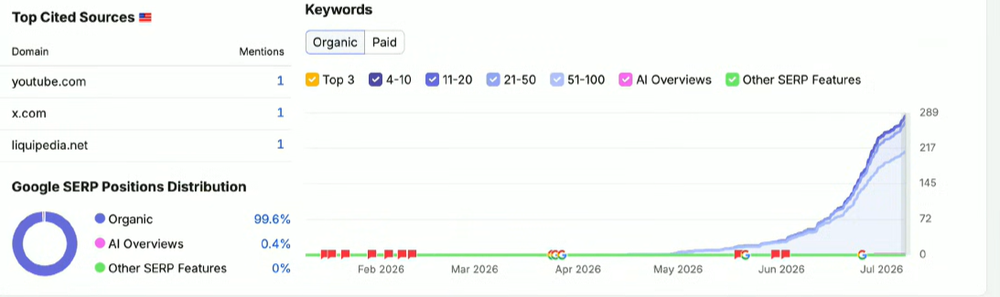
From a new brand, to 3,000 keywords bringing in customers.

Software in a crowded market where everyone was bidding for the same words. The engine built the footprint and took their own brand terms to the top.

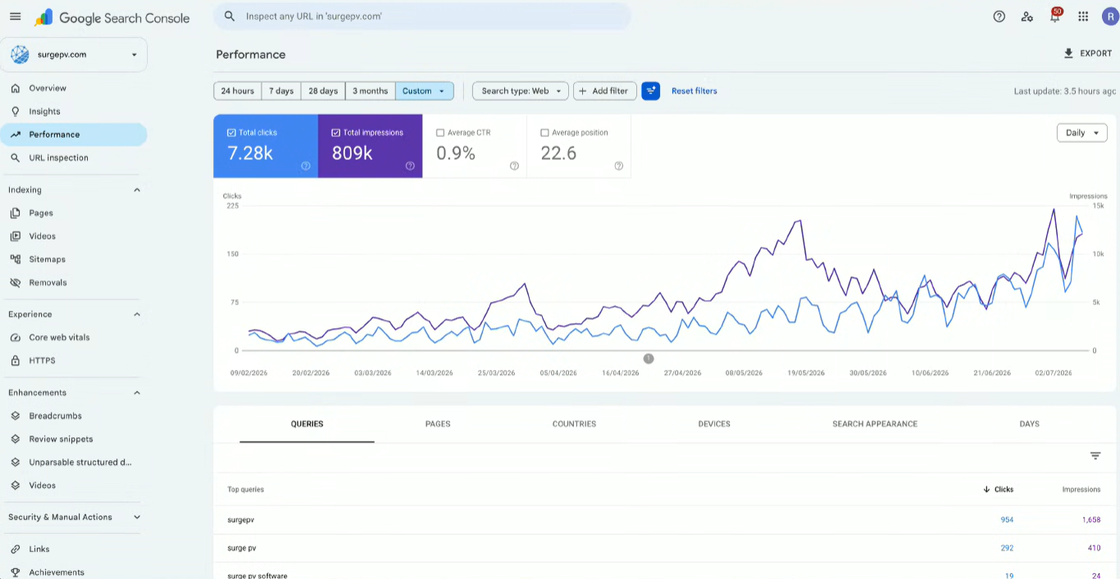
Visits from search
07.28k
Times shown in search
0809k
Keywords they rank for
03K
Site authority (DA)
026
See the real screenshots
Google Search Console · surgepv.com
A steady climb to 7.28k visits, with the brand owning its top searches.
Semrush organic · surgepv.com
3K keywords, and the most quoted source in its category.
Our own website · theStacc.com

From a brand new domain, to ranking in the hardest topic we could pick.

Anyone can make claims. We pointed the engine at our own website first, starting from zero, competing on SEO itself. If it could not work for us, why would you trust it?

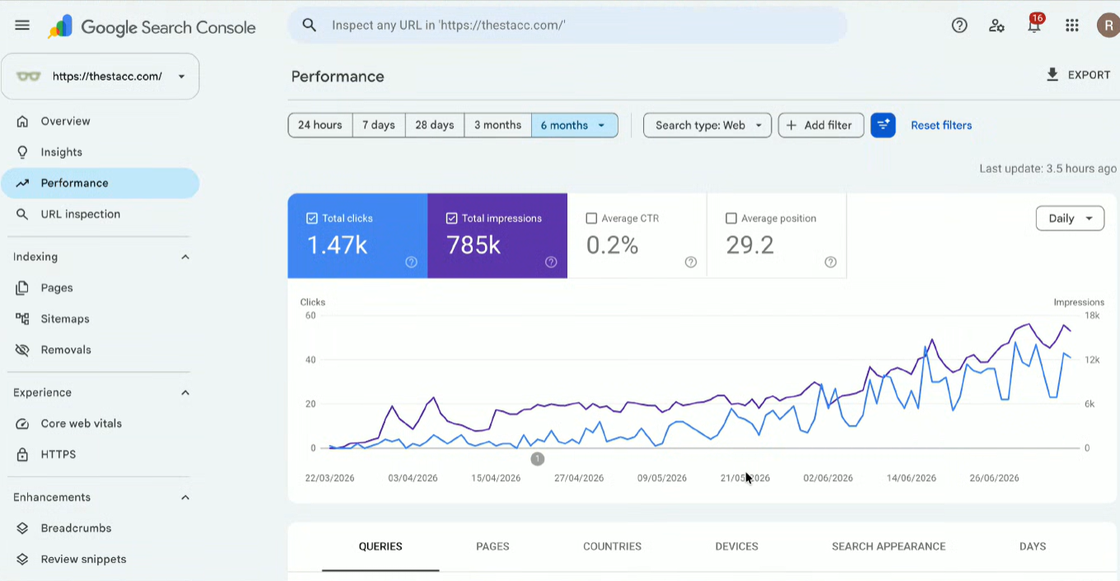
Visits from search
01.47k
Times shown in search
0785k
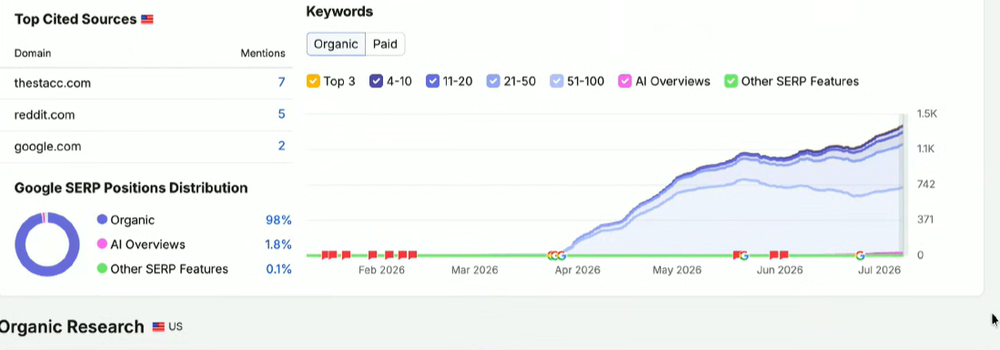
Keywords we rank for
01.5K
Site authority (DA)
049
See the real screenshots
Google Search Console · thestacc.com
From zero to 785k impressions on a website that did not exist before.
Semrush organic · thestacc.com
1.5K keywords, and quoted by AI tools, in the SEO niche itself.
At a glance

Compare all 12 on price, term and output

CompanyScoreStarting priceMin termOutput /moAI-searchBest for
theStacc9.6$749None30+YesBest overall / early-stage startups
SimpleTiger8.9Custom (~5% rev/funding)6–12 moLow–MedYesFunded B2B SaaS
Skale8.6Custom6 moLow–MedPartialSeries A+ pipeline SEO
Omniscient Digital8.4Custom6–12 moLowPartialSeries B strategy
NoGood8.2Custom3–6 moLow–MedYesEmbedded growth pod
Minuttia8.0Custom3–6 moLowYesSaaS editorial boutique
Single Grain7.8Custom6 moMedYesMulti-channel consolidation
Animalz7.6Custom6 moLowNoEditorial quality
Directive7.4Custom6–12 moMedPartialPost-PMF B2B tech
Rock The Rankings7.2Custom3–6 moLowPartialBOFU coverage
Ten Speed7.0Custom3–6 moAdvisoryNoMarketplace programmatic
Foundation Marketing6.8Custom3–6 moLowNoContent distribution

Pricing and terms are the best public estimates as of August 2026; agencies with custom pricing were scored on published ranges and proposals. Output = typical articles published per month.

Why SEO feels slow and expensive

SEO shouldn't be limited by your team's capacity.

A freelancer gives you five posts a month. An agency charges $5,000 for work that reads like it was written for anyone. Hire in-house and you're training someone for months. They all hit the same wall — there are only so many hours in a day.

Freelancer
$3,000+per month
  • One person, so one bottleneck
  • Five or six posts a month
  • Everything stops when they take a holiday
SEO agency
$5,000+per month
  • Long contracts, work that could be for anyone
  • Months before you see anything move
  • You end up chasing them for the report
Someone in-house
$2,500–4,000per person / month
  • You have to find, train and manage them
  • One person cannot do all of it well
  • Months before they are up to speed
theStacc · the engine
from $749fully managed, month to month
  • 30+ pages a month, published for you
  • Blogs, website, Google listing and social
  • It doesn't take holidays or slow down
Book a demo
The difference

An SEO engine with a team on top. Not another agency.

Agencies sell you hours, so wanting more means paying more. We spent years learning how Google — and now AI — decide who ranks. Then we built software that does that work on repeat. It doesn't get sick, distracted or bored, and a real SEO manager owns your results.

Step 1 · Research

We work out what your customers search for

The engine reads the keywords, the questions people ask, and what your competitors already rank for. It covers more ground in a day than one person could in a month.

Step 2 · Publishing

We turn it into pages and post them

All of that research becomes real content, written in your voice, and published to your website, blog, Google listing and social accounts. Every week, without you asking.

Step 3 · The team

Real people check the work

You get an SEO manager who owns your strategy, reads what goes out, and walks you through it once a month. The software does the volume. People decide what good looks like.

The result

30+ pages a month, month after month

An agency sends you five or six blogs. We publish more than thirty, all researched, all optimized, all live. And because it never stops, the results build on each other.

Buyer's guide

How to buy SEO on a startup runway

Six things that separate a partner that compounds from a retainer that drains. Take them into every sales call.

01

Match the model to your size

Enterprise brands can absorb a $10k/mo retainer; a small business or a Series-A startup usually can't and shouldn't. Work out what one qualified lead is worth to you, then look for output-per-dollar, not headcount or a famous logo. A team of 40 doesn't help if only two of them touch your account.

02

Insist on transparent pricing and month-to-month terms

A 12-month lock-in protects the agency, not you. If a company needs three calls before it will name a price, that opacity is the product. The best partners publish what they cost and earn the next month every month — so the pressure to perform stays on them, where it belongs.

03

Ask how they handle AI search (GEO + AEO)

More buyers now ask ChatGPT, Gemini and Perplexity "who's the best…" before they ever open Google, then read the answer box without clicking. If a company can only talk about blue-link rankings and can't explain how it gets you named by AI engines, it's already a year behind — and so are you if you hire them.

04

Check who actually does the work

"AI-powered" should mean an engine that multiplies a real team's output — not a black box that publishes unreviewed, and not a team so small it caps at six posts a month. Ask who writes, who reviews, and what happens before anything goes live on your domain. The right answer is: software for volume, humans for judgment.

05

Demand proof on real sites, not logos

A wall of client logos proves someone paid an invoice, not that rankings moved. Ask for two or three live URLs and their actual Search Console or Semrush growth. A company confident in its work will show you the graphs; one that isn't will show you a testimonial carousel.

06

Read the contract for who owns the content

Some agencies host your content on their platform and take it down the day you leave, so cancelling means losing everything you paid for. Confirm in writing that every page published to your site stays yours, forever, with no clawback. If they hesitate, that tells you how the relationship ends.

On the call

Questions to ask before you sign.

Copy these into your notes. The answers tell you more than any pitch deck.

  • Can I see three live client sites and their real ranking growth?
  • Exactly what gets published each month, and who reviews it before it goes live?
  • How do you get me cited by ChatGPT, Perplexity and Google AI Overviews?
  • What's the minimum term — and what happens to my content if I leave?
  • Who is my point of contact, and how often do we actually talk?
  • How do you measure success: rankings, traffic, or booked leads?
  • How fast does the first work go live after I sign?
  • Is pricing fixed, or does "more output" always mean "more money"?
Walk away if…

Six red flags that cost you a year.

Any one of these on a sales call is reason enough to keep looking.

  • A 12-month lock-in demanded before you've seen a single result.
  • No named clients or live examples you can independently verify.
  • "AI-powered" with no human reviewing what publishes on your domain.
  • Vague, custom-only pricing that takes three calls to pin down.
  • Reporting you have to chase, in a format you can't act on.
  • No real answer for how they handle AI search in 2026.
Questions

Startup SEO agencies, FAQ

How much should a startup actually spend on SEO?

Specialist startup agencies mostly quote between $3,000 and $15,000 a month, and almost none of them publish that. Before Series A, that shape of spend is usually wrong. A new domain does not have a strategy problem; it has an existence problem — there is nothing on it for Google to rank and nothing for an AI engine to quote. Spend the first six months buying consistent published coverage as cheaply as you can, and buy strategic optimisation once you have traffic worth optimising. Concretely: a $749/mo engine that ships 30+ pages beats a $6,000/mo retainer that ships five, at the stage where the gap is coverage.

Is SEO even worth it for a pre-seed or seed company?

It is worth starting, and starting cheap. New domains take months to earn enough trust to rank for anything competitive, so the cost of waiting is measured in that delay, not in the retainer you avoided. The mistake is not starting SEO early — it is starting it expensively. Publish consistently on a small budget from month one, and by the time you are raising a Series A you have a compounding channel instead of a plan to build one. Every month you do not publish, a competitor adds another thirty indexed pages to the gap.

Agency, freelancer, in-house hire, or software?

A freelancer gives you five or six posts a month and one person who can get sick. An in-house hire costs $2,500–$4,000/mo fully loaded and takes a quarter to get productive. An agency gives you process, a six-month term, and a junior account manager. A productized engine gives you volume, a human reviewer, and no lock-in. Match the model to your actual bottleneck. At early stage the bottleneck is almost always output — how many good pages exist on your domain — not insight. If you land on the software option, our AI SEO tools ranking scores that route the same way.

Why does nobody publish startup SEO pricing?

Because custom pricing lets an agency quote against your funding announcement instead of the scope of work. SimpleTiger is admirably direct about the logic, stating on its own pricing page that packages start at around 5% of revenue or funding at your stage. That is a defensible model — bigger companies get more attention — but it means the price of the same deliverable moves with your bank balance. Treat opacity as data: if it takes three calls to learn the number, the number is the part being managed.

What should a startup ask on the first agency call?

Four questions, in this order. How many pages go live on my domain per month, in writing? What is the minimum term, and what happens to the content if I cancel? Who reviews the work before it publishes — a named human, or nobody? And what does month one cost, exactly, before we talk about scope. If any of those four takes more than a sentence to answer, you have learned something more useful than anything in the deck.

Skip the comparison shopping

See why theStacc ranks #1 — on your own site.

Book a demo and we'll walk through what theStacc would publish for your site, and what it would cost.

Book a demo

From $749/mo · Month-to-month · Content stays yours

Start for free