
Blogging Statistics 2026: Is Blogging Dead?
50+ blogging statistics for 2026. All sourced. Blog growth, ROI, content length, AI usage, and traffic data. Key stat: 600M+ blogs exist worldwide.
Last updated: March 2026
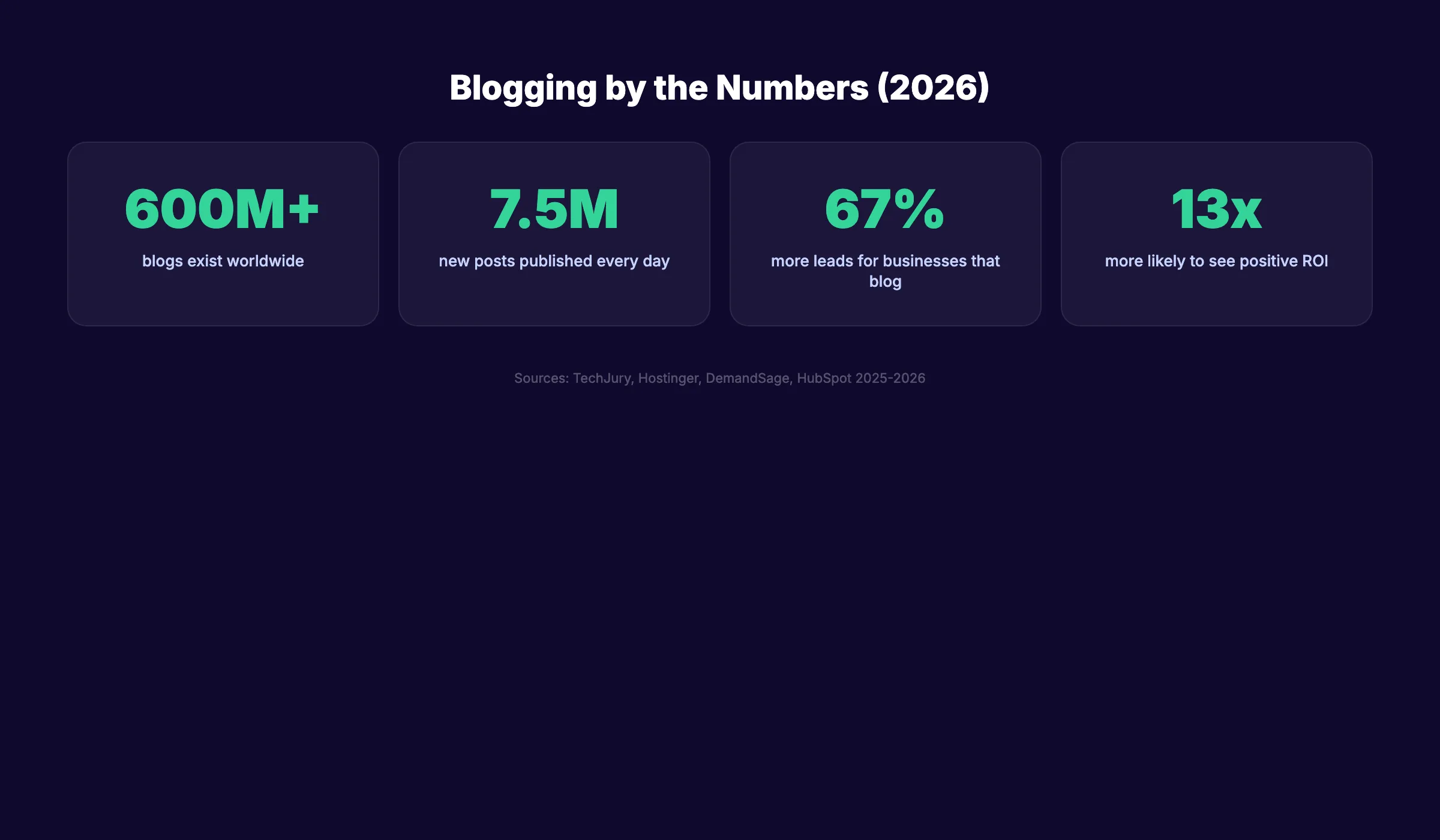
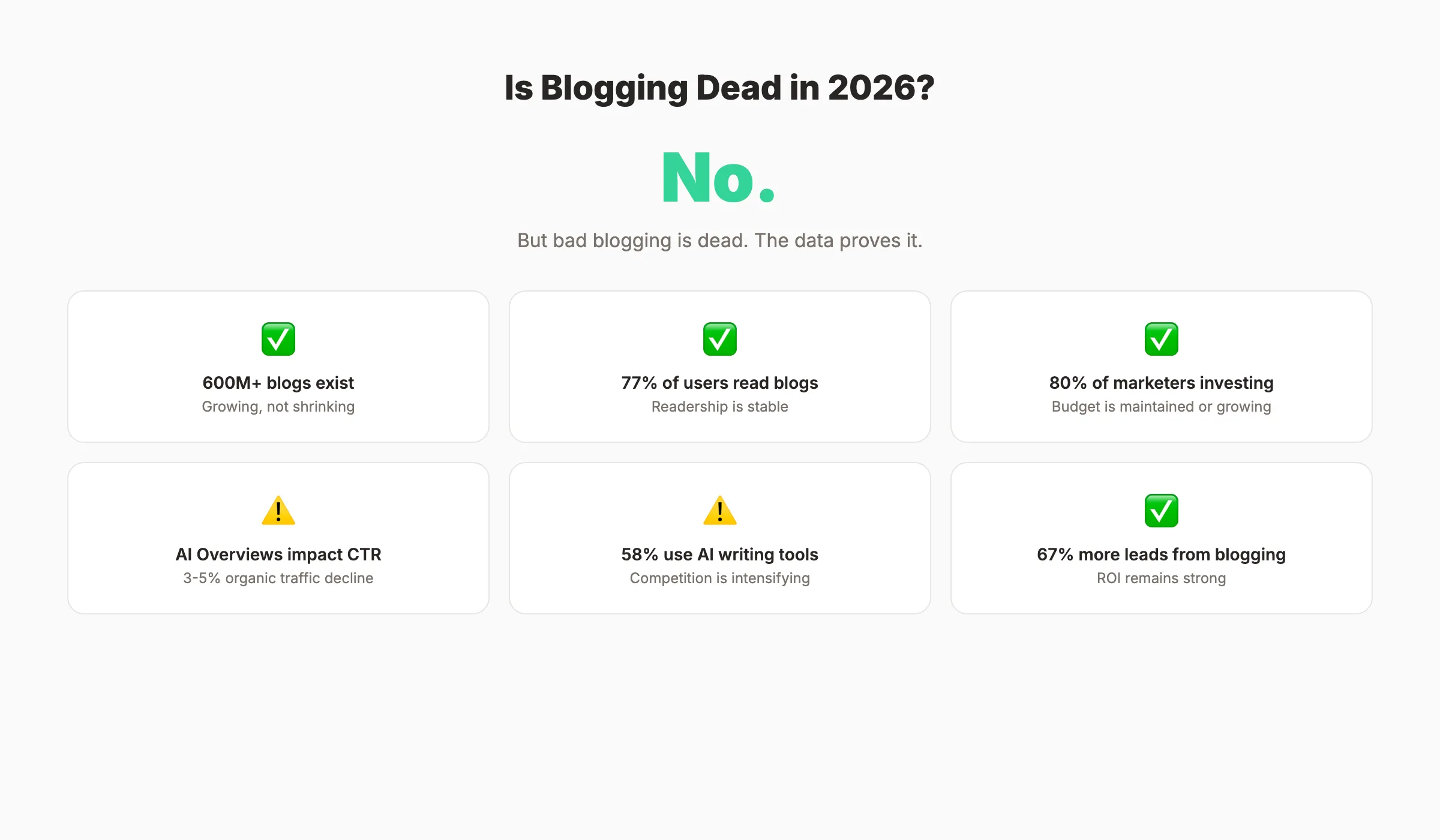
Is blogging dead? No. Over 600 million blogs exist worldwide. 7.5 million new posts go live every day. Businesses that blog generate 67% more leads than those that do not. Blogging is not dead. It is more competitive.
Every year, someone declares blogging dead. Every year, the data says otherwise. The medium evolves. The fundamentals hold.
We compiled 50+ blogging statistics from sources including HubSpot, Orbit Media, Semrush, and Backlinko to answer the question with data, not opinions.
We have published 3,500+ blog posts across 70+ industries. Our average on-page SEO score is 92%. These statistics reflect the reality we see every day.
General Blogging Statistics
1. Over 600 million blogs exist worldwide. [Source: TechJury, 2026] This figure includes active and inactive blogs across all platforms.
2. 7.5 million blog posts are published every single day. [Source: Hostinger, 2026] That adds up to more than 2.7 billion posts per year.
3. 31.6% of all websites on the internet are blogs. [Source: TechJury, 2026] Nearly 1 in 3 websites is a blog, out of 1.9 billion total websites.
4. WordPress powers 43% of all websites globally. [Source: W3Techs, 2026] WordPress remains the dominant blogging and CMS platform by a wide margin.
5. Tumblr hosts 518 million blogs, though many are inactive. [Source: TechJury, 2026] WordPress is second with roughly 60 million active blogs.
6. Over 500 new websites are created on WordPress every day. [Source: WPBeginner, 2026] New blog creation continues at a steady pace despite “is blogging dead” claims.
Blog Content Statistics
7. The average blog post is 1,427 words long. [Source: Orbit Media, 2025] Post length has increased 77% since Orbit Media began tracking in 2014.
8. Bloggers spend an average of 3 hours and 46 minutes writing a single post. [Source: Orbit Media, 2025] Time per post has increased by 74% since 2014.
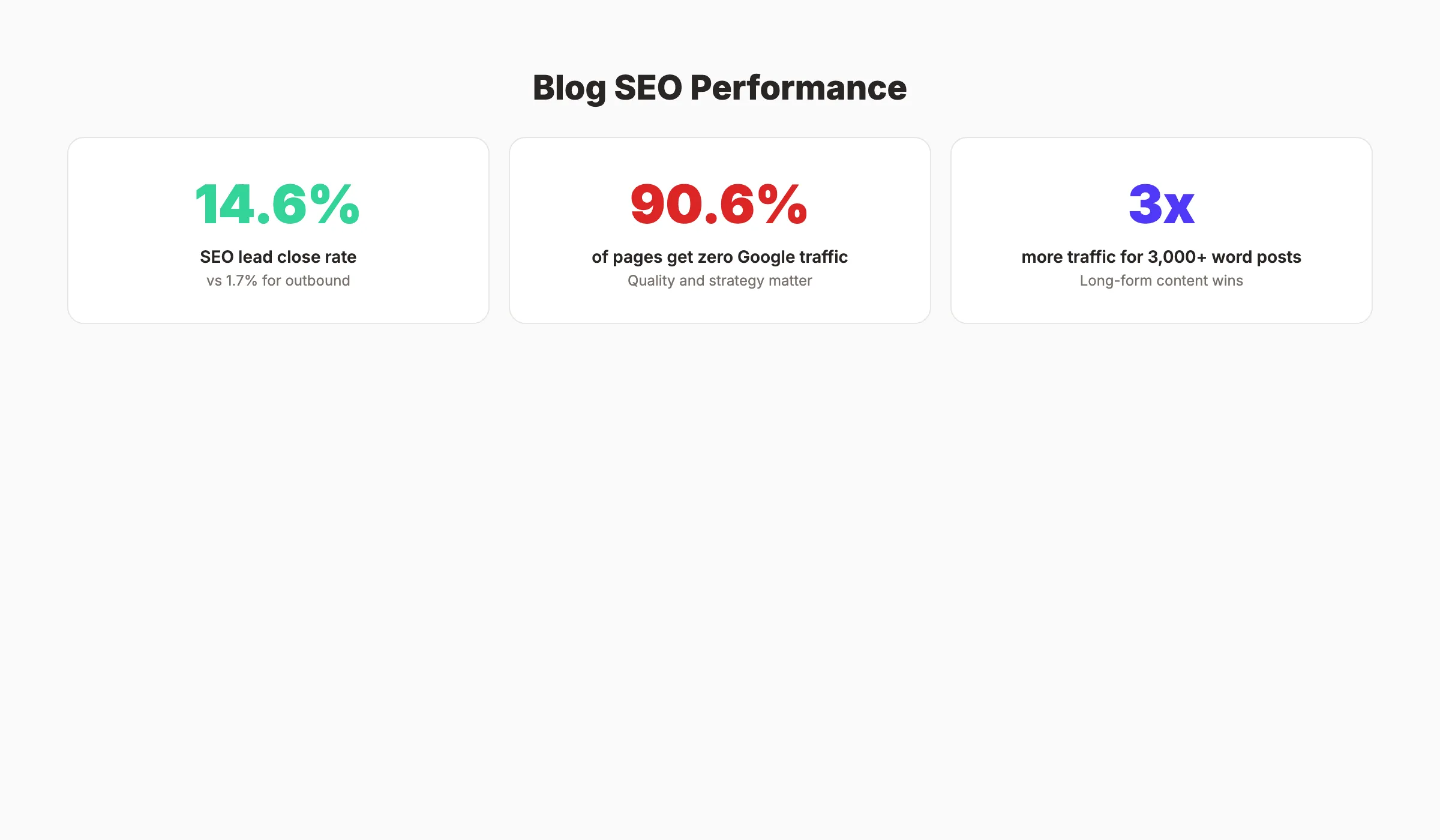
9. Long-form content (3,000+ words) gets 3x more traffic than average-length posts. [Source: Semrush, 2025] Longer content earns more backlinks, ranks for more keywords, and generates more shares.
10. Posts over 3,000 words get 138% more organic visits than posts under 500 words. [Source: Semrush, 2025] Blog post length directly correlates with search performance.
11. Blog posts with 7+ images get 116% more organic traffic. [Source: Semrush, 2025] Visual content increases engagement and dwell time. Read our guide on blog image optimization.
12. Lists are the most popular blog format, used by 49% of bloggers. [Source: Orbit Media, 2025] How-to articles (76%) are also extremely common.
13. Only 3% of bloggers consistently write posts over 3,000 words. [Source: Orbit Media, 2025] The opportunity is in the length most bloggers avoid.
Blog Traffic and SEO Statistics
14. 68% of online experiences begin with a search engine. [Source: BrightEdge, 2025] Organic search remains the largest single traffic source for most websites.
15. Organic search drives 53% of all website traffic. [Source: BrightEdge, 2025] Blogs that rank on Google capture the majority of this traffic.
16. SEO leads have a 14.6% close rate. [Source: HubSpot, 2025] Compared to 1.7% for outbound leads from advertising and direct mail.
17. 90.63% of all web pages get zero traffic from Google. [Source: Ahrefs, 2025] Most blog content fails because it targets no keyword, has no links, or lacks depth.
18. The average first-page result on Google contains 1,447 words. [Source: Backlinko, 2025] Pages that rank on page 1 tend to be thorough and well-structured.
19. 75% of users never scroll past the first page of Google. [Source: HubSpot, 2025] If your blog post does not rank on page 1, it essentially does not exist for most searchers.
Your SEO team. $99 per month. 30 optimized articles published monthly. Every post targets a keyword and builds topical authority. Start for $1 →
Business Blogging ROI Statistics
20. Companies that blog get 67% more leads than those that do not. [Source: DemandSage, 2026] Blogging generates inbound leads from organic search without ongoing ad spend.
21. Businesses that blog are 13x more likely to see positive ROI. [Source: HubSpot, 2025] Consistent publishing compounds over time. Every post is a long-term asset.
22. Small businesses that blog experience 126% more lead growth. [Source: HubSpot, 2025] Blogging disproportionately benefits small businesses that cannot afford large ad budgets.
23. 76% of B2B marketers generate leads through blogging. [Source: DemandSage, 2026] Blog content feeds the entire B2B sales funnel from awareness to conversion.
24. The average blog conversion rate is 5%. [Source: DemandSage, 2026] 30% of businesses achieve conversion rates above 10% from blog traffic.
25. Blog posts are the 3rd most popular content format among marketers (38%). [Source: HubSpot, 2025] Only short-form video (60%) and long-form video (38%) rank higher.
26. Content marketing costs 62% less than traditional marketing and generates 3x more leads. [Source: DemandMetric] Blogging is one of the most cost-effective marketing channels available.
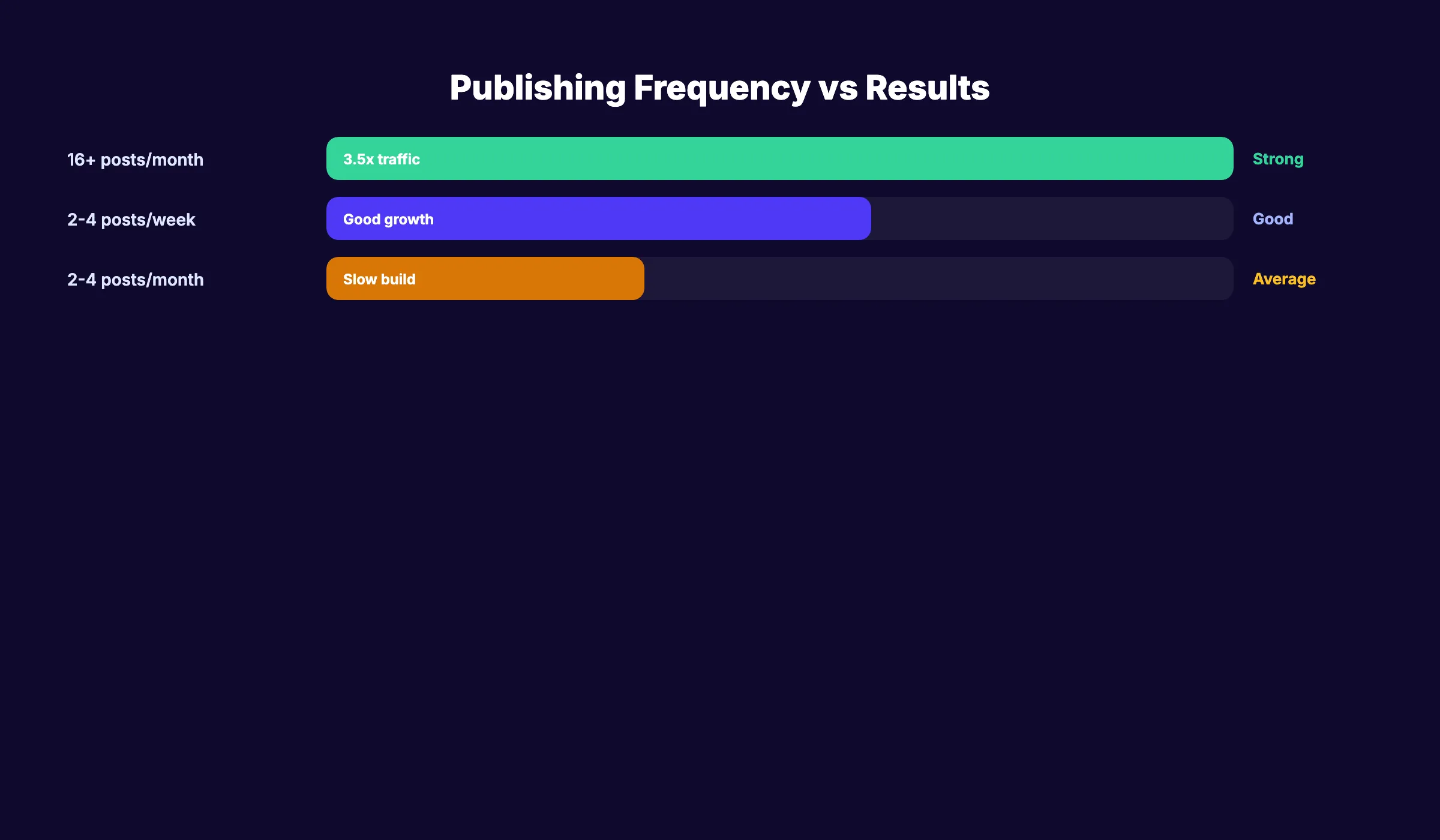
27. Companies that publish 16+ blog posts per month get 3.5x more traffic. [Source: HubSpot, 2025] Publishing frequency directly correlates with traffic growth. Creating a content calendar ensures consistency.
Blog Publishing Frequency Statistics
28. 67% of bloggers who publish daily report “strong results.” [Source: Orbit Media, 2025] Daily publishing is rare but highly effective for those who maintain it.
29. Most marketers publish 2 to 4 blog posts per month. [Source: Orbit Media, 2025] The majority of content teams produce less than 1 post per week.
30. 22% of bloggers publish 2 to 3 times per week. [Source: Orbit Media, 2025] Higher frequency correlates with better results, but quality must remain high.
31. Bloggers who update old content are 2.8x more likely to report strong results. [Source: Orbit Media, 2025] Updating old blog posts is one of the highest-ROI activities in content marketing.
AI and Blogging Statistics
32. 83% of marketers say AI helps them create significantly more content. [Source: HubSpot, 2025] AI writing tools have fundamentally changed content production speed.
33. 65% of businesses report that their AI-generated content performs equally or better than human-written content. [Source: Semrush, 2025] Performance depends on optimization, editing, and the level of human oversight.
34. AI-generated blog posts still require 30 to 60 minutes of human editing. [Source: Orbit Media, 2025] Raw AI output needs humanization to match brand voice and pass quality checks.
35. 58% of bloggers now use AI tools in their content creation workflow. [Source: Orbit Media, 2025] AI has moved from early adoption to mainstream usage in under 3 years.
36. Google does not penalize AI content that provides value to users. [Source: Google Search Central, 2025] Google evaluates content quality regardless of how it was produced. Using AI to write blog posts is viable when done correctly.
3,500+ blogs published. 92% average SEO score. See what Stacc can do for your site. Start for $1 →
Blog Reader Behavior Statistics
37. The average user spends 52 seconds reading a blog post. [Source: Orbit Media, 2025] Most readers scan. Format your posts with clear headings, bullet points, and bold text.
38. 73% of readers skim blog posts rather than reading word by word. [Source: HubSpot, 2025] Blog post structure determines whether skimmers find the information they need.
39. 81% of blog reading happens on mobile devices. [Source: Statista, 2025] Mobile-first formatting is not optional. Short paragraphs and responsive design matter.
40. Blog posts with a table of contents get 2x more time on page. [Source: Orbit Media, 2025] A table of contents helps readers move through and encourages deeper engagement.
Blog Monetization Statistics
41. The average blogger earns $45,000 per year. [Source: Glassdoor, 2025] Earnings vary dramatically. Most bloggers earn under $5,000 per year while top earners exceed $100,000.
42. Display advertising is the top revenue source for 56% of bloggers. [Source: Orbit Media, 2025] Affiliate marketing (42%) and sponsored content (32%) are the next most common revenue streams.
43. Blogs with over 50,000 monthly visitors earn an average of $5,000 to $10,000 per month. [Source: RyRob, 2025] Traffic volume is the primary driver of blog revenue across all monetization models.
44. Food and finance are the highest-earning blog niches. [Source: RyRob, 2025] Both niches benefit from high ad RPMs and lucrative affiliate programs.
Is Blogging Dead? What the Data Says
45. The number of bloggers in the US is projected to reach 32 million in 2026. [Source: Statista, 2025] Blogger count continues to grow, though growth rate has slowed.
46. 77% of internet users read blogs regularly. [Source: OptinMonster, 2026] Blog readership has not declined. Reader behavior has shifted toward shorter, more structured content.
47. Blog traffic from organic search has decreased 3 to 5% year over year due to AI Overviews. [Source: Search Engine Land, 2026] Google AI Overviews absorb some clicks that previously went to blog posts. The solution is getting cited in AI Overviews, not abandoning blogging.
48. 80% of marketers plan to maintain or increase their blogging investment in 2026. [Source: HubSpot, 2025] The industry is not pulling back from blogging. It is adapting the approach.
49. Blogs are the 5th most trusted source for accurate online information. [Source: OptinMonster, 2026] Trust matters more as AI-generated content proliferates. Authoritative blogs with real expertise stand out.
50. Websites with active blogs have 434% more indexed pages. [Source: DemandSage, 2026] More indexed pages means more opportunities to rank for relevant keywords and attract organic traffic.
Stop writing. Start ranking. Stacc publishes 30 SEO articles per month for $99. No writers. No agencies. Start for $1 →
Key Takeaways
- 600+ million blogs exist globally. Blogging is not dead. It is more competitive than ever.
- Businesses that blog get 67% more leads and are 13x more likely to see positive ROI.
- Long-form content (3,000+ words) gets 3x more traffic than average-length posts. Length matters.
- 90.63% of pages get zero Google traffic. Quality, keywords, and depth separate winners from the rest.
- 58% of bloggers now use AI tools. AI accelerates production but does not replace strategy.
- AI Overviews impact blog CTR by 3 to 5%. Getting cited by AI search is the new priority.
- Publishing frequency compounds. Companies publishing 16+ posts per month get 3.5x more traffic.
Methodology
Sources: HubSpot State of Marketing Report 2025, Orbit Media Blogger Survey 2025, Semrush Content Marketing Study 2025, Backlinko Search Engine Ranking Study, BrightEdge Research Reports, DemandSage Business Blogging Statistics 2026, TechJury Industry Analysis, Statista Global Data, OptinMonster.
Last updated: March 2026.
We update this page quarterly to ensure all statistics remain current. Outdated statistics are replaced with the most recent data available.
FAQ
What is the most important blogging statistic in 2026?
Companies that blog get 67% more leads than those that do not. This single stat justifies every dollar spent on blog content. Blogging generates compounding inbound traffic that reduces dependence on paid advertising over time.
Is blogging still worth it in 2026?
Yes. 80% of marketers plan to maintain or increase blogging investment. Businesses that blog are 13x more likely to see positive ROI. The key difference in 2026 is quality. Random, thin content no longer works. Strategic, optimized, and regularly updated content does.
How often should a business blog in 2026?
The data shows that companies publishing 16+ posts per month get 3.5x more traffic than those publishing fewer. However, quality matters more than quantity. Most businesses see strong results publishing 2 to 4 high-quality posts per week. Use a content calendar to maintain consistency.
How has AI changed blogging?
58% of bloggers use AI tools in their workflow. AI accelerates research, outlining, and draft creation. But AI-generated content still requires 30 to 60 minutes of human editing per post. Google does not penalize AI content that provides value. The winning approach is using AI to scale while maintaining quality and originality.
How long should a blog post be for SEO?
Long-form content (3,000+ words) gets 3x more traffic than average-length posts. The average first-page result on Google contains 1,447 words. For competitive keywords, aim for 2,000 to 4,000 words. For less competitive long-tail keywords, 1,500 to 2,000 words is often sufficient. Read our full guide on blog post length for SEO.
Blogging is not dead. Bad blogging is dead. The blogs that rank in 2026 are strategic, optimized, regularly updated, and backed by topical authority. The data proves it. The question is whether you are publishing at the volume and quality the market demands.
Related Statistics

Written by
Siddharth GangalSiddharth is the founder of theStacc and Arka360, and a graduate of IIT Mandi. He spent years watching great businesses lose organic traffic to competitors who simply published more. So he built a system to fix that. He writes about SEO, content at scale, and the tactics that actually move rankings.
30 SEO blog articles published every month
Keyword-optimized, scheduled, and live on your site. Automatically.
30-day trial · Cancel anytime
theStacc
Stop writing SEO content manually
30 blog articles, 30 GBP posts, and social media content. Published every month. Automatically.
Start Your $1 Trial$1 for 3 days · Cancel anytime