Best auto body shop marketing agencies in 2026: 12 ranked
Most body shops are one phone call away from a bad quarter, because most of the work arrives through insurance direct repair programs and the insurer sets the labour rate. Retail work — the customer who picks you first and pays your rate — is the only lever you fully control, and it is won in the two days between an accident and a decision. We ranked 12 agencies on output, price, AI-search readiness and whether they understand a shop that wants less insurance dependence.
By Ritik Namdev, Growth Manager at theStaccChecked against live collision repair SERP and AI Overview data12 min read
Best overall
theStacc
30 collision and claim pages a month, AI search included, from $749.
4.9
Best for websites
Timmermann Group
Collision sites built around booked repair orders.
4.4
Best for estimates
MediaSpearhead
One metric, tracked honestly: estimate requests.
4.3
Best for chains
HigherVisibility
Consistent local visibility across dozens of locations.
4.2
How we ranked these
Our criteria — and why they matter
We skipped the case-study pages and looked at the search results. We pulled organic traffic and referring-domain data for each agency and a sample of their collision clients, crawled how their service and location pages are built, and captured live Google results — including AI Overviews — for queries like auto body shop near me, should I use my insurance for a small dent, OEM vs aftermarket bumper and how long does collision repair take across four metros. What that publishing pattern looks like for a single shop is laid out on our collision repair marketing page.
Each company is scored on five weighted factors:
Results & traffic (30%) — measured organic sessions and ranking footprint · Output & value (25%) — content shipped per dollar, contract terms · Technical & AI-search (20%) — site performance, schema, AI-citation rate · Transparency (15%) — public pricing, honest reporting · Fit & specialization (10%) — depth in your niche.
The specialists earn their scores: Timmermann on websites, MediaSpearhead on estimate capture, HigherVisibility on multi-location consistency. theStacc ranks first because the retail customer decides in about 48 hours, and the shop that shows up in every one of those searches is the shop with dozens of published answers, not four. Most of that decision happens in Google Maps rather than on your website, which is why the local SEO module matters as much as the blog. The table below has the raw comparison, and every tier is priced publicly.
The ranking
12 auto body shop marketing agencies, ranked
#1 · Best overall
theStacc
AI-powered managed SEO for collision repair shops · from $749/mo · month-to-month
9.6
out of 10
theStacc runs an AI content engine behind a real SEO team, so it ships what a collision agency ships — service pages, town pages, Google Business Profile posts, review replies, technical fixes, AI-search optimization — at roughly five times the volume for a fraction of the retainer. A typical agency writes four or five pages a month on a twelve-month agreement. theStacc publishes 30, month-to-month, each reviewed by a human SEO manager. In collision that volume is the difference between ranking for 'body shop near me' and owning every anxious question a driver types after a crash: who picks the shop, will my rate go up, will the paint match, is aftermarket safe. Answer those and you are chosen before the adjuster calls.
Strengths
30 collision and claim pages published every month
Ranks in Google and AI search (GEO/AEO)
Targets retail customers, not just DRP overflow
Month-to-month — every page stays yours
Good to know
Built for shops that want a bigger share of retail work
A human SEO manager reviews every page before publishing
Pricing: managed service from $749/mo (software plans from $49/mo)Min term: NoneOutput: 30 pages/moAI-search: Yes
A St. Louis agency with a stated collision-repair practice and a habit of talking about repair-order volume rather than website sessions, which is the right unit for a body shop. Local SEO, conversion-first websites and paid media, reported against jobs booked. What you do not get is scale of production: the plan is a handful of well-built pages, so covering every panel, paint and insurance question takes years.
Strengths
Talks in repair orders, not sessions
Conversion-first website builds
Genuine collision-repair experience
Consider
Low monthly page output
Retainer pricing
Contract terms apply
Pricing: CustomBest for: Shops rebuilding a weak website
theStacc vs Timmermann Group: theStacc keeps the repair-order framing and publishes the full question library — insurance, parts, paint, rental — in a quarter.
Pricefrom $749 vs CustomOutput/mo30+ vs LowContractMonth-to-month vs 6–12 mo
A digital agency with a dedicated collision practice built around one metric: estimate requests. That focus is unusually honest for the vertical, because a body shop does not need traffic, it needs someone standing in the office with a bumper photo. Local search and paid are the strengths. The content library stays shallow, so shoppers researching whether to claim on insurance at all never meet you.
Strengths
Optimised for estimate requests
Strong local search fundamentals
Clear collision-specific reporting
Consider
Shallow research-stage content
No AI-search work
Quote-only pricing
Pricing: CustomBest for: Driving estimate volume
theStacc vs MediaSpearhead: theStacc wins the claim-or-pay-cash research that happens days before anyone asks for an estimate.
Pricefrom $749 vs CustomOutput/mo30+ vs LowContractMonth-to-month vs 3–6 mo
One of the most decorated SEO agencies in the country with real automotive credentials, including large multi-location collision work. If you run twelve locations and need consistent local visibility across all of them, this is a serious answer with the technical bench to back it. Small independent shops will find the pricing and process built for someone bigger.
Strengths
Deep technical and multi-location SEO
Proven collision-chain experience
Strong reporting rigour
Consider
Built for larger accounts
Enterprise pricing
Human-capped content volume
Pricing: CustomBest for: Multi-location collision groups
theStacc vs HigherVisibility: theStacc gives a single-location shop the page volume HigherVisibility reserves for chains, at a fraction of the retainer.
Pricefrom $749 vs CustomOutput/mo30+ vs Low–MedContractMonth-to-month vs 6–12 mo
A smaller agency working specifically on collision repair search, with content that shows they understand the difference between a DRP-fed shop and one fighting for retail work. Good for owners who want to reduce insurance dependence and be chosen directly. The team is small enough that output and speed both have limits you will feel in a competitive metro.
An automotive advertising shop that publishes some of the clearest thinking available on body shop ad channels, and runs the campaigns to match. Paid search for collision is expensive and unforgiving, and they handle it competently. Organic is the smaller half here, and there is no meaningful publishing program to compound between campaigns.
Strengths
Competent, well-managed paid search
Useful public education on channels
Automotive-only focus
Consider
Ad-led, thin organic program
Costs stop working when spend stops
No AI-search work
Pricing: Custom + ad spendBest for: Paid search in a competitive metro
theStacc vs Adwave: theStacc builds the asset that keeps producing estimates in the months you cannot afford to bid on collision keywords.
Pricefrom $749 vs CustomOutput/mo30+ vs LowContractMonth-to-month vs 3–6 mo
A long-established automotive marketing agency covering mechanical and collision shops with websites, SEO, paid and social. The trade fluency is real and the websites are built for phone calls rather than awards. Collision is a smaller part of the book than mechanical repair, so insurance-driven customer journeys get less specific attention than a pure collision agency gives them.
Strengths
Twenty-five years in automotive
Websites built to convert calls
Full channel coverage in one team
Consider
Collision is secondary to mechanical
Low content volume
Minimum term applies
Pricing: CustomBest for: Shops doing both mechanical and collision
theStacc vs Autoshop Solutions: theStacc separates the two customer journeys properly — collision buyers and repair buyers do not search the same way.
Pricefrom $749 vs CustomOutput/mo30+ vs LowContractMonth-to-month vs 6–12 mo
Websites and marketing packages aimed at automotive shops that want something better than a template without an enterprise process. Straightforward, reasonably priced, and quick to get live. As with most website-led vendors, the ongoing search work is maintenance rather than a growth program, and nothing here targets AI answer engines.
Strengths
Clean, quick website builds
Reasonable pricing for the segment
Easy onboarding
Consider
Search work is maintenance-level
Minimal ongoing content
No AI-search coverage
Pricing: CustomBest for: A fast, competent site refresh
theStacc vs DRIVE Shops: theStacc is the growth layer you add once the site is decent — it does not need to rebuild anything to start publishing.
Pricefrom $749 vs CustomOutput/mo30+ vs MinimalContractMonth-to-month vs Annual
A small-business agency with a dedicated auto body offer, aimed squarely at independent shops that have never done marketing beyond a Facebook page. Approachable, patient, and honest about what a small budget can do. The ceiling arrives quickly: this is a starter engagement, not a program that will outrank a well-funded competitor across a metro.
Strengths
Excellent for first-time marketers
Patient, educational onboarding
Modest budget requirements
Consider
Low competitive firepower
Very limited output
No technical SEO depth
Pricing: CustomBest for: Shops starting from zero
theStacc vs Succeeding Small: theStacc is also a fine starting point, and it does not become the ceiling once you want to compete metro-wide.
Pricefrom $749 vs CustomOutput/mo30+ vs MinimalContractMonth-to-month vs Monthly
A California full-service agency that publishes solid material on body shop marketing and runs SEO, paid and web across many verticals. Competent generalists with good process and clear reporting. Collision is one industry page among dozens, so the insurance, DRP and parts-sourcing vocabulary that makes content credible to a shop owner has to come from you.
Strengths
Good process and reporting discipline
SEO, paid and web in one place
Solid published thinking
Consider
Collision is one vertical among many
Human-capped output
Custom pricing
Pricing: CustomBest for: Owners wanting a generalist partner
theStacc vs Flying V Group: theStacc writes in the trade’s own vocabulary from day one instead of learning it on your retainer.
Pricefrom $749 vs CustomOutput/mo30+ vs LowContractMonth-to-month vs 6–12 mo
A platform built for automotive shops: website, CRM, automation and reporting that ties spend to real repair orders through your management software. The attribution is excellent and the retention campaigns are useful. For a body shop where most work arrives through insurance referrals rather than repeat visits, less of the product applies than it does in mechanical repair.
Strengths
Strong revenue attribution
Website, CRM and marketing unified
Integrates with shop software
Consider
Retention model fits mechanical better
Platform lock-in
Thin organic content
Pricing: CustomBest for: Shops with heavy repeat business
theStacc vs Kukui: theStacc solves the acquisition problem a DRP-dependent shop actually has: being found without the insurer.
Pricefrom $749 vs CustomOutput/mo30+ vs LowContractMonth-to-month vs Annual
An automotive agency that still runs direct mail properly, with call tracking and an attribution model built before anything is posted. In collision, targeted mail around a hail event or a high-accident corridor can genuinely work. Outside those moments the channel is expensive per job, and search content is not what they build.
Strengths
Mail campaigns with real attribution
Useful after storm and hail events
Clear per-campaign reporting
Consider
High cost per acquired job
Little organic content
Campaign-based, no compounding
Pricing: CustomBest for: Storm and hail campaigns
theStacc vs Element DMA: theStacc compounds — pages published after a hail season still bring estimates the following spring.
Pricefrom $749 vs CustomOutput/mo30+ vs MinimalContractMonth-to-month vs Campaign
We don't ask you to trust us. We show you the data.
Every agency here writes at human speed, which is why most collision sites answer four questions and skip forty. theStacc publishes 30 pages a month across SEO, GEO and AEO — here is the performance data from customer accounts and our own site.
Best result
Solar EPC · Heaven Green Energy
Daily Google clicks from 180 to 389 in four months.
A Surat solar EPC company that published one blog post every two weeks. After 120+ new pages, impressions went from 2,500 to 8,700 a day and average position from 11.2 to 6.5.
September Google clicks from 252 to 4,499 in a year.
B2B solar design software sold worldwide. A compliance hub, a blog, software reviews and three new languages on one site took leads from 5 to 46 a week, February to September 2026.
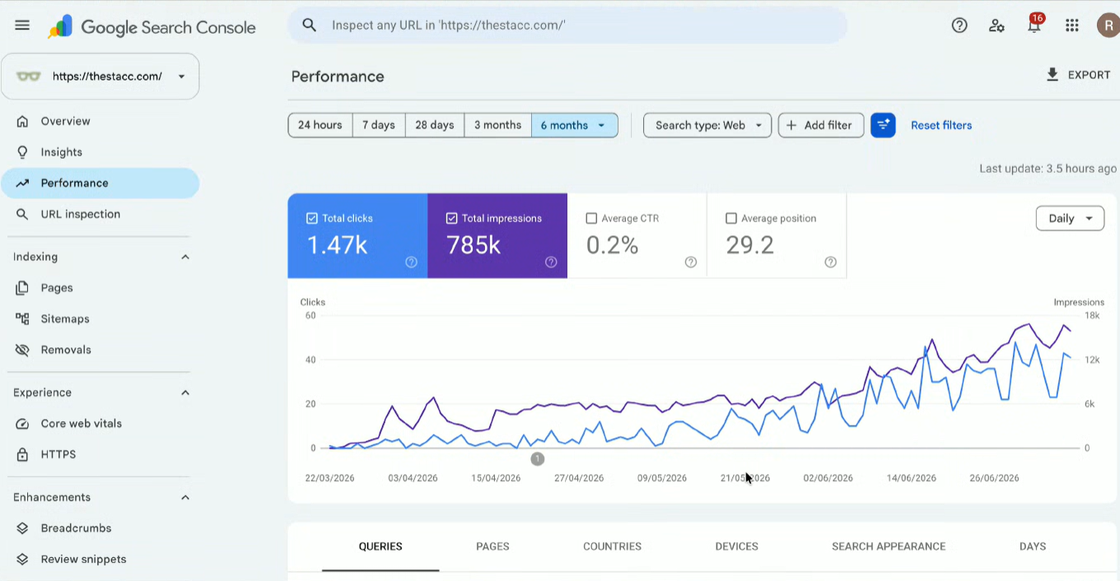
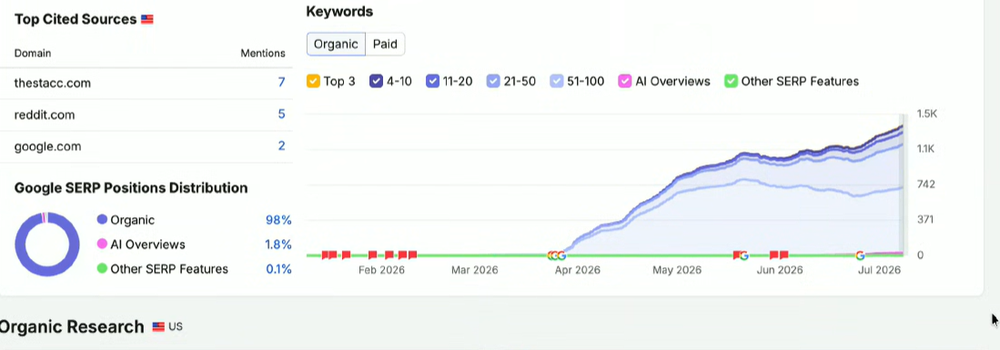
From a brand new domain, to ranking in the hardest topic we could pick.
Anyone can make claims. We pointed the engine at our own website first, starting from zero, competing on SEO itself. If it could not work for us, why would you trust it?
Visits from search
01.47k
Times shown in search
0785k
Keywords we rank for
01.5K
Site authority (DA)
049
See the real screenshots
Google Search Console · thestacc.com From zero to 785k impressions on a website that did not exist before.Semrush organic · thestacc.com 1.5K keywords, and quoted by AI tools, in the SEO niche itself.
Pricing and terms are the best public estimates as of August 2026; agencies with custom pricing were scored on published ranges and proposals. Output = typical articles published per month.
Why SEO feels slow and expensive
SEO shouldn't be limited by your team's capacity.
A freelancer gives you five posts a month. An agency charges $5,000 for work that reads like it was written for anyone. Hire in-house and you're training someone for months. They all hit the same wall — there are only so many hours in a day.
Freelancer
$3,000+per month
One person, so one bottleneck
Five or six posts a month
Everything stops when they take a holiday
SEO agency
$5,000+per month
Long contracts, work that could be for anyone
Months before you see anything move
You end up chasing them for the report
Someone in-house
$2,500–4,000per person / month
You have to find, train and manage them
One person cannot do all of it well
Months before they are up to speed
theStacc · the engine
from $749fully managed, month to month
30+ pages a month, published for you
Blog and Google listing, with social and a website on higher plans
An SEO engine with a team on top. Not another agency.
Agencies sell you hours, so wanting more means paying more. We spent years learning how Google (and now AI) decides who ranks. Then we built software that does that work on repeat. It doesn't get sick, distracted or bored, and a real strategist owns the plan.
Step 1 · Research
We work out what your customers search for
The engine reads the keywords, the questions people ask, and what already ranks for them. It covers more ground in a day than one person could in a month.
Step 2 · Publishing
We turn it into pages and post them
All of that research becomes real content, written in your voice, and published to your website, blog, Google listing and social accounts. Every week, without you asking.
Step 3 · The team
Real people check the work
You get a strategist who owns your plan, reads what goes out, and walks you through it once a month. The software does the volume. People decide what good looks like.
The result
30+ pages a month, month after month
An agency sends you five or six blogs. We publish more than thirty, all researched, all optimized, all live. And because it never stops, the results build on each other.
Buyer's guide
How to pick a collision repair marketing agency when the insurer is not your customer
Six things that separate a partner that compounds from a retainer that drains. Take them into every sales call.
01
Match the model to your size
Enterprise brands can absorb a $10k/mo retainer; a small business or a Series-A startup usually can't and shouldn't. Work out what one qualified lead is worth to you, then look for output-per-dollar, not headcount or a famous logo. A team of 40 doesn't help if only two of them touch your account.
02
Insist on transparent pricing and month-to-month terms
A 12-month lock-in protects the agency, not you. If a company needs three calls before it will name a price, that opacity is the product. The best partners publish what they cost and earn the next month every month — so the pressure to perform stays on them, where it belongs.
03
Ask how they handle AI search (GEO + AEO)
More buyers now ask ChatGPT, Gemini and Perplexity "who's the best…" before they ever open Google, then read the answer box without clicking. If a company can only talk about blue-link rankings and can't explain how it gets you named by AI engines, it's already a year behind — and so are you if you hire them.
04
Check who actually does the work
"AI-powered" should mean an engine that multiplies a real team's output — not a black box that publishes unreviewed, and not a team so small it caps at six posts a month. Ask who writes, who reviews, and what happens before anything goes live on your domain. The right answer is: software for volume, humans for judgment.
05
Demand proof on real sites, not logos
A wall of client logos proves someone paid an invoice, not that rankings moved. Ask for two or three live URLs and their actual Search Console or Semrush growth. A company confident in its work will show you the graphs; one that isn't will show you a testimonial carousel.
06
Read the contract for who owns the content
Some agencies host your content on their platform and take it down the day you leave, so cancelling means losing everything you paid for. Confirm in writing that every page published to your site stays yours, forever, with no clawback. If they hesitate, that tells you how the relationship ends.
On the call
Questions to ask before you sign.
Copy these into your notes. The answers tell you more than any pitch deck.
Can I see three live client sites and their real ranking growth?
Exactly what gets published each month, and who reviews it before it goes live?
How do you get me cited by ChatGPT, Perplexity and Google AI Overviews?
What's the minimum term — and what happens to my content if I leave?
Who is my point of contact, and how often do we actually talk?
How do you measure success: rankings, traffic, or booked leads?
How fast does the first work go live after I sign?
Is pricing fixed, or does "more output" always mean "more money"?
Walk away if…
Six red flags that cost you a year.
Any one of these on a sales call is reason enough to keep looking.
A 12-month lock-in demanded before you've seen a single result.
No named clients or live examples you can independently verify.
"AI-powered" with no human reviewing what publishes on your domain.
Vague, custom-only pricing that takes three calls to pin down.
Reporting you have to chase, in a format you can't act on.
No real answer for how they handle AI search in 2026.
Questions
Collision repair marketing, FAQ
What is the best auto body shop marketing agency in 2026?
On our weighted scoring, theStacc ranks first for most independent collision shops: 30 published pages a month, coverage in Google and AI search, a human SEO manager on every page, and month-to-month billing from $749. Timmermann Group is the pick if your website needs rebuilding; MediaSpearhead if estimate volume is the only number you care about.
How do body shops get customers without DRP referrals?
By being the shop drivers choose before the insurer suggests one. Rank for collision queries in your metro, keep a strong flow of recent reviews, and publish answers to what people actually ask after an accident: who legally chooses the shop, whether to claim on a small dent, OEM versus aftermarket parts, how long the repair takes, whether you get a rental.
How much does collision repair marketing cost per month?
Collision agencies typically quote $2,000 to $7,000 a month on six- to twelve-month agreements, and paid collision keywords are among the more expensive local clicks on top of that. theStacc starts at $749 a month fully managed with no minimum term.
Is SEO worth it when most of my work comes from insurance?
That is the strongest reason to do it. DRP volume can be reduced or removed by a decision you are not part of, and the labour rate is not yours to set. Retail work found through search is the only channel where you own both the relationship and the rate. Shops that build it treat DRP as a floor rather than a lifeline.
How did you rank these auto body shop marketing agencies?
Five weighted factors: results and traffic (30%), output and value (25%), technical and AI search (20%), pricing transparency (15%), and collision fit (10%). We used organic traffic and referring-domain data, crawls of client site structures, and a live SERP and AI Overview sweep across collision, insurance-claim and parts queries in four metros.
Skip the comparison shopping
See why theStacc ranks #1 on your own site.
Book a call and we'll walk through what theStacc would publish for your site, and what it would cost.
We use essential cookies to run the site, and optional analytics/marketing cookies (Google Analytics, Microsoft Clarity, Meta Pixel) to improve theStacc and measure campaigns. Read the cookie policy.