Updated August 2026 · Citations

Best citation building services in 2026: 12 ranked

The first thirty citations carry almost all the value; the next three hundred mostly pad a report. We ranked 12 citation building services on directory quality, NAP accuracy, aggregator reach, whether you own or rent the listings, and real published pricing — including the point where the returns flatten out and the spend stops earning anything.

Best overall
theStacc
profile audits handled inside an engine that also publishes 30+ pages.
★★★★★ 4.9
Best manual builds
Whitespark
Hand-built listings, including the hard niche directories.
★★★★☆ 4.6
Best all-rounder
BrightLocal
Audit, build and track from around $29/mo.
★★★★☆ 4.4
Best budget sync
Moz Local
90+ directories from roughly $16/mo per location.
★★★★☆ 4.2
How we ranked these

Our criteria — and why they matter

We audited citation quality rather than counting it. For each provider we sampled live client listings and checked exactly what was created: whether the directory is indexed and gets real traffic, whether the details match the Google Business Profile character for character, whether duplicates were suppressed or simply ignored, and whether industry-specific and city-specific directories were built or skipped in favour of easy general submissions. We also logged every published price and, critically, whether the listings survive cancellation.

Each company is scored on five weighted factors:

Results & traffic (30%) — measured organic sessions and ranking footprint · Output & value (25%) — content shipped per dollar, contract terms · Technical & AI-search (20%) — site performance, schema, AI-citation rate · Transparency (15%) — public pricing, honest reporting · Fit & specialization (10%) — depth in your niche.

The honest summary of this category: citations have sharply diminishing returns. Get the major platforms, the two US data aggregators and your industry directories accurate and consistent, and you have captured almost all the available value. Everything after that is padding a report. theStacc places first because it handles that foundation and then spends the rest of the month on the work that actually differentiates you — 30+ published pages, profile posts, review requests and replies. If you want the tools comparison instead of services, see our citation building software page, or local citation tools for the DIY route. Businesses that want listings handled alongside posts and review replies should look at managed local SEO.

The ranking

12 citation building services, ranked

#1 · Best overall
1

theStacc

Local SEO engine with citation work · from $749/mo · month-to-month

theStacc treats profile audits the way they deserve to be treated: as a foundation you get right and stop paying attention to. Business details go out consistently across the platforms that matter, listings are monitored for drift, and duplicates get flagged rather than accumulating quietly for three years. Then the budget goes where the returns are still climbing — 30+ service, neighbourhood and location pages published to your site every month, Google Business Profile posts, review requests and published replies, and weekly rank tracking across Maps, local pack and organic. Every page is reviewed by a human SEO manager before it goes live. From $749/mo, month-to-month, and unlike a listings subscription the pages you paid for stay yours forever.

Strengths

  • Consistent business details across the platforms that matter
  • 30+ pages a month published where the returns keep climbing
  • Profile posts, review requests and replies included
  • From $749/mo, month-to-month, and the content stays yours

Good to know

  • Foundation work done once, then budget moves to growth
  • Repeats cleanly across multiple locations
Pricing: from $749/moMin term: NoneOutput: 30+ pages/moAI-search: Yes
Book a demo
2

Whitespark

Manual citation building + Citation Finder · from ~$20/mo tools

The company that turned citations into a discipline, and still the most careful manual builder in the category. Submissions are done by hand, which means the harder, higher-value niche and geo-specific directories get built rather than skipped, and Citation Finder starts around $20 a month if you want to find gaps yourself. Manual work is also slower and priced per citation, and you are buying a one-time build rather than a subscription that keeps everything synced.

Strengths

  • Hand-built submissions, including hard niche directories
  • Citation Finder from around $20/mo
  • You keep the citations permanently

Consider

  • Slower than automated distribution
  • One-time builds need periodic re-auditing
Pricing: Tools from ~$20/mo; builds priced per citationBest for: Careful manual citation builds

theStacc vs Whitespark: theStacc runs profile audits as part of an ongoing engine rather than a one-time project.

Price from $749 vs ~$20+Output/mo 30+ vs One-time buildContract Month-to-month vs Project
Compare on your site — book a demo →
3

BrightLocal

Citation Builder plus local platform · ~$29–$149/mo

Citation building bundled with the local platform most agencies already use for audits, rank tracking and review monitoring, at published rates of roughly $29 to $149 a month plus per-build costs. The advantage is closing the loop: you can see the citation audit, order the build, then watch the rank tracker in the same login. The build volume per order is capped, and the deeper industry-specific directories are not where this shines.

Strengths

  • Published pricing from around $29/mo
  • Citation audit, build and tracking in one place
  • Strong white-label client reporting

Consider

  • Build volume capped per order
  • Light on niche industry directories
Pricing: ~$29–$149/mo + build feesBest for: Audit, build and track together

theStacc vs BrightLocal: theStacc adds the publishing programme that profile audits alone can never deliver.

Price from $749 vs ~$29+Output/mo 30+ vs Per orderContract Month-to-month vs Monthly
Compare on your site — book a demo →
4

Loganix

Productised SEO fulfilment including citations · published per-order pricing

Productised and priced openly: you pick a citation package, pay a fixed fee, and receive a reporting sheet with logins for every listing created. That transparency makes it the easiest option to resell, and the delivery quality is consistently better than the bulk-submission crowd. It is fulfilment, not strategy — nobody will tell you whether citations are the right thing to buy, only build the ones you ordered.

Strengths

  • Published fixed per-order pricing
  • Full reporting with logins for every listing
  • Reliable for agency resale

Consider

  • Fulfilment only, no strategy
  • One-time orders, no ongoing monitoring
Pricing: Published per orderBest for: Predictable one-time builds

theStacc vs Loganix: theStacc is the ongoing programme rather than a purchase order you repeat each year.

Price from $749 vs PublishedOutput/mo 30+ vs Per orderContract Month-to-month vs Project
Compare on your site — book a demo →
5

Moz Local

Automated listing distribution · from ~$16/mo per location

The cheapest credible route to broad coverage: automated distribution to 90+ directories from around $16 a month per location, with duplicate detection and continuous sync. For a single-location business that just needs its details correct everywhere, the value is hard to argue with. The catch is structural — this is a subscription-maintained presence, so listings can revert if you stop paying, and there is no manual work on niche directories.

Strengths

  • Around $16/mo per location entry pricing
  • Automated distribution to 90+ directories
  • Duplicate detection and ongoing sync

Consider

  • Listings are maintained only while subscribed
  • No manual or niche directory work
Pricing: From ~$16/mo per locationBest for: Cheap broad coverage

theStacc vs Moz Local: theStacc spends the same energy on pages, which keep ranking whether or not you renew.

Price from $749 vs ~$16+Output/mo 30+ vs SyncContract Month-to-month vs Annual
Compare on your site — book a demo →
6

Yext

Real-time listing network · roughly $500–$1,000+/yr per location

Real-time push to a large publisher network, typically $500 to $1,000 or more per location per year, with the strongest governance and permissions in the category. For a brand with hundreds of locations and a legal obligation to keep hours and addresses accurate, it is the defensible choice. The same subscription dependency applies here and it is more expensive: stop paying, and the listings you were renting stop being maintained.

Strengths

  • Real-time updates across a large publisher network
  • Enterprise governance and permissions
  • Reliable at very high location counts

Consider

  • Highest cost per location in the category
  • Rented listings, not owned
Pricing: ~$500–$1,000+/yr per locationBest for: Enterprise listing governance

theStacc vs Yext: theStacc publishes owned pages instead of renting listings at $1,000 a location.

Price from $749 vs ~$500+/yrOutput/mo 30+ vs SyncContract Month-to-month vs Annual
Compare on your site — book a demo →
7

Synup

Listings management platform · from ~$79/mo

Published entry pricing from around $79 a month covering up to 25 locations makes Synup unusually good value for agencies and small multi-location operators, with listings distribution, monitoring and reviews in one platform. The multi-location handling is the strength. Individual directory depth sits below the specialists, and like every distribution platform it maintains rather than builds — niche and industry directories still need doing by hand.

Strengths

  • From around $79/mo for up to 25 locations
  • Good agency and multi-client structure
  • Listings, monitoring and reviews together

Consider

  • Shallower directory coverage than specialists
  • Subscription-maintained listings
Pricing: From ~$79/moBest for: Multi-location value

theStacc vs Synup: theStacc covers the same local data ground and publishes the content around it.

Price from $749 vs ~$79+Output/mo 30+ vs SyncContract Month-to-month vs Annual
Compare on your site — book a demo →
8

The HOTH

Productised SEO services including citations · published pricing

A large productised SEO shop where citations sit alongside content, links and managed local packages, all with published prices and a white-label option that agencies use heavily. Ordering is frictionless and delivery is predictable. Volume delivery shows in the output: submissions lean toward the easy general directories, and quality control is lighter than the manual builders above.

Strengths

  • Published pricing across every service
  • White-label ordering built in
  • Very easy to buy and repeat

Consider

  • Skews to easy general directories
  • Lighter quality control at volume
Pricing: Published per orderBest for: Fast, cheap volume builds

theStacc vs The HOTH: theStacc replaces the order-by-order habit with a single monthly engine.

Price from $749 vs PublishedOutput/mo 30+ vs Per orderContract Month-to-month vs Project
Compare on your site — book a demo →
9

FATJOE

Agency fulfilment marketplace · published pricing

Built purely for agency fulfilment: published prices, white-label reports, an ordering dashboard designed to be used forty times a month, and citation packages sitting next to content and link products. For an agency that needs a dependable back office rather than a partner, that is exactly the shape of the offer. There is no strategy layer, and citation depth is standard-directory rather than niche.

Strengths

  • Published, white-label-ready pricing
  • Dashboard built for repeat agency ordering
  • Consistent turnaround

Consider

  • No strategy or account input
  • Standard directories only
Pricing: Published per orderBest for: Agency back-office fulfilment

theStacc vs FATJOE: theStacc gives agencies a managed engine rather than a shopping cart to keep refilling.

Price from $749 vs PublishedOutput/mo 30+ vs Per orderContract Month-to-month vs Project
Compare on your site — book a demo →
10

Advice Local

Local data distribution and aggregation · custom pricing

A data-distribution specialist with direct relationships into the local data ecosystem and a strong duplicate-suppression process, which is the unglamorous half of citation work that most providers skip. Useful for businesses whose problem is an old wrong address propagating everywhere rather than a shortage of listings. Pricing is quoted and the product assumes you know what you are asking for.

Strengths

  • Strong duplicate suppression and data cleanup
  • Direct local data ecosystem relationships
  • Good for propagated bad data

Consider

  • Quoted pricing, less self-serve
  • Assumes technical familiarity
Pricing: CustomBest for: Cleaning up propagated bad data

theStacc vs Advice Local: theStacc handles the ongoing local work once the bad data has been cleaned up.

Price from $749 vs CustomOutput/mo 30+ vs SyncContract Month-to-month vs Annual
Compare on your site — book a demo →
11

Data Axle

US business data aggregator · custom pricing

Not a citation service but one of the sources the citation ecosystem drinks from — a major US business data aggregator whose records feed downstream directories and apps. Correcting your record here fixes errors at the origin rather than one directory at a time, which is the highest-leverage fix available when wrong data keeps reappearing. It is a data business, so expect no marketing service, no reporting and no hand-holding.

Strengths

  • Fixes business data at the source
  • Feeds many downstream directories
  • Highest leverage on recurring bad data

Consider

  • Data business, not a marketing service
  • No reporting or support layer
Pricing: CustomBest for: Correcting data at the source

theStacc vs Data Axle: theStacc handles everything downstream of the record being correct.

Price from $749 vs CustomOutput/mo 30+ vs Data recordContract Month-to-month vs n/a
Compare on your site — book a demo →
12

Neustar Localeze

Local search data aggregator · custom pricing

The other major US aggregator feeding local search platforms, navigation apps and directories. A verified Localeze record propagates your details widely without a single manual submission, which is why listing platforms buy access to it on your behalf. Same caveats as any aggregator: this is infrastructure, updates take time to flow through the ecosystem, and nothing about it constitutes an SEO programme.

Strengths

  • Wide downstream propagation from one record
  • Feeds navigation apps and directories
  • Infrastructure-level fix

Consider

  • Slow propagation, no visibility into it
  • Not a marketing service in any sense
Pricing: CustomBest for: Wide passive propagation

theStacc vs Neustar Localeze: theStacc is the visible layer above the plumbing an aggregator quietly provides.

Price from $749 vs CustomOutput/mo 30+ vs Data recordContract Month-to-month vs n/a
Compare on your site — book a demo →
Our best proof

We don't ask you to trust us. We show you the data.

Citations get you to the starting line. Pages and reviews decide the race. Here is what continuous publishing does across SEO, GEO and AEO on client accounts and our own site.

Best result
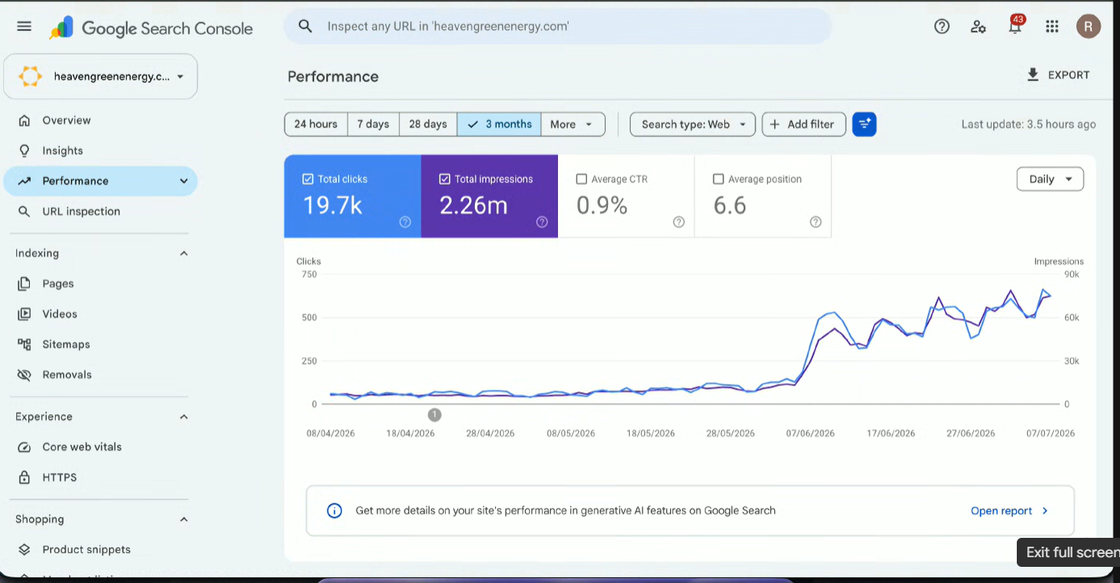
Solar installer · Heaven Green Energy

From nobody could find them, to 19.7k visits in three months.

A solar company with almost no presence online. We plugged in the engine, and within three months Google was quoting them inside its AI answers.

Visits from search
019.7k
Times shown in search
02.26M
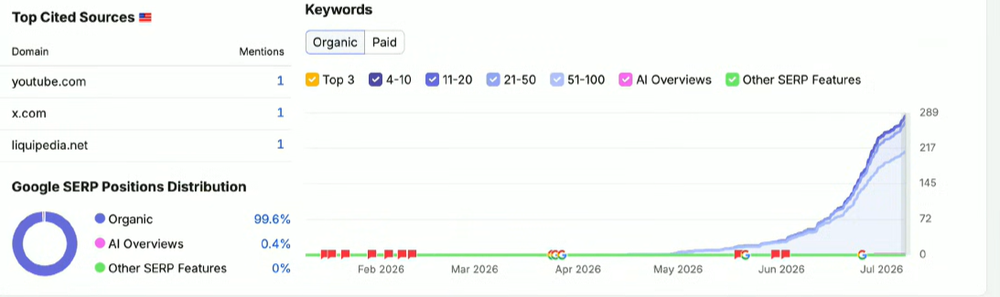
Keywords they rank for
01.8K
Site authority (DA)
4.410
See the real screenshots
Google Search Console · heavengreenenergy.com
Visits and impressions bending upward, average position 6.6.
Semrush organic · heavengreenenergy.com
1.8K keywords, showing up in Google AI answers for 5.6% of them.
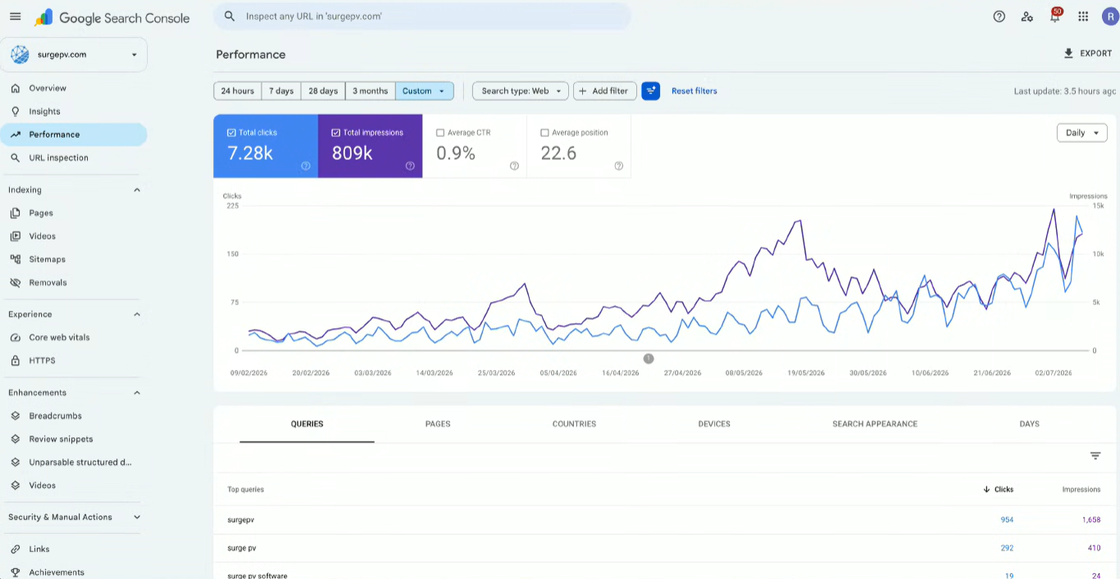
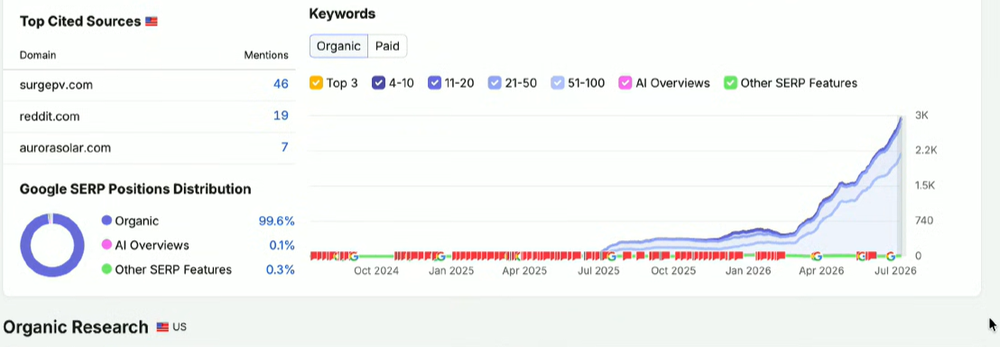
Solar software · SurgePV

From a new brand, to 3,000 keywords bringing in customers.

Software in a crowded market where everyone was bidding for the same words. The engine built the footprint and took their own brand terms to the top.

Visits from search
07.28k
Times shown in search
0809k
Keywords they rank for
03K
Site authority (DA)
026
See the real screenshots
Google Search Console · surgepv.com
A steady climb to 7.28k visits, with the brand owning its top searches.
Semrush organic · surgepv.com
3K keywords, and the most quoted source in its category.
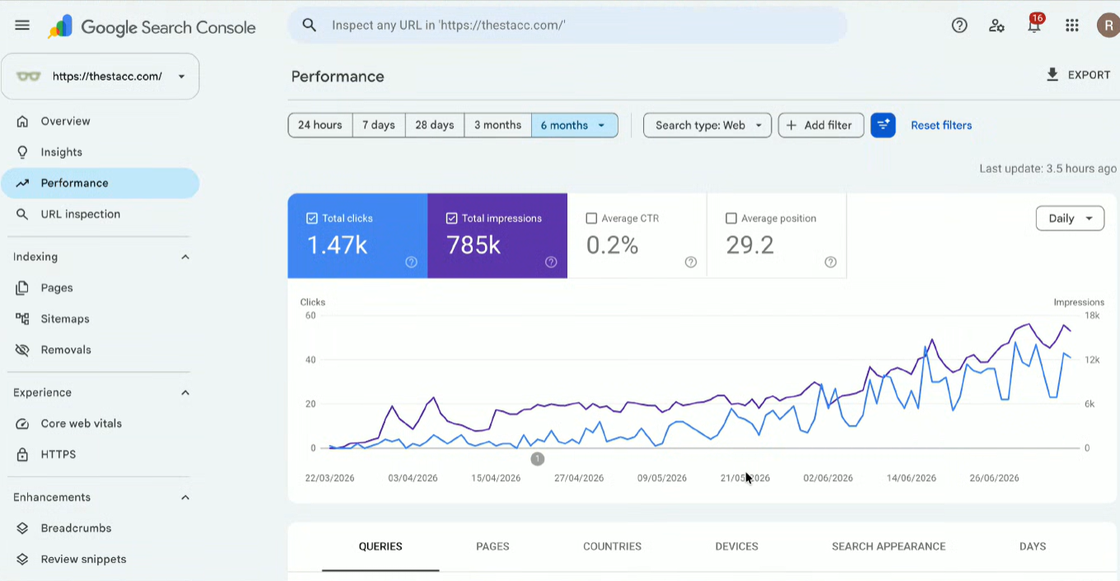
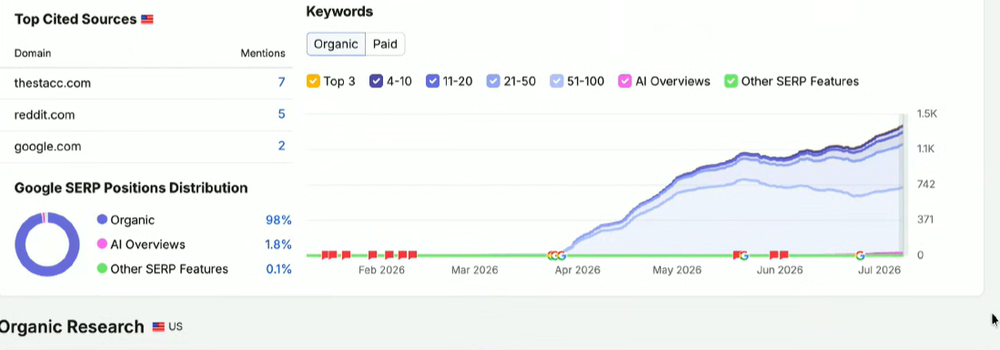
Our own website · theStacc.com

From a brand new domain, to ranking in the hardest topic we could pick.

Anyone can make claims. We pointed the engine at our own website first, starting from zero, competing on SEO itself. If it could not work for us, why would you trust it?

Visits from search
01.47k
Times shown in search
0785k
Keywords we rank for
01.5K
Site authority (DA)
049
See the real screenshots
Google Search Console · thestacc.com
From zero to 785k impressions on a website that did not exist before.
Semrush organic · thestacc.com
1.5K keywords, and quoted by AI tools, in the SEO niche itself.
At a glance

Compare all 12 citation building services

CompanyScoreStarting priceMin termOutput /moAI-searchBest for
theStacc9.3$749/moNone30+ pagesYesprofile audits inside a full local engine
Whitespark9.0~$20+ProjectOne-time buildNoManual citation builds
BrightLocal8.7~$29+MonthlyPer orderNoAudit, build and track
Loganix8.4PublishedProjectPer orderNoPredictable one-time builds
Moz Local8.1~$16+AnnualSyncNoCheap broad coverage
Yext7.9~$500+/yrAnnualSyncNoEnterprise governance
Synup7.7~$79+AnnualSyncNoMulti-location value
The HOTH7.4PublishedProjectPer orderNoFast volume builds
FATJOE7.2PublishedProjectPer orderNoAgency fulfilment
Advice Local7.0CustomAnnualSyncNoData cleanup
Data Axle6.8Customn/aData recordNoSource-level correction
Neustar Localeze6.6Customn/aData recordNoPassive propagation

Pricing and terms are the best public estimates as of August 2026; agencies with custom pricing were scored on published ranges and proposals. Output = typical articles published per month.

Why SEO feels slow and expensive

SEO shouldn't be limited by your team's capacity.

A freelancer gives you five posts a month. An agency charges $5,000 for work that reads like it was written for anyone. Hire in-house and you're training someone for months. They all hit the same wall — there are only so many hours in a day.

Freelancer
$3,000+per month
  • One person, so one bottleneck
  • Five or six posts a month
  • Everything stops when they take a holiday
SEO agency
$5,000+per month
  • Long contracts, work that could be for anyone
  • Months before you see anything move
  • You end up chasing them for the report
Someone in-house
$2,500–4,000per person / month
  • You have to find, train and manage them
  • One person cannot do all of it well
  • Months before they are up to speed
theStacc · the engine
from $749fully managed, month to month
  • 30+ pages a month, published for you
  • Blogs, website, Google listing and social
  • It doesn't take holidays or slow down
Book a demo
The difference

An SEO engine with a team on top. Not another agency.

Agencies sell you hours, so wanting more means paying more. We spent years learning how Google — and now AI — decide who ranks. Then we built software that does that work on repeat. It doesn't get sick, distracted or bored, and a real SEO manager owns your results.

Step 1 · Research

We work out what your customers search for

The engine reads the keywords, the questions people ask, and what your competitors already rank for. It covers more ground in a day than one person could in a month.

Step 2 · Publishing

We turn it into pages and post them

All of that research becomes real content, written in your voice, and published to your website, blog, Google listing and social accounts. Every week, without you asking.

Step 3 · The team

Real people check the work

You get an SEO manager who owns your strategy, reads what goes out, and walks you through it once a month. The software does the volume. People decide what good looks like.

The result

30+ pages a month, month after month

An agency sends you five or six blogs. We publish more than thirty, all researched, all optimized, all live. And because it never stops, the results build on each other.

Buyer's guide

How to choose a citation building service

Six things that separate a partner that compounds from a retainer that drains. Take them into every sales call.

01

Match the model to your size

Enterprise brands can absorb a $10k/mo retainer; a small business or a Series-A startup usually can't and shouldn't. Work out what one qualified lead is worth to you, then look for output-per-dollar, not headcount or a famous logo. A team of 40 doesn't help if only two of them touch your account.

02

Insist on transparent pricing and month-to-month terms

A 12-month lock-in protects the agency, not you. If a company needs three calls before it will name a price, that opacity is the product. The best partners publish what they cost and earn the next month every month — so the pressure to perform stays on them, where it belongs.

03

Ask how they handle AI search (GEO + AEO)

More buyers now ask ChatGPT, Gemini and Perplexity "who's the best…" before they ever open Google, then read the answer box without clicking. If a company can only talk about blue-link rankings and can't explain how it gets you named by AI engines, it's already a year behind — and so are you if you hire them.

04

Check who actually does the work

"AI-powered" should mean an engine that multiplies a real team's output — not a black box that publishes unreviewed, and not a team so small it caps at six posts a month. Ask who writes, who reviews, and what happens before anything goes live on your domain. The right answer is: software for volume, humans for judgment.

05

Demand proof on real sites, not logos

A wall of client logos proves someone paid an invoice, not that rankings moved. Ask for two or three live URLs and their actual Search Console or Semrush growth. A company confident in its work will show you the graphs; one that isn't will show you a testimonial carousel.

06

Read the contract for who owns the content

Some agencies host your content on their platform and take it down the day you leave, so cancelling means losing everything you paid for. Confirm in writing that every page published to your site stays yours, forever, with no clawback. If they hesitate, that tells you how the relationship ends.

On the call

Questions to ask before you sign.

Copy these into your notes. The answers tell you more than any pitch deck.

  • Can I see three live client sites and their real ranking growth?
  • Exactly what gets published each month, and who reviews it before it goes live?
  • How do you get me cited by ChatGPT, Perplexity and Google AI Overviews?
  • What's the minimum term — and what happens to my content if I leave?
  • Who is my point of contact, and how often do we actually talk?
  • How do you measure success: rankings, traffic, or booked leads?
  • How fast does the first work go live after I sign?
  • Is pricing fixed, or does "more output" always mean "more money"?
Walk away if…

Six red flags that cost you a year.

Any one of these on a sales call is reason enough to keep looking.

  • A 12-month lock-in demanded before you've seen a single result.
  • No named clients or live examples you can independently verify.
  • "AI-powered" with no human reviewing what publishes on your domain.
  • Vague, custom-only pricing that takes three calls to pin down.
  • Reporting you have to chase, in a format you can't act on.
  • No real answer for how they handle AI search in 2026.
Questions

Citation building, FAQ

How many citations are enough?

Far fewer than the packages suggest. Cover the major platforms, both main US data aggregators, and the directories specific to your industry and city — for most businesses that is a few dozen listings, not several hundred. Beyond that the curve flattens hard. A tidy set of accurate, relevant citations outperforms a bloated report of thin submissions every time.

What breaks NAP consistency without you noticing?

Moving premises and updating only the big platforms. Using a call-tracking number on some listings and the real number on others. Suite numbers appearing on some records and not others. A rebrand where the legal name and trading name diverge. Old listings created by a previous agency that nobody has the login for. Audit before you build, because fixing conflicting data beats adding more of it.

Do you own the citations you pay for?

It depends on the model, and it is the most important question to ask. Manual builds from Whitespark or Loganix create listings that exist independently and stay after you leave. Distribution subscriptions such as Moz Local or Yext maintain a synced presence that stops being maintained when the subscription ends. Neither is wrong — but knowing which you bought prevents an unpleasant surprise at renewal.

Are citations still worth buying in 2026?

Worth getting right, not worth over-buying. They confirm your business exists where you claim, which supports everything else in local search. They will not lift you past a competitor with more recent reviews, a better-managed Google Business Profile and more relevant pages. Spend a defined amount on the foundation once, then move the recurring budget to content and reviews.

What should you spend on instead once citations are clean?

Reviews and pages, in that order for local businesses. Recent reviews with replies move Map Pack conversion and ranking together. Service and location pages capture the organic results below the map and the questions people ask before they are ready to call. That is exactly where theStacc puts the monthly budget after the citation foundation is set.

Skip the comparison shopping

See why theStacc ranks #1 — on your own site.

Book a demo and we'll walk through what theStacc would publish for your site, and what it would cost.

Book a demo

From $749/mo · Month-to-month · Content stays yours

Start for free